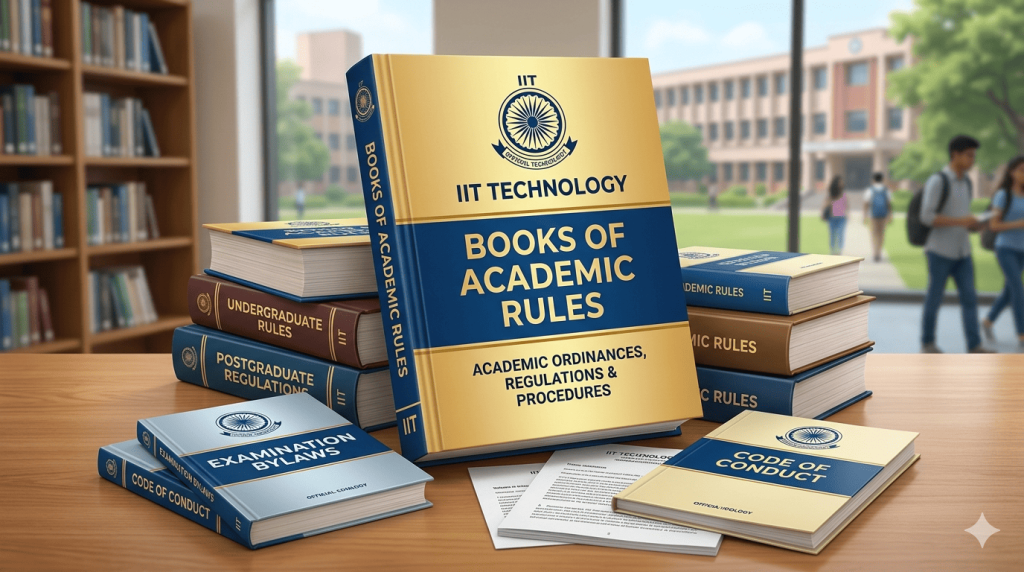
Books of Academic Rules
International Institute of Technology (IIT Technology)
1. Introduction
Academic rules form the backbone of any higher education institution, ensuring order, fairness, transparency, and academic excellence. At institutions like the International Institute of Technology, these rules are codified into what is often referred to as the “Book of Academic Rules.” This document outlines policies governing student conduct, curriculum, assessment, progression, and graduation.
Academic regulations are not merely administrative tools; they define the ethical and intellectual standards of the institution. They provide a framework within which students, faculty, and administrators operate, ensuring consistency and accountability. Similar frameworks across global institutes emphasize academic integrity, structured learning pathways, and evaluation systems to maintain quality education.
2. Objectives of Academic Rules
The primary objectives of academic rules at the IIT Institute include:
2.1 Ensuring Academic Integrity
Academic rules promote honesty in coursework, examinations, research, and collaboration. Any form of plagiarism, cheating, or misrepresentation is strictly prohibited.
2.2 Standardization of Education
Uniform policies ensure that all students are evaluated based on the same criteria, maintaining fairness.
2.3 Quality Assurance
By defining curriculum structures and evaluation systems, academic rules ensure high educational standards.
2.4 Student Development
Rules are designed not only to regulate but also to guide students toward academic and professional growth.
3. Academic Programs Structure
Academic programs at the International Institute of Technology (IIT Institute) are systematically designed to provide students with a well-rounded education that integrates theoretical knowledge, practical application, and research-based learning. The structure of these programs ensures flexibility, academic rigor, and alignment with global educational standards. Broadly, the academic offerings are categorized into undergraduate, postgraduate, and doctoral programs, all of which operate under a credit-based system.
3.1 Undergraduate Programs
Undergraduate programs at the IIT Institute typically lead to the award of Bachelor’s degrees such as Bachelor of Technology (B.Tech), Bachelor of Science (B.Sc), or equivalent qualifications. These programs are usually structured over a period of three to four years, depending on the discipline and specialization.
The undergraduate curriculum is carefully designed to build a strong foundation in core subjects during the initial years, followed by advanced and specialized courses in later semesters. For instance, engineering students pursuing a B.Tech degree begin with fundamental subjects like mathematics, physics, and basic engineering principles. As they progress, they delve into specialized domains such as computer science, mechanical engineering, electronics, or civil engineering.
In addition to core courses, undergraduate programs also include elective subjects that allow students to explore interdisciplinary areas and tailor their education according to their interests and career goals. Practical components such as laboratory work, workshops, and industry-oriented projects play a crucial role in enhancing hands-on skills.
Furthermore, internships are often a mandatory part of undergraduate education. These internships provide real-world exposure and help students understand industry practices, bridging the gap between academic learning and professional requirements. The final year typically includes a major project or capstone project, where students apply their accumulated knowledge to solve real-world problems.
3.2 Postgraduate Programs
Postgraduate programs at the IIT Institute are designed to provide advanced knowledge and specialization in a chosen field of study. These programs lead to degrees such as Master of Technology (M.Tech), Master of Science (M.Sc), Master of Business Administration (MBA), or other equivalent qualifications. The duration of postgraduate programs generally ranges from one to two years.
Unlike undergraduate programs, postgraduate studies are more focused and research-oriented. Students are expected to have a solid foundation in their respective fields before enrolling. The curriculum emphasizes advanced theoretical concepts, analytical skills, and problem-solving abilities.
Postgraduate programs often include a combination of coursework, seminars, case studies, and research projects. In technical disciplines, students may work on specialized labs and simulation-based learning. In management programs like MBA, emphasis is placed on case analysis, group discussions, presentations, and industry interactions.
A significant component of postgraduate education is the dissertation or thesis. Students are required to undertake independent research on a specific topic under the guidance of a faculty supervisor. This research work helps develop critical thinking, analytical skills, and the ability to contribute to knowledge in the field.
Additionally, many postgraduate programs encourage collaboration with industries, research institutions, and international universities. This exposure enhances the academic experience and opens up opportunities for employment and further research.
3.3 Doctoral Programs
Doctoral programs, commonly leading to a Doctor of Philosophy (Ph.D.) degree, represent the highest level of academic pursuit at the IIT Institute. These programs are primarily research-oriented and are designed for students who wish to contribute original knowledge to their field.
The duration of a Ph.D. program typically ranges from three to five years, depending on the discipline and the nature of the research. The program usually begins with a coursework phase, where students study advanced topics related to their research area. This is followed by comprehensive examinations to assess their readiness for independent research.
After successfully completing the coursework and qualifying examinations, students focus on their research work. They are required to identify a research problem, conduct an extensive literature review, design experiments or theoretical models, and generate new findings. Throughout this process, they work closely with a research supervisor or guide.
The culmination of a doctoral program is the submission of a thesis or dissertation, which presents the research findings in a structured and detailed manner. The thesis must demonstrate originality, significance, and contribution to the field. It is evaluated by experts, followed by an oral defense known as a viva voce.
Doctoral programs also encourage participation in conferences, publication of research papers in reputed journals, and collaboration with academic and industrial researchers. These activities help in building a strong academic and professional profile.
3.4 Credit-Based System
The academic programs at the IIT Institute are governed by a credit-based system, which provides flexibility and standardization in education. In this system, each course is assigned a certain number of credits based on factors such as instructional hours, laboratory work, and expected learning outcomes.
Typically, one credit corresponds to one hour of lecture per week or a combination of lecture and practical sessions. For example, a course with three lecture hours per week may carry three credits, while laboratory courses may have different credit allocations depending on their duration and intensity.
Students are required to earn a minimum number of credits to complete their degree program. The credit system allows students to plan their academic load each semester, choose elective courses, and even take additional courses if they wish to accelerate their progress.
Assessment in the credit-based system is continuous and comprehensive. It includes assignments, quizzes, mid-term examinations, end-term examinations, and project evaluations. Each course contributes to the student’s Grade Point Average (GPA), which reflects overall academic performance.
Another important feature of the credit system is its compatibility with global education standards. It facilitates credit transfer between institutions, enabling student mobility and participation in exchange programs. This system also supports interdisciplinary learning, allowing students to take courses from different departments.
4. Admission Policies
4.1 Eligibility Criteria
Admission is based on academic qualifications, entrance examinations, and merit.
4.2 Entrance Examinations
Students may be required to qualify in standardized tests or institutional exams.
4.3 Reservation Policies
Institutions often follow government guidelines regarding reservation categories.
4.4 Documentation and Verification
Students must submit valid documents for verification during admission.
5. Academic Calendar
The academic calendar is a fundamental component of the academic framework at the International Institute of Technology (IIT Institute). It provides a structured timeline for all academic activities and ensures the smooth functioning of teaching, learning, and evaluation processes throughout the year. By clearly outlining important dates and deadlines, the academic calendar helps students, faculty, and administrative staff plan their responsibilities effectively and maintain discipline within the institution.
The academic year at the IIT Institute is typically divided into a semester system, consisting of two main semesters: the Odd Semester and the Even Semester. Each semester generally spans a period of approximately 16 to 20 weeks, including teaching, examinations, and breaks. This system allows for a balanced distribution of academic workload and provides students with multiple opportunities to assess and improve their performance within a year.
Each semester begins with a registration period, which is a crucial administrative phase. During this time, students are required to enroll in their respective courses for the semester. The registration process includes selecting core and elective subjects, confirming course loads, and completing necessary formalities such as fee payment and academic advising. Failure to register within the stipulated period may result in penalties or denial of access to classes and examinations.
Following registration, the semester moves into the instruction period, which forms the core of academic engagement. This phase typically lasts for 12 to 14 weeks and involves regular classroom teaching, laboratory sessions, tutorials, and project work. Faculty members deliver lectures, assign coursework, and facilitate discussions to ensure that students achieve the desired learning outcomes. Active participation during this period is essential, as it lays the foundation for academic success.
Midway through the instruction period, mid-semester examinations are conducted. These assessments are designed to evaluate students’ understanding of the subjects covered in the first half of the semester. Mid-semester exams play a significant role in continuous assessment and provide students with feedback on their academic performance. Based on their results, students can identify areas for improvement and adjust their study strategies accordingly.
At the end of the instruction period, the institute conducts end-semester examinations, which are comprehensive evaluations covering the entire syllabus of each course. These exams carry substantial weight in the overall grading system and are critical for determining a student’s final grade. In addition to written exams, practical examinations, project evaluations, and presentations may also be conducted, depending on the course requirements.
The academic calendar also includes scheduled breaks such as semester vacations, public holidays, and preparatory leave before examinations. These breaks provide students with time to rest, revise, and prepare for upcoming assessments. Additionally, important academic events such as orientation programs, seminars, workshops, and cultural activities are often integrated into the calendar.
Strict adherence to the academic calendar is mandatory for all students and faculty members. Timely completion of academic activities ensures fairness, consistency, and efficiency in the educational process. Delays or deviations can disrupt the academic schedule and affect overall performance. Therefore, students are expected to stay informed about important dates and comply with all deadlines.
6. Course Registration
6.1 Registration Process
Students must register for courses at the beginning of each semester.
6.2 Add/Drop Policy
Students may add or drop courses within a specified period.
6.3 Course Load
A full-time student must maintain a minimum number of credits per semester.
- Undergraduate: ~12–18 credits
- Graduate: ~9–15 credits
6.4 Overload and Underload
Special permission is required for exceeding or reducing the standard course load.
7. Attendance Requirements
7.1 Minimum Attendance
Students must maintain a minimum attendance (usually 75%).
7.2 Absenteeism
Excessive absence may result in:
- Debarment from exams
- Lower grades
7.3 Leave Policy
Students must inform faculty in case of illness or emergencies.
8. Evaluation System
8.1 Continuous Assessment
Evaluation includes:
- Assignments
- Quizzes
- Projects
- Mid-term exams
8.2 End-Semester Examination
Final exams carry significant weight in grading.
8.3 Grading System
Grades are typically assigned as:
- A, B, C, D, F
- GPA (Grade Point Average)
8.4 Pass/Fail Criteria
Students must achieve minimum grades to pass courses.
9. Academic Performance and Progression
9.1 Minimum GPA Requirements
Students must maintain a minimum GPA (e.g., 2.0).
9.2 Academic Probation
Students failing to meet standards may be placed on probation.
9.3 Academic Dismissal
Continued poor performance may result in dismissal.
9.4 Maximum Duration
Programs must be completed within a specified time frame.
10. Academic Integrity and Discipline
10.1 Code of Conduct
Students must adhere to ethical standards.
10.2 Plagiarism
Strict penalties for copying or unauthorized use of materials.
10.3 Examination Malpractice
Includes cheating, impersonation, or use of unfair means.
10.4 Disciplinary Actions
Penalties may include:
- Warning
- Grade reduction
- Suspension
- Expulsion
11. Curriculum and Course Structure
11.1 Core Courses
Mandatory subjects required for all students in a program.
11.2 Electives
Students may choose courses based on interests.
11.3 Labs and Practical Work
Hands-on training is essential for technical education.
11.4 Projects and Internships
Students must complete projects and internships.
12. Academic Advising
12.1 Role of Advisors
Each student is assigned an academic advisor.
12.2 Responsibilities
Advisors help with:
- Course selection
- Career guidance
- Academic issues
12.3 Student Responsibility
Students must understand and follow academic requirements.
13. Examination Rules
13.1 Examination Schedule
Students must follow the official timetable.
13.2 Exam Conduct
Strict discipline during exams is mandatory.
13.3 Make-Up Exams
Allowed under special circumstances.
13.4 Result Declaration
Results are published after evaluation.
14. Grievance and Appeal System
14.1 Grade Appeals
Students may appeal grades through proper channels.
14.2 Academic Complaints
Handled by academic committees.
14.3 Transparency
Institutions ensure fair and unbiased decisions.
15. Degree Requirements
15.1 Credit Completion
Students must complete required credits.
15.2 Minimum GPA
A minimum GPA is required for graduation.
15.3 Final Project/Thesis
Mandatory for many programs.
15.4 Application for Graduation
Students must apply for degree conferral.
16. Honors and Awards
16.1 Dean’s List
Students with high GPA are recognized.
16.2 Academic Honors
Categories may include:
- Cum Laude
- Magna Cum Laude
- Summa Cum Laude
17. Leave and Withdrawal Policies
17.1 Leave of Absence
Students may take temporary leave.
17.2 Withdrawal from Courses
Allowed within deadlines.
17.3 Withdrawal from Program
Formal procedure required.
18. Transfer and Mobility
18.1 Credit Transfer
Students may transfer credits from other institutions.
18.2 Exchange Programs
Opportunities for international exposure.
19. Research Regulations (For PG & PhD)
19.1 Research Ethics
Students must follow ethical guidelines.
19.2 Thesis Submission
Research must be original and properly documented.
19.3 Viva Voce
Oral examination for thesis evaluation.
20. Financial and Administrative Rules
20.1 Fee Payment
Students must clear all dues.
20.2 Financial Holds
Pending dues may restrict services like transcripts.
21. Digital and Online Learning Policies
21.1 E-Learning Platforms
Students must use institutional portals.
21.2 Online Assessments
Rules apply to virtual exams as well.
22. Role of Faculty
22.1 Teaching Responsibilities
Deliver lectures, conduct evaluations.
22.2 Mentorship
Guide students academically and professionally.
22.3 Research Contribution
Engage in research and innovation.
23. Student Responsibilities
Students must:
- Attend classes regularly
- Complete assignments
- Follow institutional rules
- Maintain discipline
24. Institutional Governance
Academic policies are governed by:
- Academic Council
- Board of Studies
- Examination Committees
25. Amendments to Academic Rules
Rules may be updated periodically to:
- Improve quality
- Adapt to new technologies
- Meet global standards
26. Conclusion
The “Books of Academic Rules” at the International Institute of Technology serve as a comprehensive framework guiding all academic activities. These rules ensure discipline, fairness, and excellence, forming the foundation of a robust educational system.
Academic regulations are essential not only for maintaining order but also for fostering innovation, integrity, and lifelong learning among students. By adhering to these rules, students can achieve academic success and contribute meaningfully to society.
IIT Technology
- Regulations and Policies Governing Undergraduate (UG) Programmes
- Framework and Guidelines for the Interdisciplinary Dual Degree Programme (IDDDP)
- Rules and Regulations Applicable to Postgraduate (PG) Programmes
- Medical Policies and Healthcare-Related Rules For Students
- Instructions For Preparing Synopses, Theses, Dissertations, and Reports
- Policies Addressing Academic Misconduct and Malpractices
- Permissible Academic Engagements for Faculty, Including During Sabbatical, Lien, or Extended Leave
- Guidelines for Awarding Medals and Academic Honors for UG and PG Students
Table of Contents