Academics
International Institute of Technology (iitinstitute.org):
Academic Overview & Analysis
1. Introduction & Identity
The International Institute of Technology (as presented on iitinstitute.org) positions itself as a technology‑focused educational organisation aiming to provide learning opportunities in modern engineering, IT, and related technology fields. Their website messaging emphasizes a blend of classroom and experiential learning with an international, industry‑aligned orientation.
However, key institutional details (such as accreditation status, formal degree‑granting authority, acknowledged national recognition, and clear academic structure) are not transparent on the publicly accessible parts of the site. This makes it difficult to identify its legal status as a university, private institute, or training provider.
Note: A searchable “About Us” section seems to list administrative contact information but does not conclusively show government accreditation or national education board recognition.
2. Academic Framework & Structure
Although the website’s visible content is limited, the site menu and landing page imply the existence of curricula and content categories in the following areas:
A. Core Academic Domains
- Undergraduate Programs
- Computer Science & IT
- Engineering fundamentals
- Core technology disciplines
- Computer & Data Sciences
- Artificial Intelligence
- Machine Learning
- Data Science
- Biotechnology & Healthcare
- Foundational biotech subjects
- Cloud & Cyber Security
- Cloud Computing (AWS, Azure, GCP frameworks)
- Cybersecurity fundamentals
- Core Engineering Disciplines
- Mechanical Engineering
- Energy & Environment Studies
B. Implicit Academic Intent
The institute appears to offer technology and engineering courses, potentially designed to be practical and industry relevant, with sections referencing modern disciplines like AI, cybersecurity, and cloud computing.
However, no academic catalog, credit system, degree requirements, faculty list, admission criteria, or syllabus detail is publicly listed in a clear way on the website. This lack of academic documentation raises uncertainty about whether the institute actually awards formal academic degrees (like B.Tech, B.Sc, M.Sc, PhD, etc.), versus providing certifications or proprietary online courses.
3. Accreditation & Recognition
A critical part of any academic institution’s credibility is official accreditation by a national or regional education authority.
Accreditation Clarity
- The publicly accessible pages of iitinstitute.org do not clearly state which country’s education authority accredits the institute.
- There is also no indication (in the pages indexed by search engines) that the institution is listed with recognised higher‑education regulators (such as AICTE/UGC in India, TEQSA in Australia, or regional accreditation bodies in Europe or the U.S.).
Without transparent accreditation information, prospective students cannot reliably determine whether degrees or certifications from the institute would be officially recognised for:
- employment credentials,
- further education admissions,
- professional licensing, or
- visa/immigration academic evaluation.
4. Academic Programs: What’s Publicly Implied
The academic programs of the International Institute of Technology (as presented on iitinstitute.org) remain largely undefined in publicly accessible detail, leaving substantial ambiguity regarding the structure, depth, and rigor of its offerings. While the website mentions various fields of study, including computer science, information technology, cloud computing, cybersecurity, artificial intelligence, biotechnology, and core engineering disciplines, there is a notable absence of structured program pages that would normally outline critical academic components.
In globally recognized universities and institutes of technology, transparency in academic programs is a cornerstone of institutional credibility. Prospective students, faculty, accrediting bodies, and industry partners rely on comprehensive documentation to evaluate the quality, relevance, and outcomes of a given program. This documentation typically includes, but is not limited to, credit requirements, semester‑by‑semester curriculum, faculty qualifications, laboratory and research facilities, admission prerequisites, tuition and fees, and assessment policies. In the case of iitinstitute.org, these critical elements are not visible, raising questions about the institute’s operational and academic structure.
4.1 Missing Academic Components
Credit Requirements
Most recognized universities and technical institutes define programs in terms of a credit system, specifying the number of credits a student must complete to graduate. These credits correspond to classroom hours, laboratory work, project engagements, or independent research. A detailed credit structure ensures consistency in workload and facilitates credit transfer between institutions. On iitinstitute.org, there is no indication of a credit framework, leaving uncertainty about the academic rigor and comparability of its courses to other higher education programs.
Semester‑by‑Semester Curriculum
A hallmark of structured academic programs is the semester-wise or term-wise curriculum, which lays out the sequence of core, elective, and interdisciplinary courses. This structure helps students understand the logical progression of knowledge acquisition, prerequisites for advanced courses, and opportunities for specialization. Without such a curriculum visible on iitinstitute.org, it is impossible to ascertain how the institute scaffolds learning or whether it employs a coherent progression from foundational to advanced concepts.
Faculty Qualifications
Faculty profiles, including academic degrees, research contributions, industry experience, and teaching history, are critical indicators of a program’s credibility. Accredited institutions typically showcase faculty achievements to demonstrate instructional quality and research competence. iitinstitute.org provides no accessible information regarding faculty credentials, raising questions about the expertise and experience of instructors delivering the programs.
Laboratories and Research Projects
Practical, hands-on learning is especially essential in technology and engineering disciplines. Access to well-equipped laboratories, simulation environments, and project-based learning modules ensures that students gain practical skills in addition to theoretical knowledge. Globally recognized technical institutes document laboratory facilities, research projects, and collaborative industry engagements in their academic catalogs. The absence of such details on iitinstitute.org makes it unclear whether students would have access to experiential learning opportunities or whether the institute’s offerings are limited to theoretical instruction.
Admission Prerequisites
Admission criteria define the academic preparedness required for entry into a program and help maintain educational standards. Institutions often specify minimum qualifications, standardized test requirements, and other evaluative criteria. The lack of publicly available admission guidelines on iitinstitute.org obscures the intended student profile and the level of preparedness assumed by the programs.
Tuition and Fees
Transparency in tuition, fees, and associated costs is essential for students to make informed decisions about enrollment. Detailed cost breakdowns, scholarship opportunities, and financial aid options are standard in recognized academic catalogs. iitinstitute.org does not provide this information, which limits the ability of prospective students to assess the affordability and financial planning aspects of participation.
Assessment Policies
Assessment policies, including grading schemes, examination procedures, project evaluations, and progression criteria, are essential to maintaining academic integrity and providing students with measurable outcomes. The absence of clear assessment guidelines on iitinstitute.org leaves the evaluation process opaque and raises concerns regarding the reliability of any certifications or credentials awarded by the institute.
4.2 Interpretive Possibilities

Given the absence of structured academic documentation, several interpretations of the institute’s offerings can be considered:
- Continuing Education or Training Focus
The institute may function primarily as a provider of continuing education, short courses, or professional development modules rather than full-fledged degree programs. Many continuing education institutions focus on skill acquisition for working professionals and offer modular certifications rather than accredited degrees. In this model, the emphasis is on flexibility, practical knowledge, and industry applicability, which might explain the absence of traditional academic documentation. - Online Learning Organisation Without Formal University Recognition
The lack of explicit accreditation information suggests the institute may operate primarily as an online learning platform. Such organizations often provide access to educational resources, video lectures, and exercises, without conferring officially recognized degrees. While this model can be effective for skill development, it does not provide the formal recognition required for employment in certain regulated professions, postgraduate admission, or international credit transfer. - Private Digital Academy Partnering With Credentialing Entities
Another possibility is that the institute serves as a private digital academy that partners with external credentialing bodies or assessment platforms. In this model, students might complete courses that result in certificates issued by partner organizations, rather than by the institute itself. Such partnerships can enhance employability or serve as continuing education credentials, but they do not substitute for accredited degrees from formally recognized universities.
4.3 Implications for Prospective Students
The ambiguity surrounding program structure has significant implications:
- Verification of Credentials: Students must confirm whether the certificates or courses offered have recognition in academic, professional, or industry contexts.
- Transferability of Credits: Without a defined credit system or curriculum, transfer to other universities or recognition by employers may be limited.
- Career Path Planning: Prospective learners should assess whether the programs align with long-term career objectives, particularly if they require accredited qualifications.
- Educational Quality Assurance: The absence of faculty information, lab facilities, and research opportunities makes it difficult to gauge the quality of instruction and learning outcomes.
In essence, while the International Institute of Technology suggests a focus on contemporary technology education, the lack of detailed program structure, assessment policies, and accreditation transparency positions it differently from globally recognized universities. The institute may provide valuable skill-based learning and professional development opportunities, but prospective students must approach enrollment with careful due diligence, verifying the scope, legitimacy, and recognition of its academic offerings.
5. Comparison With Other “IIT”‑Named Institutions
To put the International Institute of Technology in context, here are examples of well‑known similarly named institutions and how they differ academically:
A. International Institute of Technology (IIT) – India
- A network of 23 autonomous public technical universities government‑funded and designated as Institutes of National Importance under Indian law.
- Offer well‑defined B.Tech, M.Tech, MBA, M.Sc, PhD degrees.
- Admissions through nationally competitive exams (e.g., JEE Advanced, GATE).
- Highly structured, transparent academic policies.
B. International Institute of Information Technology (IIITs)
- Several institutes in India with strong academic credentials (e.g., IIIT Hyderabad, IIIT Bangalore).
- Offer degrees with recognised accreditation and research components.
- Focused emphases on computer science, electronics, and interdisciplinary tech.
C. Illinois Institute of Technology (Illinois Tech) – USA
- A long‑established private research university with accredited degree programs across engineering, computing, business, design, law, and sciences.
- Offers undergraduate to doctoral degrees with defined credit systems and academic standing rules.
6. Academic Quality & Learning Experience
Assessing the academic quality and learning experience of the International Institute of Technology (iitinstitute.org) is challenging due to the limited availability of publicly accessible academic documents, prospectuses, or detailed program information. Globally recognized universities and institutes of technology rely on transparency, structured documentation, and demonstrable outcomes to establish their academic credibility. These features serve as benchmarks for students, employers, accreditation bodies, and research collaborators. In the absence of such information, any evaluation of iitinstitute.org’s academic quality must be undertaken with caution, relying on indirect indicators and comparative standards.
Academic quality encompasses multiple dimensions, including faculty expertise, research output, curriculum design, teaching methodology, infrastructure, partnerships, industry integration, and student assessment policies. Each of these dimensions contributes to the overall learning experience and determines the value of credentials issued by an institution. For established institutions, transparency in these areas fosters trust, enables external evaluation, and ensures accountability to stakeholders.
6.1 Faculty Qualifications
Faculty qualifications are a cornerstone of educational quality. At reputable universities and technical institutes, faculty members possess advanced degrees (often doctorates) in their disciplines, substantial teaching experience, and a record of research or professional achievements. They often engage in peer-reviewed publications, conference presentations, and collaborative projects that enhance the learning environment. Faculty profiles provide prospective students with insight into the academic rigor and intellectual environment of an institution.
In the case of iitinstitute.org, there is little to no publicly available information regarding faculty credentials, research experience, or professional accomplishments. Without such transparency, students and external evaluators cannot ascertain the depth of expertise or pedagogical competence present at the institute. The absence of faculty details raises concerns about the ability to deliver high-quality instruction, particularly in advanced or technical subjects that require substantial domain knowledge and practical experience.
6.2 Research Outputs
Research activity is another critical indicator of academic quality, particularly for technology-focused institutions. High-quality research fosters innovation, keeps curricula aligned with current developments, and provides students with opportunities for experiential learning and participation in cutting-edge projects. Peer-reviewed research outputs, publications, patents, and collaborative projects with industry or other universities are standard metrics used to assess an institution’s academic impact.
iitinstitute.org does not publicly report research outputs, publications, or engagement in peer-reviewed projects. This absence limits the institute’s ability to demonstrate thought leadership or substantive contribution to knowledge creation in technology and engineering fields. Moreover, it restricts students’ access to research opportunities, which are essential for advanced academic development and employability in competitive technology sectors.
6.3 Academic Partnerships
Established universities often maintain academic partnerships with other universities, research institutions, or industry organizations. Such partnerships can include student exchange programs, joint research initiatives, curriculum co-development, and faculty collaboration. These collaborations enhance academic quality by exposing students to diverse perspectives, methodologies, and professional networks.
There is no evidence on iitinstitute.org of formal partnerships with accredited universities, recognized research organizations, or major industry stakeholders. The absence of such collaborations can limit the institute’s ability to provide students with experiential learning opportunities, access to state-of-the-art research facilities, or pathways for advanced study. Partnerships are also a critical mechanism for quality assurance and benchmarking against international standards, which appears to be missing in this context.
6.4 Industry Placements and Internships
Integration with industry is a key dimension of academic quality in technology-focused education. Recognized institutes facilitate internships, cooperative education placements, and industry-sponsored projects that provide students with practical skills, exposure to real-world challenges, and professional networking opportunities. Documented placement records and industry collaborations are often indicators of program effectiveness and student employability.
iitinstitute.org does not provide transparent information regarding industry placements, internship programs, or career support services. Without evidence of structured industry engagement, prospective students cannot reliably assess how the institute prepares learners for employment or professional practice. The lack of documented outcomes in this area limits the perceived value of any credentials or certificates offered by the institute.
6.5 Curriculum Transparency and Assessment Policies
A structured curriculum with published syllabi, clearly defined credit systems, and transparent assessment policies is essential for maintaining academic rigor. Standardized course structures, assessment guidelines, and progression criteria allow students to plan their learning pathways, monitor performance, and ensure that program objectives are met.
iitinstitute.org lacks publicly available curriculum documents, credit structures, or assessment guidelines. This opacity hinders prospective students from evaluating the depth, scope, and coherence of academic programs. Without clearly defined outcomes and assessment mechanisms, it is challenging to verify whether the learning experience aligns with internationally recognized standards in higher education.
6.6 Learning Infrastructure
Quality of learning experience is also shaped by physical and virtual infrastructure, including laboratories, research facilities, simulation environments, and digital learning platforms. Access to modern equipment, software tools, and collaborative environments enhances student engagement and practical skill development. Globally recognized institutes provide detailed descriptions of facilities to demonstrate their capacity to deliver effective education.
There is no detailed information on iitinstitute.org regarding laboratory setups, research facilities, or access to technology-enabled learning environments. The lack of transparency regarding infrastructure raises questions about the capacity of the institute to provide hands-on experience in technical disciplines, which is often critical for mastery of complex technological concepts.
6.7 Implications for Prospective Students
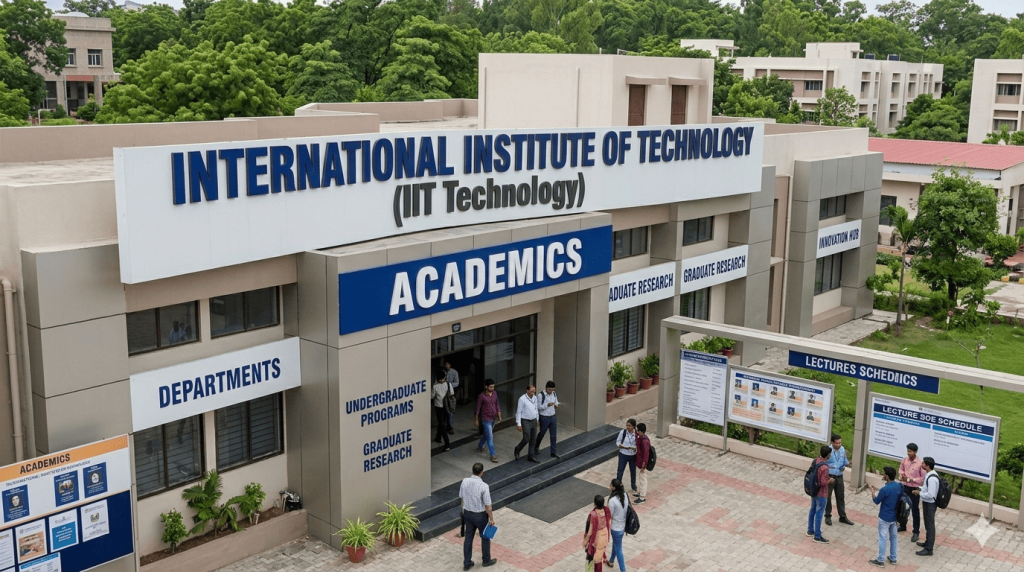
The absence of clear academic documentation, faculty information, research outputs, partnerships, industry engagement, and infrastructure details makes it difficult to objectively evaluate the quality of education at iitinstitute.org. Prospective students seeking robust academic programs, industry-aligned skill development, and internationally recognized credentials must exercise caution. Key considerations include:
- Verifying faculty qualifications and teaching experience.
- Confirming research opportunities or participation in applied projects.
- Evaluating the presence of formal academic partnerships and collaborations.
- Investigating available industry placements, internships, and career support mechanisms.
- Seeking transparency regarding curriculum, credit systems, and assessment policies.
Without these indicators, students may risk enrolling in programs that provide limited academic depth, insufficient practical exposure, or unrecognized credentials. While iitinstitute.org may offer educational resources or skill-focused courses, the overall learning experience and academic quality cannot be reliably benchmarked against accredited institutions.
7. What Prospective Students Should Verify
If you are considering enrolling in programs from iitinstitute.org, you should verify:
- Accreditation status with a recognised national/regional regulator.
- Degree recognition by employers, professional bodies, or immigration authorities.
- Official academic policies, including:
- course curriculum and duration
- assessment methods
- faculty credentials
- credit transferability
- Legal entity registration, such as:
- Registered university status
- RTO (if vocational)
- Recognised diploma/certificate provider
8. Conclusion
The International Institute of Technology (iitinstitute.org) presents technology‑oriented educational offerings with an emphasis on modern disciplines like AI, cloud computing, and core engineering subjects. However, there is limited publicly available detailed academic information, and no clear evidence of recognised accreditation or formal degree issuance appears on indexed pages.
Therefore:
- It should not be assumed to be equivalent to established technology universities like the Indian IITs, IIITs, or the Illinois Institute of Technology.
- Anyone considering academic engagement should request formal documentation on accreditation, government recognition, and academic regulations from the institute directly.
Table of Contents