Transfer of Technology
International Institute Of Technology (IIT)
https://iitinstitute.org/
📧 info@iitinstitute.org | admin@iitinstitute.org
Introduction: Understanding Transfer of Technology (ToT)
Transfer of Technology (ToT) stands as one of the most powerful enablers of innovation, economic development, and global collaboration in today’s knowledge-driven world. As industries evolve rapidly and new discoveries emerge across scientific and technical domains, the ability to effectively transfer knowledge and innovation from one entity to another becomes essential. Technology transfer is not merely a process—it is a strategic mechanism that ensures ideas move beyond theory and research, ultimately creating tangible value for society.
At its core, Transfer of Technology refers to the structured process through which scientific discoveries, technical expertise, intellectual property, methodologies, and innovations are shared between organizations, institutions, or even countries. This transfer can occur in multiple forms, including licensing agreements, joint ventures, research collaborations, training programs, and commercialization initiatives. The goal is to ensure that innovations developed in one environment—such as a university laboratory or research center—are effectively applied in another, such as industry or public sector systems.
In the modern interconnected global economy, ToT plays a vital role in bridging the gap between research and real-world application. Academic institutions and research organizations are often hubs of groundbreaking discoveries, but without proper mechanisms for transfer, these innovations risk remaining unused or underutilized. Technology transfer ensures that these ideas are refined, adapted, and scaled to meet practical needs. This transformation is critical in sectors such as healthcare, engineering, manufacturing, agriculture, and information technology, where innovation directly impacts quality of life and economic progress.
One of the defining characteristics of ToT is its collaborative nature. It brings together diverse stakeholders, including universities, industries, government bodies, and entrepreneurs. Each of these participants plays a unique role in the innovation ecosystem. Universities and research institutes generate knowledge and conduct foundational research. Industries provide the resources, infrastructure, and market access required to commercialize innovations. Governments create policies, funding mechanisms, and regulatory frameworks that facilitate and support the transfer process. Entrepreneurs and startups, on the other hand, act as catalysts by transforming innovative ideas into scalable business solutions.
Moreover, Transfer of Technology contributes significantly to economic growth and competitiveness. By enabling the commercialization of research outputs, it leads to the creation of new products, services, and industries. This, in turn, generates employment opportunities, enhances productivity, and strengthens national and global economies. Countries and institutions that actively invest in and promote ToT are better positioned to compete in the global market, as they can quickly adapt to technological advancements and leverage innovation for strategic advantage.
Another important dimension of ToT is its role in addressing global challenges. From climate change and sustainable energy to public health and digital transformation, many of the world’s pressing issues require innovative solutions. Technology transfer allows these solutions to be shared and implemented across borders, ensuring that advancements benefit not just a single organization or country, but the global community as a whole. It fosters inclusivity by enabling developing regions to access advanced technologies and knowledge, thereby reducing technological gaps and promoting equitable development.
In addition, intellectual property (IP) plays a central role in the technology transfer process. Protecting innovations through patents, copyrights, and trademarks ensures that creators and institutions receive recognition and financial returns for their work. At the same time, IP frameworks provide a structured and secure environment for sharing technologies with external partners. This balance between protection and dissemination is crucial for sustaining innovation and encouraging further research and development.
The process of technology transfer is not without its challenges. Differences in organizational cultures, lack of communication, financial constraints, and regulatory complexities can hinder effective transfer. However, with the right strategies, infrastructure, and collaborative mindset, these barriers can be overcome. Establishing dedicated technology transfer offices, fostering industry-academia partnerships, and promoting innovation-friendly policies are some of the key measures that support successful ToT initiatives.
At the International Institute Of Technology (IIT), Transfer of Technology is recognized as a strategic priority and a cornerstone of its mission to drive innovation and societal impact. The institute is committed to creating a dynamic ecosystem where research excellence meets practical application. By fostering strong collaborations with industry partners, supporting intellectual property management, and encouraging entrepreneurship, IIT ensures that its research outputs translate into meaningful solutions that address real-world challenges.
Furthermore, IIT emphasizes capacity building and knowledge dissemination as integral components of its ToT framework. Through training programs, workshops, and collaborative projects, the institute equips students, researchers, and professionals with the skills and knowledge required to participate effectively in the technology transfer process. This holistic approach not only enhances the institute’s impact but also contributes to the development of a skilled and innovation-driven workforce.
In conclusion, Transfer of Technology is a critical driver of progress in the modern world. It transforms ideas into action, research into results, and innovation into impact. By bridging the gap between knowledge creation and practical application, ToT ensures that advancements in science and technology are harnessed for the greater good. Institutions like the International Institute Of Technology (IIT) play a pivotal role in this process, acting as catalysts for innovation, collaboration, and sustainable development on both national and global scales.
Concept and Definition of Technology Transfer
Technology transfer is broadly defined as the movement of knowledge, technology, or innovation from its origin (such as a university or research lab) to a recipient (such as industry or government) for practical use.
This process includes:
- Transfer of scientific knowledge
- Sharing of technical expertise
- Licensing of intellectual property
- Commercialization of research outputs
- Collaborative innovation initiatives
It is not merely a transaction but a dynamic and collaborative process involving adaptation, learning, and continuous improvement.
Importance of Transfer of Technology
1. Bridging Research and Industry
Technology transfer ensures that academic research is translated into market-ready products and services. Without ToT, many innovations would remain unused despite their potential value.
2. Driving Economic Growth
Technology transfer contributes significantly to economic development by:
- Creating new industries
- Generating employment opportunities
- Enhancing productivity
- Encouraging entrepreneurship
3. Promoting Innovation Ecosystems
ToT strengthens the relationship between academia, industry, and government, forming a robust innovation ecosystem.
4. Enhancing Global Competitiveness
Countries and institutions that actively engage in technology transfer gain a competitive advantage in global markets.
5. Societal Benefits
Technology transfer leads to:
- Improved healthcare solutions
- Environmental sustainability
- Advanced infrastructure
- Better quality of life
Objectives of Technology Transfer at IIT
The International Institute Of Technology (IIT) focuses on achieving the following objectives through its ToT initiatives:
- Promote commercialization of research outcomes
- Encourage collaboration between academia and industry
- Protect and manage intellectual property
- Support startups and innovation-driven enterprises
- Facilitate skill and knowledge dissemination
- Contribute to national and global development
Types of Technology Transfer
Technology transfer can take various forms depending on the nature of the innovation, the stakeholders involved, and the intended application of the knowledge or technology. Understanding these types is essential for organizations, academic institutions, and industries to effectively plan, implement, and benefit from the transfer process. Each type serves a distinct purpose and operates within a specific context, contributing to the overall innovation ecosystem in different ways.
1. Horizontal Transfer

Horizontal technology transfer refers to the movement of technology between organizations or entities that operate at the same level within the value chain. Typically, this occurs between companies within the same industry or across similar sectors where the technological capabilities and operational structures are comparable. Unlike other forms of transfer, horizontal transfer does not involve a hierarchy such as research-to-industry flow; instead, it focuses on peer-to-peer exchange.
This type of transfer is commonly seen in strategic partnerships, joint ventures, and collaborations between companies aiming to enhance their technological capabilities. For instance, two manufacturing firms may share production techniques, automation tools, or quality management systems to improve efficiency and competitiveness. Horizontal transfer is particularly valuable in industries where rapid innovation is necessary, as it allows organizations to adopt proven technologies without investing heavily in research and development.
One of the key advantages of horizontal transfer is speed. Since the technology is often already tested and applied in a similar environment, the adoption process is relatively smooth. It also promotes standardization across industries, leading to improved interoperability and quality consistency. However, challenges may arise in terms of intellectual property rights, competition concerns, and trust between participating entities. Establishing clear agreements and maintaining transparency are crucial for the success of horizontal technology transfer.
2. Vertical Transfer
Vertical technology transfer involves the movement of technology from one stage of the innovation pipeline to another, typically from research institutions, universities, or laboratories to industry for commercialization. This is one of the most recognized and widely practiced forms of technology transfer, as it directly connects knowledge creation with market application.
In this model, academic institutions and research organizations play a foundational role by generating new knowledge, conducting experiments, and developing innovative solutions. These innovations are then transferred to industrial partners who have the resources, infrastructure, and market access needed to transform them into products or services. This process often involves licensing agreements, patents, startup formation, or collaborative research and development initiatives.
Vertical transfer is essential for ensuring that scientific discoveries do not remain confined to academic journals or laboratory settings. It enables the practical application of research, contributing to economic growth, technological advancement, and societal benefit. For example, a new medical device developed in a university lab can be transferred to a healthcare company for production and distribution, ultimately benefiting patients.
Despite its importance, vertical transfer can be complex and time-consuming. It requires effective coordination between researchers and industry professionals, alignment of objectives, and careful management of intellectual property. Institutions often establish dedicated technology transfer offices (TTOs) to facilitate this process, ensuring that innovations are evaluated, protected, and marketed effectively.
3. International Technology Transfer
International technology transfer refers to the movement of technology across national borders. This type of transfer plays a critical role in global development by enabling countries to share knowledge, innovation, and technological advancements. It often involves multinational corporations, international research collaborations, government agreements, and global development programs.
This form of transfer is particularly important for developing countries, as it provides access to advanced technologies that may not be available locally. By adopting technologies from more developed regions, these countries can accelerate their industrial growth, improve infrastructure, and enhance productivity. For example, renewable energy technologies developed in one country can be implemented in another to address energy challenges and promote sustainability.
International technology transfer also fosters global collaboration and cultural exchange. Researchers, engineers, and professionals from different countries work together, bringing diverse perspectives and expertise to the innovation process. This collaboration can lead to more robust and adaptable solutions that address global challenges such as climate change, public health, and digital transformation.
However, international transfer comes with its own set of challenges. Differences in legal systems, regulatory frameworks, cultural practices, and economic conditions can complicate the process. Issues related to intellectual property protection, technology adaptation, and knowledge absorption must be carefully managed. Successful international technology transfer requires strong partnerships, supportive policies, and a clear understanding of local needs and capabilities.
4. Intra-Organizational Transfer
Intra-organizational technology transfer refers to the sharing of knowledge, skills, and technologies within different departments or units of the same organization. Although it may seem less complex than external transfer, it is equally important for enhancing organizational efficiency, innovation, and competitiveness.
Large organizations often operate across multiple divisions, locations, or business units, each with its own expertise and capabilities. Intra-organizational transfer ensures that valuable knowledge and technologies developed in one part of the organization are effectively shared and utilized across others. This can include best practices, process improvements, software systems, or technical know-how.
For example, a company’s research and development department may develop a new production technique that can be adopted by its manufacturing units. Similarly, a successful marketing strategy implemented in one region can be replicated in others. By facilitating internal knowledge sharing, organizations can avoid duplication of efforts, reduce costs, and improve overall performance.
One of the main advantages of intra-organizational transfer is the ease of communication and alignment, as all stakeholders operate under the same organizational structure and objectives. However, challenges such as departmental silos, lack of communication, and resistance to change can hinder effective transfer. To overcome these barriers, organizations must foster a culture of collaboration, continuous learning, and knowledge sharing.
Mechanisms of Technology Transfer
Technology transfer occurs through multiple channels, including:
1. Licensing Agreements
Organizations grant rights to use patented technologies in exchange for royalties or fees.
2. Research Collaborations
Joint research projects between universities and industries.
3. Consultancy Services
Experts provide technical guidance to organizations.
4. Spin-offs and Startups
New companies formed to commercialize research innovations.
5. Publications and Conferences
Dissemination of knowledge through academic and professional platforms.
6. Training and Workshops
Skill development programs to transfer technical expertise.
7. Industry-Academia Partnerships
Long-term collaborations for innovation and development.
Technology Transfer Process
The process of technology transfer typically involves several stages:
1. Research and Discovery
Innovations originate from scientific research and experimentation.
2. Disclosure
Researchers disclose their invention to the institution.
3. Evaluation
Assessment of commercial potential and feasibility.
4. Intellectual Property Protection
Patents, copyrights, or trademarks are secured.
5. Marketing
Promotion of technology to potential industry partners.
6. Licensing or Commercialization
Agreements are made for technology use or development.
7. Implementation
The receiving organization applies the technology.
8. Monitoring and Support
Continuous improvement and technical assistance.
Role of Intellectual Property (IP)
Intellectual property plays a crucial role in technology transfer by:
- Protecting innovations
- Encouraging investment
- Facilitating licensing agreements
- Ensuring fair returns for inventors
IP rights create a structured framework that enables secure and efficient transfer of technology.
Benefits of Technology Transfer
For Universities and Research Institutions
- Increased research funding
- Enhanced reputation and prestige
- Attraction of talented researchers
- Opportunities for collaboration
For Industry
- Access to cutting-edge technologies
- Reduced R&D costs
- Faster product development
- Competitive advantage
For Society
- Improved quality of life
- Job creation
- Economic development
- Technological advancement
Challenges in Technology Transfer
Despite its benefits, technology transfer faces several challenges:
1. Intellectual Property Issues
Disputes over ownership and licensing rights.
2. Lack of Collaboration
Limited interaction between academia and industry.
3. Financial Constraints
Insufficient funding for commercialization.
4. Regulatory Barriers
Complex legal and policy frameworks.
5. Technological Gaps
Mismatch between research outcomes and industry needs.
6. Cultural Differences
Differences in organizational goals and working styles.
7. Market Uncertainty
Unpredictability in demand for new technologies.
Key Factors for Successful Technology Transfer
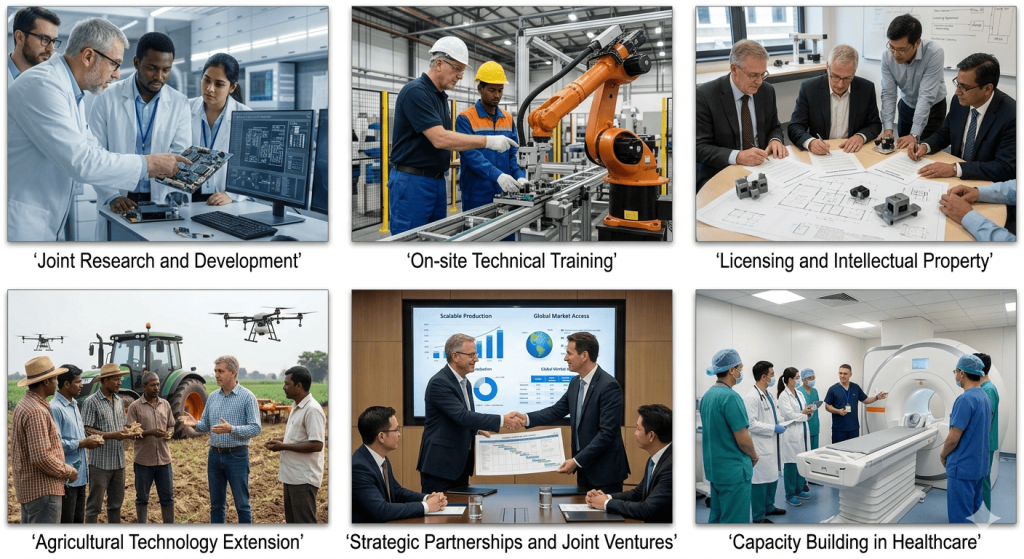
Successful ToT requires:
- Strong collaboration between stakeholders
- Effective communication
- Market-oriented research
- Adequate funding and resources
- Skilled human capital
- Supportive policies and infrastructure
Additionally, the technology must be appropriate, economically viable, and aligned with the needs of the receiving organization.
Role of IIT in Technology Transfer
The International Institute Of Technology (IIT) plays a pivotal role in facilitating technology transfer through:
1. Research Excellence
Conducting cutting-edge research in various fields.
2. Industry Collaboration
Partnering with industries for innovation and development.
3. Innovation Centers
Establishing hubs for startups and entrepreneurship.
4. Technology Transfer Offices (TTOs)
Managing intellectual property and commercialization.
5. Training Programs
Providing skill development and knowledge transfer.
6. Global Partnerships
Collaborating with international institutions.
Technology Transfer in the Digital Era
The digital transformation has significantly enhanced technology transfer by:
- Enabling faster communication and collaboration
- Facilitating online knowledge sharing
- Supporting remote research and innovation
- Expanding global reach
Emerging technologies such as Artificial Intelligence, Blockchain, and Cloud Computing are further accelerating the process of technology transfer.
Future Trends in Technology Transfer
1. Open Innovation
Collaboration across organizations and borders.
2. Digital Platforms
Online ecosystems for innovation exchange.
3. Sustainable Technologies
Focus on environmental and social impact.
4. Global Collaboration
Increased international partnerships.
5. Startup Ecosystems
Growth of innovation-driven startups.
Case Studies and Applications
Technology transfer has been successfully applied in various sectors:
Healthcare
Development of vaccines, medical devices, and diagnostic tools.
Agriculture
Improved farming techniques and biotechnology solutions.
Manufacturing
Advanced production technologies and automation.
Information Technology
Software development and digital solutions.
Building a Strong Technology Transfer Ecosystem
To build an effective ToT ecosystem, institutions like IIT focus on:
- Strengthening research capabilities
- Encouraging innovation culture
- Developing industry partnerships
- Supporting entrepreneurship
- Enhancing policy frameworks
Conclusion
Transfer of Technology (ToT) has firmly established itself as a cornerstone of modern innovation systems, playing a transformative role in converting ideas into practical, impactful solutions. In an era defined by rapid technological advancement and global interconnectivity, the ability to effectively transfer knowledge, skills, and innovations from one entity to another is not just beneficial—it is essential. Technology transfer serves as the vital link that connects research with real-world application, ensuring that discoveries made in laboratories and academic institutions are translated into products, services, and processes that benefit industries and society at large.
One of the most significant contributions of technology transfer lies in its ability to foster economic growth. By enabling the commercialization of research outcomes, it supports the creation of new businesses, industries, and employment opportunities. Organizations that actively engage in technology transfer are better equipped to innovate, adapt to changing market demands, and maintain a competitive edge in the global economy. Furthermore, by facilitating collaboration between academia, industry, and government, ToT strengthens the overall innovation ecosystem, creating a cycle of continuous development and improvement.
Beyond economic benefits, technology transfer also has a profound impact on societal well-being. Innovations in healthcare, agriculture, engineering, and information technology have the potential to address some of the world’s most pressing challenges. Through effective transfer mechanisms, these advancements can reach communities where they are needed most, improving quality of life and promoting sustainable development. Whether it is the introduction of advanced medical technologies, environmentally friendly solutions, or digital tools for education, ToT ensures that progress is shared and accessible.
At the heart of successful technology transfer is collaboration. It requires a coordinated effort among researchers, industry professionals, policymakers, and entrepreneurs. Each stakeholder brings unique expertise and resources to the table, making the transfer process more dynamic and effective. Establishing strong partnerships, maintaining clear communication, and aligning objectives are key factors that contribute to successful outcomes. Additionally, protecting intellectual property and creating supportive regulatory frameworks help build trust and encourage participation in the transfer process.
The International Institute Of Technology (IIT) recognizes the strategic importance of technology transfer and has made it a central component of its mission. Through a combination of research excellence, industry engagement, and innovation-driven initiatives, IIT actively promotes the dissemination and application of knowledge. The institute’s commitment to fostering collaboration ensures that its research outputs are not confined to academic boundaries but are transformed into practical solutions that address real-world challenges.
Moreover, IIT emphasizes the development of a strong innovation culture by supporting entrepreneurship, encouraging interdisciplinary research, and facilitating skill development. By equipping students, researchers, and professionals with the tools and knowledge required for effective technology transfer, the institute contributes to building a future-ready workforce capable of driving innovation across sectors. Its focus on global partnerships further enhances its ability to participate in international technology transfer, expanding its impact beyond national boundaries.
Table of Contents