
Placements
1. Introduction to IIT Placements
Placements in the International Institute Of Technology (IIT) refer to the structured campus recruitment process through which companies hire students for full-time jobs, internships, and research-based roles. This process is one of the most organized and competitive campus recruitment systems in the world. It plays a crucial role in shaping the early careers of engineering and technology graduates in India.
At its core, IIT placements connect industry with highly skilled students who have undergone rigorous academic training. These students are selected into IITs through the Joint Entrance Examination (JEE) Advanced, which is widely regarded as one of the toughest entrance examinations globally. The selection process itself ensures that only the top percentile of engineering aspirants gain admission, creating a highly talented pool of students. As a result, companies actively compete to recruit from IIT campuses.
The placement system in IITs is considered elite for several reasons. First, the academic environment in IITs emphasizes strong foundations in mathematics, science, programming, and engineering principles. Students are trained not just to memorize concepts but to solve complex, real-world problems. This problem-solving ability is highly valued by recruiters, especially in sectors like software engineering, data science, consulting, and research.
Second, IIT students are exposed to extensive project work, coding assignments, lab research, and internships throughout their academic journey. Many students participate in national and international competitions such as hackathons, robotics contests, and research symposiums. These experiences build practical skills that go beyond classroom learning. Companies recognize this and often prefer IIT graduates for roles that require analytical thinking and technical depth.
Third, IITs have strong global visibility. Companies from across the world—including the United States, Europe, Japan, Singapore, and the Middle East—participate in campus recruitment drives. This global recruiter presence allows students to access international job opportunities without leaving campus. In some cases, students receive offers with overseas postings or remote roles, making IIT placements truly global in nature.
The placement process in IITs is highly structured and is managed by dedicated Training and Placement (T&P) cells at each institute. These cells coordinate with companies, schedule recruitment drives, and ensure smooth execution of the entire process. The system is designed to be transparent and efficient, allowing equal opportunity for all eligible students.
Placements in IITs typically happen in two major phases: the internship season and the final placement season.
The internship season usually occurs during the pre-final year of study. In this phase, companies offer short-term work opportunities, typically lasting two to three months during summer. These internships are extremely important because they often serve as a direct pathway to full-time employment. Many companies extend Pre-Placement Offers (PPOs) to students who perform well during their internships. A PPO allows a student to secure a job offer before the final placement season even begins, reducing stress and competition later.
The final placement season takes place in the final year of study. This is when companies visit campuses in large numbers to hire students for full-time roles. The process begins with company registrations, followed by eligibility criteria such as minimum CGPA requirements, skill assessments, and resume shortlisting. Students who qualify then go through multiple rounds of evaluation, including aptitude tests, coding challenges, technical interviews, and HR interviews.
Different companies recruit for different types of roles during placements. For example, technology companies like Google, Microsoft, and Amazon primarily hire for software engineering roles. Consulting firms such as McKinsey, BCG, and Bain recruit students for analytical and business strategy roles. Financial institutions offer roles in investment banking, quantitative analysis, and risk management. Core engineering companies recruit for mechanical, electrical, and civil engineering roles, while startups often hire for product development and innovation-based positions.
The placement experience in IITs is not just about securing a job; it is also a reflection of the students’ skills, preparation, and adaptability. While IITs provide excellent opportunities, students must still compete at a high level. Performance in coding tests, communication skills, problem-solving ability, and internship experience all play a major role in determining outcomes.
2. Placement Process in IITs
The placement process is centrally managed by each IIT’s Training and Placement Cell (T&P Cell).
Step-by-step process:
1. Registration
Students register with placement cells and submit resumes.
2. Shortlisting by Companies
Companies shortlist candidates based on:
- CGPA cutoff (often 7.0–9.0+)
- Skills (coding, projects, research papers)
- Resume strength
3. Tests and Assessments
Depending on company:
- Coding tests (DSA, algorithms)
- Aptitude tests
- Technical MCQs
- Case studies (for consulting roles)
4. Interviews
Usually 2–5 rounds:
- Technical interview
- HR interview
- System design / problem-solving interview
- Managerial rounds
5. Offer Release
Students receive:
- PPO (Pre-Placement Offer) from internships OR
- Final placement offers
3. Types of Jobs Offered in IIT Placements
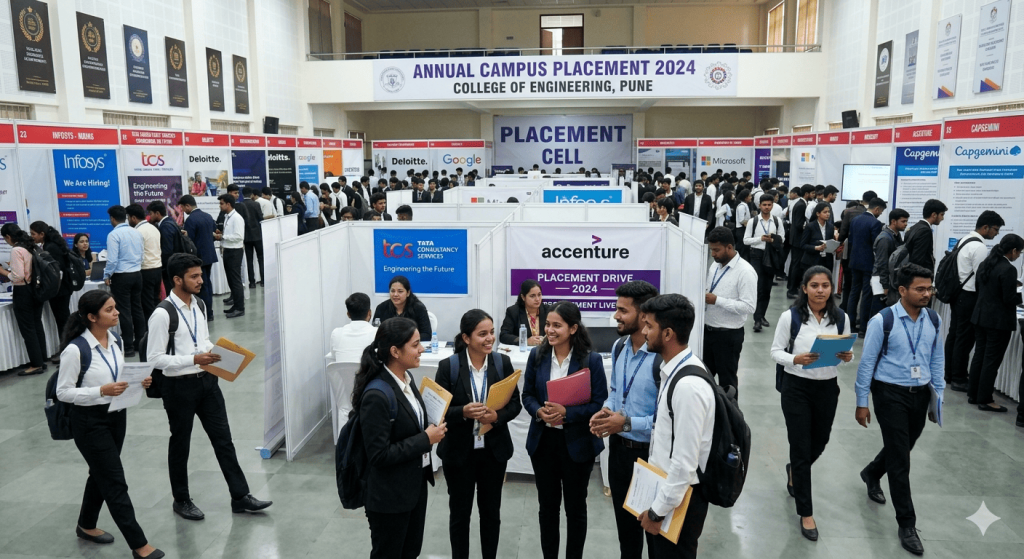
IITs offer a wide range of roles, not just engineering:
A. Software Engineering
Most common category:
- Backend Developer
- Frontend Developer
- Full Stack Engineer
- Machine Learning Engineer
- Data Scientist
B. Core Engineering
- Mechanical design engineer
- Electrical engineer
- Civil engineer
- Aerospace engineer
C. Consulting
- Strategy consultant
- Business analyst
- Management trainee
Companies: McKinsey, BCG, Bain
D. Finance
- Investment banking
- Quant analyst
- Risk analyst
- Trading roles
E. Product Management
- Product manager (PM roles in tech firms)
F. Research & Higher Studies
- R&D roles
- MS/PhD abroad (very common)
4. Top Recruiters in IITs
Some of the biggest recruiters include:
Global Tech Companies
- Microsoft
- Amazon
- Meta
- Apple
High-Frequency Trading (HFT)
- Jane Street
- Tower Research
- Hudson River Trading
- Quadeye
Consulting Firms
- McKinsey & Company
- Boston Consulting Group (BCG)
- Bain & Company
Indian Tech Companies
- TCS
- Infosys
- Flipkart
- Razorpay
- Zomato
Core Engineering Companies
- ISRO
- DRDO
- L&T
- Siemens
5. Salary Packages in IIT Placements
Salary is one of the most discussed aspects of IIT placements.
A. Highest Packages
- ₹1 crore to ₹2 crore+ (international offers, mostly HFT or US-based roles)
B. Average Packages
Varies by IIT:
- Top IITs: ₹20–30 LPA average (CSE branch)
- Other branches: ₹10–18 LPA average
C. Median Packages
- More realistic measure than average
- Usually ₹12–20 LPA for top IITs
D. Domestic vs International Offers
- Domestic: ₹10–40 LPA common
- International: ₹60 LPA – ₹2 Cr equivalent (rare but present)
6. Branch-Wise Placement Differences
Placements vary significantly by branch.
1. Computer Science Engineering (CSE)
- Highest placement rate
- Most companies visit
- Top salaries
- Almost 100% placement in top IITs
2. Electrical Engineering (EE)
- Strong placements in tech + core + finance
- Many go into coding roles
3. Mechanical Engineering
- Core jobs + tech switch
- Slightly lower average than CSE
4. Civil Engineering
- Lower placement rate in private sector
- Many opt for government exams
5. Chemical Engineering
- Balanced placements in core + IT
7. IIT-wise Placement Comparison
IIT Bombay
Indian Institute of Technology Bombay
- Highest competition
- Strong in tech + finance + consulting
- Massive global recruiter presence
IIT Delhi
Indian Institute of Technology Delhi
- Strong coding culture
- High startup participation
- Excellent consulting placements
IIT Madras
Indian Institute of Technology Madras
- Strong core engineering + tech
- Excellent research ecosystem
- Very stable placement record
IIT Kanpur
Indian Institute of Technology Kanpur
- Known for research-heavy roles
- Strong in software + analytics
IIT Kharagpur
Indian Institute of Technology Kharagpur
- One of the largest campuses
- Wide branch diversity
- Balanced placement outcomes
8. Internship Culture (Very Important)
Internships play a central role in the overall placement ecosystem of the International Institute Of Technology (IIT). They are not just optional learning experiences but are often the most important stepping stones toward securing final job offers. In many cases, internships directly determine a student’s career outcome through Pre-Placement Offers (PPOs), making them a critical part of IIT education and placement culture.
One of the primary reasons internships are so important is that a significant number of PPOs originate from them. A Pre-Placement Offer is extended by a company to a student who has completed an internship with them and performed exceptionally well. This eliminates the need for the student to go through the final placement process. Companies prefer this model because it allows them to evaluate candidates over a longer period rather than relying solely on interviews. For students, PPOs provide job security well before the final placement season begins, reducing stress and competition.
Internships also provide real industry exposure, which is essential in bridging the gap between academic learning and professional work environments. While IITs offer a strong theoretical foundation, internships allow students to apply their knowledge to real-world problems. For example, a computer science student may work on large-scale software systems, while a mechanical engineering student may contribute to product design or manufacturing processes. This hands-on experience helps students understand how industries operate, how teams collaborate, and how large-scale projects are managed.
Another major benefit of internships is the significant improvement they bring to a student’s resume. Recruiters often prioritize candidates who have relevant internship experience because it demonstrates practical skills and industry readiness. A well-completed internship at a reputed company such as Google, Microsoft, Amazon, or leading startups can greatly enhance a student’s profile. Even internships in research labs or smaller companies can be valuable if they involve meaningful work, innovation, or problem-solving.
Internships in IITs can broadly be divided into three main categories: summer internships, research internships, and corporate internships.
1. Summer Internships (2–3 Months)
Summer internships are the most common type and usually take place during the vacation period after the pre-final year. These internships last for approximately two to three months. Many companies conduct structured internship programs where students work on assigned projects under the guidance of mentors. These projects often mirror real industry problems and may involve software development, data analysis, system design, or engineering simulations.
Summer internships are particularly important because they are the primary source of PPOs. Companies closely monitor student performance during this period, evaluating technical skills, teamwork, communication, and problem-solving abilities.
2. Research Internships (India and Abroad)
Research internships are another important component of IIT internship culture. These internships may be conducted within IITs, other Indian research institutions, or international universities. Students interested in higher studies or research careers often choose this path.
In India, students may work with professors on advanced research topics in fields such as artificial intelligence, robotics, materials science, or theoretical physics. International research internships, often called visiting student researcher programs, allow IIT students to work in universities in the United States, Europe, Japan, and other countries.
These internships help students develop critical thinking skills, research methodology, and exposure to global academic environments. They are especially valuable for students planning to pursue MS or PhD programs abroad.
3. Corporate Internships (Tech Companies and Startups)
Corporate internships are offered by major technology companies, consulting firms, financial institutions, and startups. Companies like Google, Microsoft, Amazon, and other global firms frequently recruit IIT students for internship roles.
In these internships, students typically work on real production systems, product development, or data-driven projects. Startup internships, on the other hand, often provide more flexibility and exposure to multiple roles, allowing students to experience different aspects of a business such as development, marketing, and operations.
Corporate internships are highly competitive and require strong coding skills, problem-solving abilities, and communication skills. Students often prepare for months through coding practice, mock interviews, and project building to secure these opportunities.
Importance of Internship Culture in IITs
The internship culture in IITs is deeply integrated into the overall academic and placement framework. From early years, students are encouraged to build skills, participate in projects, and prepare for internships. Training and Placement Cells also facilitate internship drives by coordinating with companies and organizing recruitment processes.
Internships not only improve job prospects but also help students make informed career choices. Many students realize their interests during internships—some discover a passion for software engineering, while others find interest in research or consulting. This clarity helps them choose better career paths during final placements.
9. Skills Required for IIT Placements
Students prepare extensively in:
A. Coding & DSA
- Arrays, trees, graphs
- Dynamic programming
- System design
B. Aptitude
- Logical reasoning
- Quantitative ability
C. Projects
- Web apps
- AI/ML projects
- Research publications
D. Communication Skills
- Interview clarity
- Resume presentation
10. Placement Statistics Overview

While exact numbers vary yearly:
- Top IITs: 85–100% placement rate
- CSE branch: nearly full placement
- Overall IIT average: 70–95%
High-paying sectors (approx distribution):
- Software: 50–60%
- Core engineering: 15–20%
- Consulting: 10–15%
- Finance: 5–10%
- Others: remaining
11. Challenges in IIT Placements
Despite strong reputation, IIT placements face challenges:
1. Branch disparity
CSE gets much higher salaries than Civil/Mechanical.
2. Economic cycles
Global recessions reduce hiring.
3. Overdependence on coding jobs
Too many students shift to IT sector.
4. Stress & competition
Intense peer pressure during placement season.
5. Skill gap
Some students struggle despite IIT tag.
12. Trends in Recent Years
1. Rise of AI/ML roles
Machine learning engineer demand is increasing.
2. Remote international jobs
More global remote hiring opportunities.
3. Startup culture
Many students choose startups over MNCs.
4. Higher PPO dominance
Internships now play bigger role than final placements.
5. Finance & HFT growth
Quant trading roles paying extremely high salaries.
13. Reality vs Perception
A common misconception is that “all IIT students get crore packages.”
Reality:
- Only a small fraction get ₹1 crore+ offers
- Majority fall in ₹10–30 LPA range
- Some students opt for startups or higher studies instead of jobs
IITs provide opportunity, not guaranteed success.
14. Higher Studies and Alternatives
Many IIT graduates also pursue:
- MS in USA
- MBA (IIMs, Harvard, Stanford)
- PhD in research fields
- Government exams (IAS, IES, PSU jobs)
15. Conclusion
Placements at the International Institute Of Technology (IIT) represent one of the most established, competitive, and globally respected campus recruitment ecosystems in the world. Over decades, IITs have built a reputation for producing graduates who excel in technical knowledge, analytical thinking, and problem-solving ability. This strong foundation is one of the main reasons why top companies across industries actively recruit from IIT campuses every year.
Institutes such as the Indian Institute of Technology Bombay, Indian Institute of Technology Delhi, and Indian Institute of Technology Madras consistently rank among the top engineering institutions in India and Asia. These institutes attract leading multinational corporations, high-growth startups, consulting firms, and research organizations due to the exceptional quality of students they produce.
One of the key strengths of IIT placements is the diversity of opportunities available. Students are not limited to traditional engineering roles. Instead, they can explore careers in software development, data science, artificial intelligence, product management, consulting, finance, research, and even entrepreneurship. This diversity allows students to align their careers with their interests and strengths rather than being restricted to a single industry path.
Another important aspect of IIT placements is their global recognition. Companies from countries such as the United States, Germany, Singapore, Japan, and the United Kingdom actively participate in campus recruitment. This international demand reflects the global competitiveness of IIT graduates. In many cases, students receive offers for overseas roles or remote positions, giving them exposure to international work environments early in their careers.
However, IIT placements are not solely defined by high salary packages or prestigious companies. They also reflect the rigorous academic environment and the continuous skill development that students undergo during their time at IITs. The curriculum, combined with project-based learning, internships, and research opportunities, ensures that students are industry-ready by the time they graduate.
At the same time, it is important to understand that placements are not uniform across all branches or students. While computer science and related fields often see very high placement rates and salary packages, other branches such as civil or chemical engineering may have different outcomes depending on industry demand. This variation highlights that success in placements depends not only on the IIT tag but also on individual skills, specialization, and effort.
Another key feature of IIT placements is their structured and transparent process. The Training and Placement Cells at IITs coordinate with companies to ensure fair recruitment procedures. Students undergo assessments, interviews, and evaluations that test both technical and behavioral skills. This structured approach helps maintain the credibility and efficiency of the entire system.
In conclusion, IIT placements represent more than just job opportunities—they are a reflection of academic excellence, industry trust, and global recognition. While institutes like Indian Institute of Technology Bombay, Indian Institute of Technology Delhi, and Indian Institute of Technology Madras continue to lead in attracting top recruiters, the true value of IIT placements lies in the wide range of opportunities they provide and the strong career foundation they help students build. Ultimately, placements serve as a bridge between academic learning and professional success, preparing students to contribute meaningfully to industries across the world.
Table of Contents