Central Library
International Institute of Technology (IIT)
The Central Library at the International Institute of Technology (IIT) serves as a cornerstone of academic excellence, intellectual development, and research innovation within the institution. Far beyond being a traditional collection of books, it functions as a dynamic and evolving knowledge hub designed to meet the diverse needs of students, faculty, and researchers. In an era where information is abundant but meaningful understanding is essential, the Central Library plays a crucial role in guiding learners toward informed thinking, critical analysis, and lifelong learning.
At its core, the Central Library reflects the academic vision of IIT by creating an environment that encourages curiosity, exploration, and discovery. It provides access to a wide range of educational resources that support various disciplines, ensuring that learners from engineering, technology, management, and other fields can find relevant and updated information. This diversity of resources enables users to expand their perspectives, deepen subject knowledge, and stay aligned with current academic and industry trends.
The library is thoughtfully designed to offer a balanced blend of traditional and modern learning tools. While it maintains a rich collection of printed books, journals, and reference materials, it also integrates advanced digital resources such as e-books, online journals, and research databases. This combination allows users to choose the format that best suits their learning preferences, whether it is in-depth reading from physical texts or quick access to digital content. Moreover, the availability of online resources ensures that learning is not confined to the physical space of the library but can continue anytime and anywhere.
One of the defining features of the Central Library is its role in supporting academic success. For students, it acts as a reliable companion throughout their educational journey. It helps them prepare for examinations, complete assignments, and engage in self-study beyond classroom teaching. By providing access to high-quality and credible information, the library encourages students to move beyond rote learning and develop a deeper understanding of concepts. This approach not only enhances academic performance but also builds analytical and problem-solving skills that are essential in professional life.
For faculty members, the Central Library is an indispensable resource for teaching and research. It enables them to design effective course materials, update their knowledge, and explore new areas of study. Access to scholarly journals and research publications allows faculty to contribute to academic discourse and publish their work in reputed platforms. In this way, the library not only supports individual growth but also strengthens the overall academic reputation of the institution.
Research scholars benefit significantly from the Central Library’s comprehensive resources and services. Conducting meaningful research requires access to reliable data, previous studies, and scholarly insights. The library provides all these elements, along with tools that assist in literature review, citation management, and maintaining academic integrity. By facilitating high-quality research, the library contributes to innovation and knowledge creation, which are essential for the progress of both the institution and society.
Another important aspect of the Central Library is its emphasis on creating a conducive learning environment. The space is designed to promote concentration, comfort, and collaboration. Quiet reading areas allow individuals to focus on their studies without distractions, while group discussion rooms encourage teamwork and exchange of ideas. This balance between individual and collaborative learning reflects modern educational practices, where both independent thinking and collective problem-solving are valued.
The integration of technology further enhances the functionality of the library. Digital catalogs, automated systems, and online access tools make it easier for users to locate and utilize resources efficiently. These technological advancements save time and improve the overall user experience, making the library more accessible and user-friendly. As education continues to evolve with technological progress, the Central Library remains adaptable and forward-looking.
In addition to academic support, the library plays a vital role in fostering a culture of reading and intellectual curiosity. It encourages students to explore topics beyond their syllabus, engage with different perspectives, and develop a habit of continuous learning. This culture not only enriches the academic experience but also contributes to personal growth, creativity, and effective communication skills.
Introduction to the Central Library
A Central Library in any premier institution symbolizes the intellectual core and heartbeat of academic life. At the International Institute of Technology (IIT), the Central Library represents far more than a traditional space for storing books—it is a thoughtfully designed, resource-rich environment that supports the diverse and evolving needs of a multidisciplinary academic community. It serves as a vital foundation for learning, teaching, and research, playing a central role in shaping the academic journey of students, scholars, and faculty members alike.
In a modern educational setting, where knowledge is constantly expanding and disciplines are increasingly interconnected, the importance of a well-equipped and accessible library cannot be overstated. The Central Library at IIT reflects this understanding by offering a comprehensive and inclusive platform that caters to individuals at every stage of their academic careers. Whether a student is beginning their undergraduate studies, advancing through postgraduate education, or engaging in complex doctoral research, the library provides consistent and reliable support tailored to their specific academic needs.
One of the key strengths of the Central Library lies in its structured organization and user-centric approach. The layout, cataloging system, and service design are all aligned to ensure seamless access to information. Users can easily locate materials, explore new resources, and navigate through different sections without unnecessary complexity. This efficiency is essential in enabling learners to focus more on gaining knowledge and less on searching for it.
The library’s collection is both extensive and diverse, encompassing a wide array of academic materials. These include core textbooks that align with institutional curricula, reference books that offer in-depth explanations, scholarly journals that provide insights into current research, and archives of theses and dissertations that reflect original academic contributions. In addition to traditional print resources, the library integrates digital content such as e-books, online journals, and multimedia learning materials. This combination ensures that users have access to both foundational knowledge and the latest developments in their respective fields.
By providing such a wide range of resources, the Central Library effectively bridges the gap between theoretical learning and practical application. Students are not limited to classroom instruction; instead, they are encouraged to explore subjects more deeply, verify concepts through multiple sources, and apply their knowledge in real-world contexts. This approach fosters critical thinking, analytical skills, and independent learning—qualities that are essential for academic success and professional growth.
Furthermore, the Central Library contributes to creating a culture of inquiry and intellectual curiosity within the institution. It acts as a space where ideas are explored, questions are raised, and knowledge is continuously refined. The availability of credible and updated information ensures that users engage with accurate and relevant content, which is particularly important in maintaining academic integrity and promoting high-quality research.
Vision and Mission
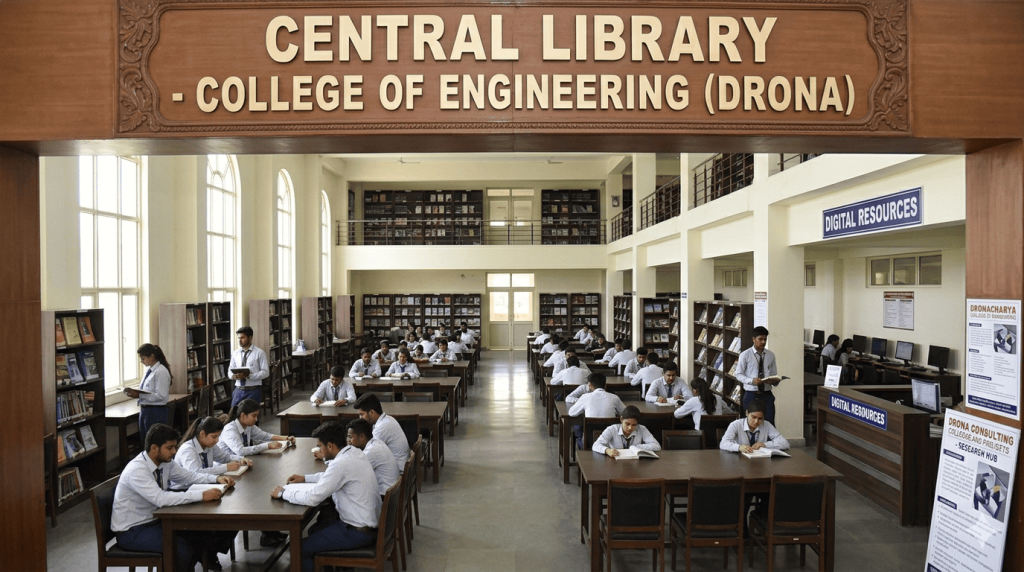
The vision of the Central Library at IIT is to become a globally recognized knowledge center that promotes excellence in education, research, and innovation. Its mission revolves around providing high-quality information resources, integrating modern technologies, and creating an environment that encourages lifelong learning.
The library aims to:
- Support teaching, learning, and research activities.
- Provide access to global knowledge resources.
- Encourage independent learning and critical thinking.
- Foster a culture of reading, research, and innovation.
Infrastructure and Facilities
The Central Library is designed with a modern architectural approach that combines functionality with comfort. Spacious reading halls, well-lit study areas, and ergonomic seating arrangements ensure a conducive environment for focused learning. The infrastructure is thoughtfully planned to accommodate large numbers of users without compromising on comfort or accessibility.
Key facilities include:
- Silent reading zones for uninterrupted study.
- Group discussion rooms for collaborative learning.
- Digital resource centers equipped with computers and internet access.
- Dedicated research sections for advanced scholars.
- Comfortable seating areas for long study hours.
The ambiance of the library promotes concentration and intellectual engagement, making it a preferred space for students and researchers alike.
Collection and Resources
One of the strongest aspects of the Central Library is its extensive and diverse collection of resources. The library continuously updates its collection to keep pace with advancements in various fields of study.
Print Resources
The library houses thousands of books covering a wide range of disciplines such as engineering, technology, management, science, humanities, and social sciences. These include:
- Core textbooks aligned with academic curricula.
- Reference materials like encyclopedias, dictionaries, and handbooks.
- Competitive exam preparation books.
- Rare and specialized collections for advanced research.
Digital Resources
In the digital age, access to electronic resources is crucial. The Central Library provides:
- E-books and online journals.
- Access to international research databases.
- Digital repositories of theses and dissertations.
- Online learning platforms and academic tools.
Students and faculty can access these resources remotely, ensuring continuous learning beyond physical boundaries.
Journals and Periodicals
The library subscribes to numerous national and international journals, magazines, and periodicals. These resources help users stay updated with the latest developments, research trends, and innovations in their respective fields.
Role in Academic Development
The Central Library plays a critical role in supporting the academic journey of students. It complements classroom teaching by providing additional learning materials and references. Students can deepen their understanding of subjects, explore new topics, and enhance their knowledge through independent study.
For faculty members, the library serves as a resource center for preparing lectures, conducting research, and publishing scholarly work. It enables them to stay informed about the latest advancements and integrate new knowledge into their teaching methodologies.
Research Support and Innovation
Research is a cornerstone of any reputed institution, and the Central Library at IIT actively contributes to fostering a research-driven environment. It provides access to high-quality research materials, enabling scholars to conduct in-depth studies and produce meaningful contributions to their fields.
Key research support services include:
- Access to scholarly databases and journals.
- Assistance in literature review and research methodology.
- Guidance on citation styles and academic writing.
- Plagiarism detection tools to ensure originality.
By offering these services, the library encourages innovation, critical thinking, and academic integrity.
Digital Transformation and Technology Integration
The Central Library has embraced digital transformation to enhance user experience and improve accessibility. Advanced library management systems allow users to search, locate, and reserve books efficiently.
Technological features include:
- Online Public Access Catalog (OPAC).
- Digital library portals.
- RFID-based book tracking systems.
- Remote access to e-resources.
- Automated circulation systems.
These innovations make the library more efficient, user-friendly, and aligned with modern educational needs.
User Services and Support
The Central Library is committed to providing excellent user services. Trained library staff assist users in locating resources, using digital tools, and navigating research databases.
Services offered include:
- Reference and information services.
- Book lending and renewal services.
- Inter-library loan facilities.
- Orientation programs for new users.
- Research assistance and consultation.
The staff ensures that every user receives the support they need to make the most of the library’s resources.
Importance for Students
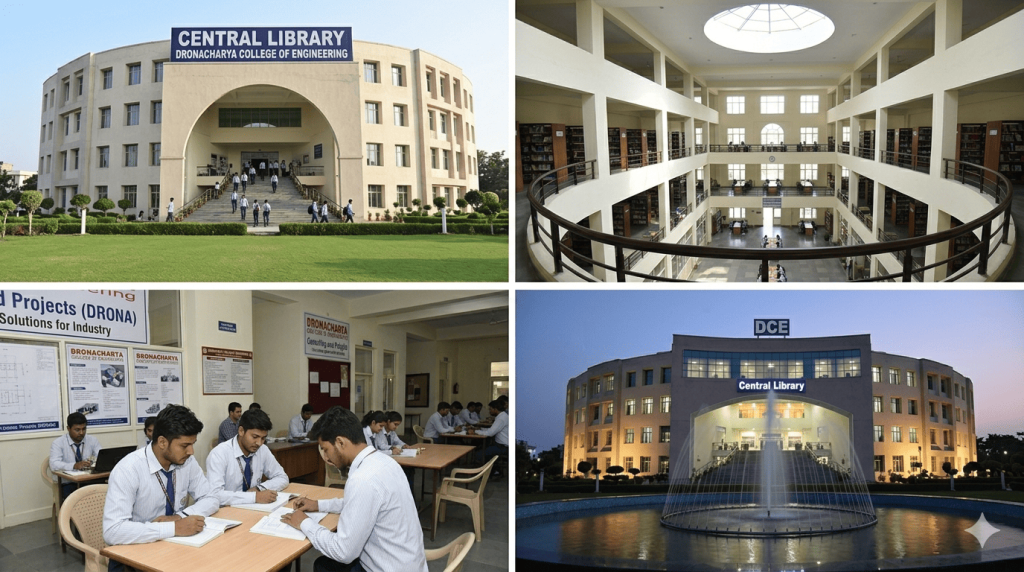
For students, the Central Library is more than just a study space—it is a gateway to knowledge and success. It helps them:
- Improve academic performance.
- Develop research and analytical skills.
- Prepare for competitive exams.
- Cultivate reading habits and intellectual curiosity.
The library encourages students to become independent learners, which is essential for long-term success in their careers.
Importance for Faculty and Researchers
Faculty members and researchers benefit immensely from the Central Library’s resources and services. It supports them in:
- Conducting advanced research.
- Publishing papers in reputed journals.
- Developing innovative teaching methods.
- Collaborating with global research communities.
The library acts as a bridge between knowledge creation and knowledge dissemination.
Promoting a Culture of Reading
The Central Library plays a significant role in promoting a culture of reading within the institution. Regular initiatives such as book exhibitions, reading sessions, and awareness programs encourage students to explore beyond their academic syllabus.
Reading not only enhances knowledge but also improves communication skills, creativity, and critical thinking. The library nurtures these qualities by providing a rich and engaging environment.
Accessibility and Inclusivity
The Central Library ensures that its resources and services are accessible to all users, including those with special needs. Efforts are made to create an inclusive environment where everyone can benefit from the available resources.
Features supporting accessibility include:
- User-friendly layouts.
- Digital access for remote learners.
- Assistive technologies where possible.
Challenges and Future Prospects
Like any modern academic facility, the Central Library faces challenges such as keeping up with rapidly changing technologies, managing vast amounts of digital data, and meeting the evolving expectations of users. However, it continuously adapts and innovates to overcome these challenges.
Future developments may include:
- Expansion of digital collections.
- Integration of artificial intelligence for resource management.
- Enhanced virtual learning support.
- Collaboration with global libraries and institutions.
These advancements will further strengthen the library’s role as a knowledge hub.
Contribution to Institutional Excellence
The Central Library significantly contributes to the overall reputation and excellence of IIT. A strong library system reflects the institution’s commitment to quality education and research. It attracts students, faculty, and researchers who value access to comprehensive academic resources.
The library’s impact extends beyond the campus, as it supports knowledge creation that benefits society at large.
Conclusion
The Central Library at the International Institute of Technology (IIT) stands as a powerful symbol of knowledge, progress, and academic excellence. It is far more than a physical space filled with books; it is a dynamic and evolving ecosystem that continuously nurtures learning, encourages innovation, and inspires discovery. As education moves beyond traditional boundaries, the role of the Central Library becomes even more significant in shaping an intellectually vibrant academic community.
At the heart of its contribution lies its ability to provide access to a vast and diverse range of resources. From foundational textbooks to advanced research publications, and from print materials to digital databases, the library ensures that users have the tools they need to succeed in a competitive and knowledge-driven world. This accessibility empowers students to deepen their understanding, broaden their perspectives, and engage with subjects at a much more meaningful level. It also supports faculty members in enhancing their teaching methodologies and conducting impactful research that contributes to academic and industrial advancement.
The integration of advanced technologies further strengthens the role of the Central Library as a modern knowledge hub. Digital platforms, automated systems, and remote access capabilities allow users to retrieve information quickly and efficiently, regardless of their physical location. This adaptability ensures that the library remains relevant in an era where digital learning and online research are becoming increasingly important. By embracing technological innovation, the library not only improves user experience but also prepares students to navigate the digital landscape with confidence and competence.
Another defining aspect of the Central Library is its commitment to providing dedicated support services. Whether it is assisting users in locating resources, guiding them through research processes, or helping maintain academic integrity, the library staff plays an essential role in enhancing the overall learning experience. These services create a supportive environment where individuals feel encouraged to explore, question, and grow academically.
The impact of the Central Library extends beyond individual success; it contributes significantly to the development of the institution as a whole. A strong and well-equipped library enhances the reputation of IIT by reflecting its commitment to quality education and research excellence. It attracts motivated students, skilled educators, and dedicated researchers who seek an environment that supports intellectual growth and innovation.
Most importantly, the Central Library plays a crucial role in shaping the future. By fostering critical thinking, independent learning, and a culture of inquiry, it prepares students to become responsible professionals, innovative thinkers, and lifelong learners. These individuals go on to contribute meaningfully to society, driving progress in various fields and addressing real-world challenges with knowledge and creativity.
Table of Contents