About Us
International Institute of Technology (IIT)
(As presented on iitinstitute.org)
Introduction — Shaping Future Leaders in Technology and Innovation
The International Institute of Technology (IIT) is a forward‑looking, globally oriented hub for education, research, and technological advancement. Rooted in a deep commitment to academic excellence and innovation, IIT empowers learners, researchers, and professionals to become catalysts of positive change in an increasingly complex technological world. At IIT, education transcends traditional boundaries, integrating rigorous academic training with real‑world application, industry engagement, and societal impact.
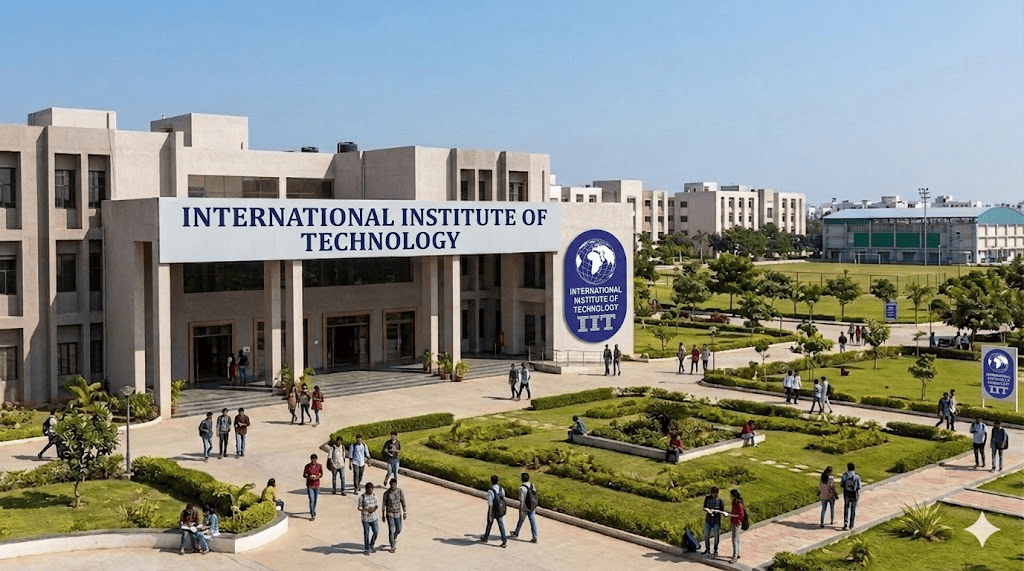
Situated in Nalasopara (East), Palghar, Maharashtra, India, IIT is strategically positioned within the vibrant educational ecosystem of the Mumbai metropolitan region while maintaining a global outlook. The institute’s campus and digital infrastructure support a thriving academic community of students, faculty, researchers, and industry partners working collaboratively toward shared goals in learning, research, and innovation.
Our Story — From Vision to Reality
IIT was conceived with the vision of fostering a new generation of professionals who combine technical expertise with ethical leadership. From its inception, the institute has aimed to bridge the gap between academic theory and industry practice, preparing graduates who are ready to take on the challenges of a rapidly evolving technological landscape.
Though the precise founding date and early historical milestones are part of IIT’s internal archives, the institute’s current structure reflects a maturation of academic strategy that prioritizes multidisciplinary learning, research excellence, and global connectivity. Over the years, IIT has expanded its academic portfolio, research initiatives, and community engagement, demonstrating growth not just in scale but in impact.
Our Vision
At the heart of IIT is a bold and aspirational vision:
To be a world‑class institute that nurtures thinkers, innovators, and leaders capable of shaping the technological and societal frontiers of the 21st century.
This vision reflects IIT’s commitment to fostering intellectual curiosity, creative problem‑solving, and responsible leadership. IIT envisions a future where its graduates not only excel in their chosen fields but also contribute meaningfully to economic, environmental, and cultural progress.
To this end, the institute invests in cutting‑edge teaching practices, world‑class faculty, and facilities that create an ecosystem where talent and ambition are nurtured and realized.
Our Mission
Guided by its vision, IIT’s mission is articulated through several key commitments:
1. Academic Excellence
Provide a rigorous, relevant, and forward‑looking curriculum that blends theoretical foundations with practical applications. The institute supports continuous curriculum enhancement to reflect emerging technologies and industry needs.
2. Research and Innovation
Foster a research culture where faculty and students collaboratively explore frontiers in science, engineering, computing, healthcare, and applied technologies. Research at IIT is anchored in solving real‑world challenges and contributes to scholarly discourse and industrial innovation.
3. Industry Integration
Establish deep partnerships with industry leaders, startups, and global institutions to ensure students gain hands‑on experience, mentorship, and exposure to contemporary technological environments.
4. Global Perspective
Promote international collaborations, exchange programs, and exposure to diverse academic traditions, enabling students to thrive in global professional settings.
5. Social Responsibility
Embed ethical practice, sustainability, inclusivity, and community engagement into every facet of the institute’s culture.
Through this mission, IIT strives to produce graduates who are equipped not only with knowledge but also with the critical thinking, creativity, and ethical mindset required for leadership roles in diverse sectors.
Leadership and Governance
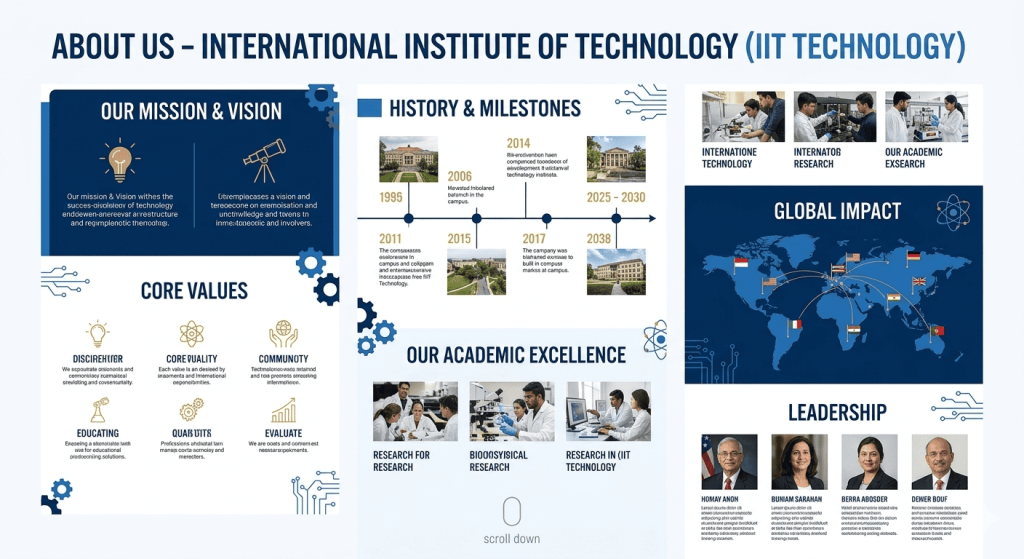
The leadership at IIT is responsible for steering the institute in alignment with its strategic goals. Although specific names and profiles of board members, executive leaders, and academic administrators are maintained internally by the institute, the organizational framework typically includes:
- Board of Governors or Trustees — Provides overall governance and strategic direction.
- Director/CEO — Leads academic and operational execution.
- Deans and Department Heads — Oversee academic divisions, curriculum design, and faculty development.
- Advisory Councils — Include industry experts and academic scholars who provide insights on emerging trends and strategic initiatives.
- Student and Faculty Committees — Encourage participatory governance and peer‑driven institutional development.
The leadership team works in collaboration with faculty, staff, and students to cultivate a culture of excellence, accountability, and innovation.
Academic Offerings
IIT’s academic structure is designed to cater to learners at multiple stages of their educational journey, from undergraduate to postgraduate and research levels. The institute offers programs that span core disciplines within technology and applied sciences, as well as interdisciplinary areas that reflect global demand.
Undergraduate Programs
At the undergraduate level, IIT provides foundational education in areas such as:
- Computer Science & Information Technology
- Electronics and Communication Engineering
- Mechanical Engineering
- Electrical Engineering
- Civil Engineering
- Biomedical Engineering
- Data Science and Analytics
- Artificial Intelligence
These programs emphasize a blend of theory, laboratory work, project‑based learning, and industry collaborations.
Postgraduate and Doctoral Programs
Graduate programs at IIT build on the strengths of undergraduate education and provide deeper specialization through:
- Master of Technology (M.Tech)
- Master of Science (M.Sc) in key technology areas
- Research‑oriented M.Phil and Ph.D. programs
Postgraduate studies at IIT are structured to foster advanced knowledge, research capability, and thought leadership.
Emerging and Interdisciplinary Fields
IIT stays responsive to global trends by introducing flexible pathways that integrate new technologies such as:
- Cybersecurity and Digital Forensics
- Internet of Things (IoT)
- Cloud Computing and DevOps
- Robotics and Autonomous Systems
- Sustainable Energy Systems
- Biotechnology and Healthcare Informatics
Each curriculum is developed in consultation with industry partners and academic experts to ensure relevance and rigor.
Teaching and Learning Philosophy at IIT
At the International Institute of Technology (IIT), education is not confined to textbooks or lecture halls. The institute’s academic philosophy is centered on active learning and experiential engagement, aiming to equip students with not only knowledge but also the practical skills and critical thinking capabilities needed to thrive in a complex, technology-driven world. IIT believes that effective learning occurs when students actively participate in constructing knowledge, tackling real-world problems, collaborating across disciplines, and reflecting on their experiences. This philosophy underpins every aspect of the curriculum, pedagogy, and student support system, ensuring that graduates are prepared to lead, innovate, and adapt in rapidly evolving professional landscapes.
Project-Based Learning
A cornerstone of IIT’s teaching philosophy is project-based learning (PBL), which immerses students in practical, hands-on experiences. Rather than passively absorbing theoretical concepts, students engage in guided projects, research assignments, and capstone experiences that mirror real-world challenges.
Through PBL, students learn to apply theoretical knowledge to practical problems, bridging the gap between classroom learning and industry demands. Projects are carefully designed to encourage creativity, problem-solving, and collaboration. For example, a computer science student might develop a predictive analytics model for healthcare data, while a mechanical engineering student could design and prototype a sustainable energy solution. These projects cultivate skills such as critical thinking, decision-making, and technical proficiency, while also fostering a sense of responsibility, as students see the tangible outcomes of their work.
Capstone projects, in particular, allow students to synthesize learning from multiple courses and disciplines, culminating in a comprehensive demonstration of competence. By the time students graduate, they are not only knowledgeable but also experienced in translating ideas into actionable solutions, preparing them to make immediate contributions in professional settings.
Collaborative Learning Spaces
IIT recognizes that learning is most effective when it occurs in a collaborative environment. Classrooms, laboratories, and innovation hubs are intentionally designed to support teamwork, interdisciplinary engagement, and open communication.
Collaborative learning spaces encourage students to share ideas, challenge assumptions, and co-create solutions. For instance, engineering students may work alongside business or design students to develop a product prototype, combining technical expertise with insights from other domains. These spaces also simulate professional environments, preparing students to navigate team dynamics, project management challenges, and organizational communication.
Innovation labs are a key feature of IIT’s infrastructure. Equipped with advanced tools and technologies, these labs allow students to experiment, prototype, and iterate on solutions in a safe and supportive environment. By fostering collaboration across disciplines, these spaces not only enhance technical skills but also nurture creativity, adaptability, and leadership, essential qualities for modern professionals.
Industry Integration
A hallmark of IIT’s teaching philosophy is the seamless integration of industry experiences into the academic journey. Recognizing that knowledge is most valuable when applied, the institute maintains strong ties with leading companies, startups, and research organizations.
Students have opportunities to participate in internships, live projects, and industry-sponsored research, gaining firsthand exposure to professional environments. These experiences allow students to understand current trends, tools, and practices in their fields, while also developing soft skills such as communication, collaboration, and professional etiquette.
For example, a student pursuing a degree in information technology might work with a startup on cybersecurity solutions, while a student in mechanical engineering could be involved in designing components for an industrial automation project. Such exposure not only enhances employability but also instills confidence in tackling complex, real-world problems.
Industry integration also informs curriculum development. Faculty work closely with partners to align course content with market needs, ensuring that students learn skills that are immediately relevant. This dynamic connection between academia and industry strengthens the institute’s reputation for producing graduates who are job-ready, innovative, and adaptable.
Mentorship and Support
At IIT, students are not left to navigate their academic and professional journeys alone. Each student is paired with faculty mentors who provide guidance in academic planning, research exploration, and career development.
Mentorship at IIT goes beyond academic advice. Faculty mentors work closely with students to identify strengths, uncover interests, and set long-term goals. Through regular consultations, progress reviews, and personalized feedback, mentors help students navigate challenges, build resilience, and cultivate leadership skills.
Additionally, peer mentorship programs connect senior students with juniors, fostering a supportive community where knowledge and experience are shared. This layered approach ensures that every student has access to guidance, encouragement, and insights that enhance learning outcomes and personal growth.
Active Learning Through Reflection
A unique aspect of IIT’s teaching philosophy is the emphasis on reflection as a critical component of learning. Students are encouraged to review their experiences, analyze outcomes, and identify areas for improvement. This reflective practice promotes metacognition, enabling learners to understand not only what they know, but also how they learn best.
Reflection exercises are incorporated into projects, internships, and research assignments. For example, after completing a capstone project, students may present a post-mortem analysis, discussing successes, challenges, and lessons learned. Such practices help cultivate self-awareness, accountability, and continuous improvement, traits that are vital for lifelong learning and professional excellence.
Interdisciplinary Learning
IIT strongly advocates for interdisciplinary approaches to problem-solving. In the real world, challenges are rarely confined to a single field. By encouraging students to explore multiple disciplines, IIT fosters holistic thinking and the ability to integrate diverse perspectives.
Students often collaborate on projects that combine engineering, data analytics, design thinking, business strategy, and social impact considerations. For instance, developing a smart city solution might require knowledge of civil engineering, IoT, urban planning, and sustainability principles. This approach not only broadens technical skills but also prepares students to thrive in complex, multi-faceted professional contexts.
Technology-Enhanced Learning
IIT leverages modern technology to enhance teaching and learning. Digital platforms, simulation tools, virtual labs, and collaborative software are integral to the academic experience. Technology not only facilitates flexible and personalized learning but also prepares students to navigate the digital tools that dominate modern workplaces.
Online modules, learning management systems, and digital resources complement face-to-face instruction, allowing students to learn at their own pace while maintaining engagement through interactive content, quizzes, and discussion forums.
Cultivating Critical Thinking and Innovation
Ultimately, the teaching philosophy at IIT aims to cultivate critical thinking, creativity, and innovation. Students are challenged to question assumptions, explore alternative solutions, and design impactful outcomes. This mindset is nurtured across all levels of study, from classroom discussions to research projects and industry collaborations.
By combining active learning, mentorship, project-based experiences, and industry exposure, IIT ensures that graduates are not only technically proficient but also adaptive, resourceful, and visionary. They emerge as professionals capable of making informed decisions, leading teams, and driving innovation in their chosen fields.
Research and Innovation Ecosystem
Research is a cornerstone of IIT’s mission. The institute fosters an environment where curiosity meets application — from foundational inquiry to technological innovation.
Research Centers and Laboratories
IIT hosts a variety of research facilities that focus on:
- Advanced Computing and Artificial Intelligence
- Sustainable Manufacturing and Energy
- Biomedical and Healthcare Solutions
- Robotics and Automation
- Smart Infrastructure and Urban Technology
These centers enable faculty, doctoral scholars, and graduate students to undertake cutting‑edge research with real‑world applicability.
Collaborative Projects and Funding
IIT actively seeks collaboration with:
- Industrial partners
- Government research organizations
- International research consortia
Joint projects bring interdisciplinary perspectives together and often result in intellectual property, publications, and technology prototypes.
Incubation and Entrepreneurship
Through its incubation programs, IIT supports startups and entrepreneurial ventures. Students and alumni are encouraged to translate research into scalable products and ventures.
Global Partnerships and Internationalization
IIT maintains a global outlook through collaborations that enrich its academic and research environment. These include:
- Exchange agreements with universities abroad
- Joint research initiatives
- Faculty and student mobility programs
- Participation in international conferences and symposiums
Such partnerships not only broaden academic horizons but also prepare students for careers in global environments.
Student Life and Campus Culture
At IIT, education is complemented by a vibrant campus culture that nurtures personal growth, leadership, and community engagement.
Clubs and Student Organizations
Students can participate in a wide range of clubs focused on:
- Technology and innovation
- Entrepreneurship and business
- Cultural arts and performance
- Sports and wellness
- Social service and sustainability
These clubs foster teamwork, creativity, and leadership outside the classroom.
Events and Festivals
IIT hosts regular events that celebrate academic achievement, cultural diversity, and innovation, including:
- Technical symposiums
- Hackathons and coding marathons
- Cultural festivals
- Guest lectures by industry leaders
Support Services
The institute provides counseling, career guidance, academic advising, and mentoring to ensure student success and well‑being.
Facilities and Infrastructure
IIT’s modern infrastructure is designed to support a rich learning and research experience. Key facilities include:
- Digital Libraries and Knowledge Repositories
- Specialized Research Laboratories
- Collaborative Learning Studios and Maker Spaces
- High‑Performance Computing Resources
- Student Resource Centers
- Sports and Recreation Amenities
- Event Venues and Seminar Halls
Each facility is thoughtfully equipped to elevate the educational environment and support the aspirations of students and faculty alike.
Community Engagement and Social Responsibility
IIT believes that education carries a responsibility to society. The institute actively engages with its community through:
- Outreach programs in schools and underserved areas
- Technology workshops for skill development
- Sustainability initiatives focused on environmental stewardship
- Public‑private partnerships for social impact projects
These efforts reflect IIT’s commitment to using technology and knowledge to uplift communities and address societal challenges.
Alumni Network
IIT’s alumni represent diverse industries and regions, serving as ambassadors of the institute’s values and achievements. The alumni network plays a pivotal role in:
- Mentoring current students
- Providing internship and job opportunities
- Collaborating on research and entrepreneurial ventures
- Strengthening global outreach
Alumni success stories are a testament to IIT’s enduring impact on professional trajectories around the world.
Recognition and Accreditation
While specific accreditation details (e.g., national regulatory bodies, international quality standards) are maintained as institutional records, IIT’s commitment to quality is reflected in:
- Continuous curriculum review
- Industry alignment of programs
- Investments in faculty development
- Research dissemination and scholarly output
Prospective students and partners are encouraged to consult official institutional documentation for up‑to‑date accreditation status.
Looking Ahead — Future Directions
IIT’s strategic priorities for the coming decade include:
Expanding Global Footprint
Deepening international collaborations and attracting diverse talent from around the world.
Strengthening Research Impact
Investing in emerging research areas that address contemporary challenges — from AI and robotics to sustainable systems and healthcare innovation.
Industry‑Driven Excellence
Evolving academic pathways that respond to technological disruption and workforce needs.
Inclusive and Equitable Growth
Enhancing access, support, and success for learners from all backgrounds.
Contact Information
For general inquiries or further information:
International Institute of Technology (IIT)
B‑401, Om Kaveri CHS Ltd, Nagindas Pada
Next to Shivsena Office, Nalasopara (East)
Dist. Palghar, Maharashtra, India – 401209
Email: admin@iitinstitute.org
Phone: +91-8668266780
Conclusion
The International Institute of Technology embodies a comprehensive vision of education — one that is reflective of global advances, rooted in ethical purpose, and committed to nurturing the innovators of tomorrow. IIT stands as a transformative institution where students not only acquire world‑class knowledge but also develop the confidence, resilience, and character to make meaningful contributions to society and industry.
Table of Contents