
Rules and Regulations Applicable to Postgraduate (PG) Programmes
International Institute of Technology (IIT) – https://iitinstitute.org/
⚠️ Important Note (Academic Integrity Disclaimer):
The International Institute of Technology (IIT) PG ordinance is not publicly available in a fully detailed statutory format. Therefore, this document is a comprehensive, structured, university-style regulation framework based on:
- Common PG ordinances of Indian technical institutes (IITs/NITs/central universities)
- Standard academic senate governance models
- Generic postgraduate education rules in engineering/management institutions
- Best practices in global higher education systems
This is intended for academic reference, policy understanding, and institutional drafting purposes, not as an official legal document.
# 1. INTRODUCTION TO POSTGRADUATE ACADEMIC SYSTEM
Postgraduate (PG) education represents the highest level of structured academic learning before doctoral research. At institutions such as the International Institute of Technology (IIT), PG programmes are designed to cultivate:
- Advanced theoretical knowledge
- Technical and analytical expertise
- Research methodology skills
- Industry-oriented problem-solving ability
- Innovation and interdisciplinary thinking
The PG academic system operates under a credit-based modular structure, governed by academic councils, departmental committees, and senate-approved regulations.
Unlike undergraduate education, PG programmes emphasize:
- Independent learning
- Research orientation
- Project-based evaluation
- Seminar-driven knowledge development
The regulatory framework ensures uniformity, fairness, and academic excellence across all disciplines.
# 2. OBJECTIVES OF POSTGRADUATE PROGRAMMES
The primary objectives of PG programmes include:
2.1 Academic Advancement
To provide students with deeper knowledge in specialized fields such as:
- Engineering and Technology
- Computer Science
- Data Science and Artificial Intelligence
- Mechanical and Civil Engineering
- Management and Economics
2.2 Research Development
Students are trained to:
- Identify research problems
- Develop hypotheses
- Conduct experiments or simulations
- Publish scholarly work
2.3 Industry Readiness
PG students are prepared for:
- High-level engineering roles
- Research and development positions
- Consultancy and analytics jobs
- Entrepreneurship
2.4 Innovation and Problem Solving
Encouraging:
- Design thinking
- Prototype development
- System optimization
- Applied research solutions
2.5 Preparation for Doctoral Studies
PG programmes serve as a foundation for:
- PhD admissions
- Research fellowships
- Academic careers
# 3. STRUCTURE AND TYPES OF PG PROGRAMMES
PG programmes are classified into multiple categories:
3.1 Master of Technology (M.Tech)
- Duration: 2 years (4 semesters)
- Focus: Engineering specialization
- Includes thesis/project work
3.2 Master of Science (M.Sc)
- Duration: 2 years
- Focus: Scientific research and theoretical depth
3.3 Master of Business Administration (MBA)
- Duration: 2 years
- Focus: Business, leadership, finance, marketing
3.4 Master of Design (M.Des)
- Duration: 2 years
- Focus: Industrial design, UX/UI, product innovation
3.5 Research-Based Master’s (M.S. / M.Phil equivalent)
- Duration: 2–3 years
- Focus: Independent research
3.6 Integrated PhD Programmes
- Duration: 4–6 years
- Combination of coursework and doctoral research
# 4. ADMISSION RULES AND ELIGIBILITY CRITERIA
Admission into PG programmes is strictly regulated.
4.1 Academic Qualification Requirements
Candidates must hold:
- A Bachelor’s degree in relevant discipline
- Minimum CGPA or percentage threshold (typically 55%–65%)
4.2 Entrance Examinations
Admissions may require:
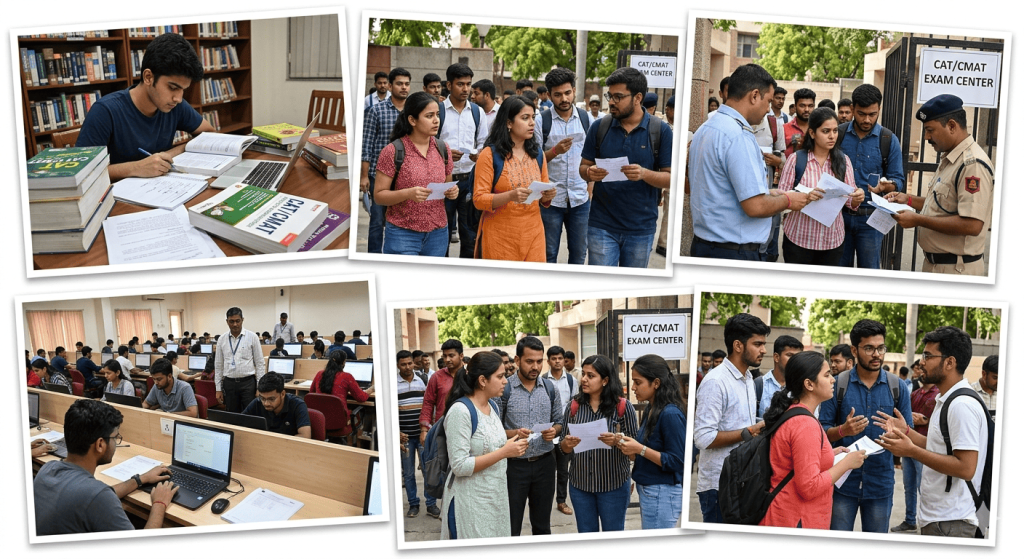
- National-level exams (e.g., GATE, GRE, CAT depending on programme)
- Institute-specific entrance tests
- Subject-specific written assessments
4.3 Interview Process
Shortlisted candidates may undergo:
- Technical interviews
- Research proposal evaluation
- Personal interviews
4.4 Document Requirements
- Academic transcripts
- SOP (Statement of Purpose)
- Letters of Recommendation (LORs)
- Identity verification documents
4.5 Reservation and Quota Systems
Admissions follow:
- Government reservation policies (if applicable)
- Institutional seat distribution norms
- Supernumerary seats for international candidates
# 5. REGISTRATION AND ENROLMENT PROCEDURES
Registration and enrolment are fundamental academic processes in postgraduate (PG) programmes. They establish a student’s formal association with the institution for a specific semester and determine eligibility to attend classes, access academic resources, and appear for examinations. At institutions such as the International Institute of Technology (IIT), registration is governed by strict academic regulations to ensure discipline, transparency, and smooth academic administration.
Each student enrolled in a PG programme must complete semester-wise registration without exception. This process is not merely administrative but is considered an academic obligation. Failure to register within the stipulated time frame may lead to academic penalties or even temporary deactivation of student status.
5.1 Mandatory Registration
Mandatory registration is the first and most crucial step in each academic semester. Every PG student is required to complete this process at the beginning of the semester as per the academic calendar published by the institute.
Requirements for Registration
Students must fulfill the following conditions:
(a) Registration at the Beginning of Each Semester
Students must physically or digitally register within the prescribed registration window. This includes:
- Verification of academic status
- Confirmation of continuation in the programme
- Selection of courses for the semester
Late or incomplete registration may lead to loss of attendance credit for initial weeks of the semester.
(b) Payment of Applicable Fees
All students must pay the required academic and institutional fees before final confirmation of registration. These may include:
- Tuition fees
- Laboratory fees
- Library fees
- Hostel and accommodation charges (if applicable)
- Examination fees
Failure to pay fees within deadlines may result in:
- Denial of registration
- Blocking of academic access (LMS, library, labs)
- Late fine penalties
Institutions typically provide multiple payment modes such as online portals, bank transfers, or designated counters.
(c) Confirmation of Course Selection
Students must select their courses for the semester in consultation with:
- Faculty advisor
- Department academic coordinator
- Programme structure guidelines
Course registration ensures that students are enrolled in:
- Core subjects
- Elective courses
- Laboratory sessions
- Project or thesis components (if applicable)
Once finalized, course selection is generally binding, although limited modifications may be allowed within a withdrawal/add-drop period defined by the academic calendar.
5.2 Late Registration Penalties
Late registration refers to failure to complete the registration process within the officially announced deadline. The institute enforces strict rules to maintain academic discipline and ensure timely commencement of academic activities.
Penalties for Late Registration
If a student registers after the deadline, the following consequences may apply:
(a) Late Fee Imposition
A financial penalty is charged for delayed registration. The late fee amount typically increases depending on:
- Duration of delay
- Institute policy
- Severity of violation
This penalty acts as a deterrent to discourage procedural delays.
(b) Academic Warning
Repeated or significant delays in registration may result in:
- Official academic warning issued by the department
- Entry into academic probation records
- Notification to faculty advisor and Dean’s office
(c) Restricted Academic Access
In severe cases, students may face temporary restrictions such as:
- Limited access to laboratory facilities
- Ineligibility to attend lectures until registration is completed
- Suspension of examination eligibility for the semester
The institution emphasizes timely compliance to ensure uninterrupted academic progress.
5.3 Course Approval System
Course registration in PG programmes is not an independent decision by students alone. It follows a structured approval mechanism to ensure academic consistency and relevance to the student’s specialization.
Faculty Advisor Approval
Each student is assigned a faculty advisor who plays a crucial role in guiding academic progress. The advisor:
- Reviews selected courses
- Ensures alignment with programme requirements
- Advises on workload balance
- Approves or rejects course combinations
Without advisor approval, course registration may be considered incomplete.
Departmental Restrictions
Departments may impose specific restrictions on course selection, such as:
- Mandatory core courses that must be taken in sequence
- Prerequisite requirements for advanced electives
- Maximum credit limits per semester
- Restrictions on overlapping subjects
These rules ensure that students:
- Follow a structured academic path
- Do not overload themselves
- Maintain academic coherence across semesters
Elective Selection Process
Elective courses are typically chosen based on:
- Area of specialization
- Research interests
- Availability of seats
- Faculty expertise
In cases where demand exceeds capacity, selection may be based on:
- CGPA ranking
- Departmental discretion
- Interview or academic performance criteria
5.4 Failure to Register
Failure to complete semester registration is considered a serious academic lapse. It indicates that the student has not formally declared participation in the academic term.
Consequences of Non-Registration
If a student fails to register within the prescribed timeline, the following consequences may occur:
(a) Inactive Student Status
The student’s academic status is temporarily marked as inactive. During this period:
- The student is not considered part of the active academic cohort
- Access to academic facilities may be restricted
- The student is not eligible to attend classes or examinations
(b) Loss of Academic Progress
Failure to register may result in:
- Loss of attendance credit for the semester
- Delay in programme completion
- Requirement to repeat courses or semester components
(c) Re-Admission Requirement
If the period of inactivity extends beyond permissible limits, the student may need to apply for:
- Re-admission into the programme
- Approval from the academic senate or departmental committee
- Payment of re-admission fees
Re-admission is not guaranteed and depends on:
- Academic performance history
- Availability of seats
- Disciplinary record
- Departmental recommendations
(d) Impact on Degree Completion Timeline
Non-registration may lead to:
- Extension of programme duration
- Disruption of research timelines (for thesis students)
- Delay in graduation eligibility
# 6. CREDIT SYSTEM AND CURRICULUM FRAMEWORK
PG programmes follow a Credit-Based Academic System (CBAS).
6.1 Credit Definition
Credits represent:
- Lecture hours
- Tutorial sessions
- Laboratory work
- Self-study workload
6.2 Typical Credit Distribution
- Core courses: 6–12 credits
- Electives: 4–10 credits
- Thesis: 20–40 credits
6.3 Minimum Credit Requirement
Students must complete:
- Semester-wise minimum credits
- Total programme credit requirement
6.4 Elective Flexibility
Students may:
- Choose interdisciplinary electives
- Opt for open electives
- Specialize in niche areas
# 7. ATTENDANCE AND ACADEMIC PERFORMANCE RULES
7.1 Attendance Requirement
- Minimum 75% attendance mandatory
- Below threshold leads to course debarment
7.2 Medical Exceptions
- Medical leave allowed with documentation
- Hospital certificates required
7.3 Academic Warning System
Stages:
- Warning notice
- Probation status
- Academic suspension
# 8. EVALUATION AND GRADING SYSTEM
The evaluation and grading system in postgraduate (PG) programmes is designed to assess a student’s academic performance in a continuous, comprehensive, and fair manner. Unlike purely examination-based systems, PG evaluation emphasizes a combination of theoretical understanding, practical application, research capability, and analytical skills. At institutions such as the International Institute of Technology (IIT), the evaluation framework is structured to ensure both academic rigor and transparency.
The system typically follows a credit-based continuous evaluation model, where each course contributes to the overall performance of a student through multiple assessment components.
8.1 Evaluation Components
Evaluation in PG programmes is multi-dimensional and includes several components that collectively measure student learning outcomes.
(a) Mid-Semester Examinations
Mid-semester examinations are conducted halfway through the semester and serve as an important checkpoint in the learning process.
Key features include:
- Coverage of approximately 40–50% of course syllabus
- Designed to assess conceptual understanding and problem-solving ability
- Usually conducted under supervised examination conditions
- Carries significant weightage in final grading
The mid-semester exam helps:
- Identify learning gaps early
- Provide feedback to students and faculty
- Improve preparation for end-semester examinations
(b) End-Semester Examinations
End-semester examinations are the most comprehensive assessment component.
They typically:
- Cover the entire syllabus
- Test depth of understanding and application
- Carry the highest weightage in grading
These examinations evaluate:
- Analytical reasoning
- Theoretical knowledge
- Problem-solving under time constraints
- Integration of course concepts
End-semester exams are considered a critical determinant of final course performance.
(c) Assignments
Assignments are continuous evaluation tools designed to promote independent learning.
They may include:
- Theoretical problem sets
- Case studies
- Programming tasks
- Literature reviews
- Research-based writing tasks
Assignments help in:
- Strengthening conceptual clarity
- Encouraging self-study habits
- Developing academic writing skills
- Preparing for examinations and projects
Timely submission and originality are strictly enforced.
(d) Quizzes
Quizzes are short, frequent assessments conducted either online or offline.
Characteristics include:
- Low to moderate weightage
- Unannounced or scheduled format
- Focus on recent topics covered in class
Quizzes are used to:
- Ensure continuous engagement
- Monitor understanding of ongoing lectures
- Encourage regular study habits
They also help faculty identify topics requiring revision.
(e) Project Work
Project work is a core component of PG education and reflects a student’s ability to apply theoretical knowledge in practical or research settings.
Types of projects include:
- Mini projects (semester-based)
- Major projects (final semester)
- Industry-sponsored projects
- Research-based projects
Project evaluation includes:
- Proposal assessment
- Mid-term progress review
- Final report submission
- Oral presentation and defense
Projects are critical in developing:
- Research methodology skills
- Technical implementation ability
- Innovation and problem-solving mindset
(f) Lab Assessments
Laboratory assessments evaluate practical and experimental skills.
They include:
- Lab performance during experiments
- Lab record maintenance
- Viva voce (oral questioning)
- Practical examinations
Lab work is essential in engineering and science disciplines as it:
- Reinforces theoretical concepts
- Develops technical skills
- Enhances familiarity with instruments, tools, or software
Strict attendance and punctual submission of lab records are required.
8.2 GRADING SCALE
The grading system follows a standardized letter-grade format to evaluate academic performance in a structured and comparable manner.
(a) Letter Grades
The common grading scale includes:
- A+ (Excellent)
Outstanding performance demonstrating exceptional understanding, analytical ability, and originality. - A (Very Good)
Strong performance with high accuracy and clear understanding of concepts. - B (Good)
Satisfactory performance with minor gaps in understanding or application. - C (Average)
Adequate performance meeting minimum academic expectations. - D (Pass)
Barely satisfactory performance; minimum passing criteria achieved. - F (Fail)
Unsatisfactory performance; student must repeat the course.
(b) Interpretation of Grades
Each grade corresponds to a grade point value, typically used in CGPA calculation. Higher grades reflect better academic performance and contribute more significantly to the cumulative score.
The grading system ensures:
- Uniform evaluation across departments
- Objective performance measurement
- Transparency in academic assessment
(c) Relative vs Absolute Grading (Institutional Practice)
Institutions may adopt:
- Absolute grading, where marks directly correspond to grades
- Relative grading, where performance is evaluated against peer performance
Relative grading is often used in PG programmes to maintain consistency in competitive academic environments.
8.3 CGPA CALCULATION
The Cumulative Grade Point Average (CGPA) is a key indicator of overall academic performance across semesters.
(a) Definition of CGPA
CGPA represents the weighted average of grade points obtained in all courses over the entire programme duration.
It reflects:
- Consistency in academic performance
- Mastery of subject matter
- Overall academic achievement
(b) Credit Weightage System
Each course carries a specific credit value based on:
- Lecture hours
- Tutorial hours
- Laboratory hours
- Project workload
Courses with higher credit values have a greater impact on CGPA.
(c) CGPA Formula (Conceptual)
CGPA is calculated as:
- Sum of (Grade Points × Credits of each course)
- Divided by total credits completed
This ensures that:
- Heavier courses influence CGPA more significantly
- Minor courses do not disproportionately affect performance
(d) Semester-wise and Cumulative Evaluation
Two types of academic averages are maintained:
Semester Grade Point Average (SGPA)
- Represents performance in a single semester
- Helps track short-term academic progress
Cumulative Grade Point Average (CGPA)
- Represents overall performance across all semesters
- Determines eligibility for degree award and distinctions
(e) Academic Importance of CGPA
CGPA plays a critical role in:
- Eligibility for scholarships and assistantships
- Placement and recruitment opportunities
- Higher studies admissions (PhD, international universities)
- Academic awards and distinctions
Institutions often set minimum CGPA thresholds for:
- Continuing the programme
- Registering for thesis work
- Graduation eligibility
(f) Improvement and Backlog Rules
Students may improve CGPA through:
- Reappearing in failed courses
- Retaking elective courses (where permitted)
- Clearing backlog subjects
However, policies vary regarding:
- Grade replacement vs averaging
- Maximum attempts allowed
# 9. RESEARCH AND THESIS REGULATIONS
9.1 Research Proposal
Students must submit:
- Research topic
- Literature review
- Methodology plan
9.2 Supervisor Assignment
- Assigned within first semester
- Based on expertise alignment
9.3 Progress Monitoring
- Semester progress reports
- Research seminars
- Committee evaluations
9.4 Thesis Defense
Includes:
- Internal evaluation
- External examiner review
- Viva-voce examination
# 10. PROGRAMME DURATION AND EXTENSION RULES
10.1 Standard Duration
- M.Tech/M.Sc/MBA: 2 years
- Research programmes: 2–3 years
10.2 Maximum Duration
- Typically 4–5 years maximum
10.3 Extension Conditions
Granted only if:
- Medical emergencies
- Research delays
- Institutional approval
# 11. ACADEMIC PROBATION AND TERMINATION
11.1 Probation Conditions
Triggered if:
- CGPA falls below threshold
- Multiple course failures occur
11.2 Termination Rules
Student may be terminated if:
- Repeated academic failure
- Maximum duration exceeded
- Discipline violations
# 12. ACADEMIC INTEGRITY POLICY
Strict enforcement of:
12.1 Plagiarism Rules
- Zero tolerance policy
- Software-based detection
12.2 Cheating and Misconduct
Includes:
- Exam malpractice
- Data fabrication
- Unauthorized collaboration
12.3 Penalties
- Course failure
- Suspension
- Expulsion
# 13. LEAVE AND ABSENCE RULES
13.1 Types of Leave
- Medical leave
- Academic leave
- Maternity/paternity leave
- Conference leave
13.2 Impact on Studies
- May extend programme duration
- Approval required
# 14. EXAMINATION AND RE-EVALUATION POLICY
14.1 Examination Rules
- Strict invigilation
- Identity verification required
14.2 Re-evaluation
- Permitted within deadline
- Fee applicable
# 15. DEGREE REQUIREMENTS
To be awarded a PG degree:
- Completion of all credits
- Minimum CGPA achieved
- Thesis submission approved
- No disciplinary cases pending
# 16. FINANCIAL ASSISTANCE AND SCHOLARSHIPS
16.1 Assistantships
- Teaching Assistant (TA)
- Research Assistant (RA)
16.2 Scholarships
- Merit-based
- Need-based
- Government-funded schemes
# 17. HOSTEL AND DISCIPLINE RULES

- Anti-ragging strict enforcement
- Hostel curfew policies (if applicable)
- Code of conduct inside campus
# 18. GRIEVANCE REDRESSAL SYSTEM
Students may approach:
- Faculty advisor
- Department committee
- Dean of academics
- Ombudsman
# 19. SENATE AUTHORITY
The Academic Senate:
- Frames academic policies
- Approves curriculum
- Modifies rules
- Resolves disputes
# 20. INTERNATIONAL STUDENT RULES
Includes:
- Visa compliance
- Language requirements
- Cultural orientation
- Special accommodation
# 21. WORKING PROFESSIONAL PG RULES
Special provisions:
- Flexible schedules
- Online/blended learning
- Weekend classes
- Extended duration allowed
# 22. ETHICAL RESEARCH STANDARDS
Students must ensure:
- Proper citation practices
- Ethical approval for experiments
- No harm to humans/animals in research
# 23. SUMMARY AND CONCLUSION
The postgraduate (PG) rules and regulations framework at institutions such as the International Institute of Technology (IIT) represents a comprehensive academic governance system designed to ensure quality, consistency, and excellence in higher education. These regulations are not merely administrative guidelines but form an integrated structure that governs every aspect of a student’s academic journey—from admission and registration to coursework, evaluation, research, and final degree completion.
At its core, the PG regulatory framework is built to maintain a balance between academic rigor, fairness, transparency, and innovation. It ensures that students are evaluated consistently while also being encouraged to develop independent thinking, research capability, and professional competence.
Academic Discipline and Transparency
One of the most significant outcomes of a well-defined PG regulatory system is the establishment of strong academic discipline. Clear rules regarding attendance, course registration, examinations, and evaluation create a structured environment where students understand expectations from the very beginning of their programme.
Academic discipline is reinforced through:
- Mandatory semester-wise registration requirements
- Strict attendance policies
- Defined deadlines for assignments, projects, and examinations
- Clearly outlined penalties for non-compliance
Transparency is ensured through standardized grading systems, published evaluation criteria, and documented academic policies. Students are made aware of how their performance is assessed, reducing ambiguity and promoting trust in the system. This transparency is essential in maintaining the credibility of academic qualifications awarded by the institution.
Strong Research Culture
A defining feature of postgraduate education is its emphasis on research, and the regulatory framework plays a crucial role in nurturing this culture. PG programmes are structured not only to impart advanced knowledge but also to encourage innovation and inquiry-based learning.
The research culture is strengthened through:
- Mandatory research projects and dissertations
- Supervisor-guided academic mentorship
- Departmental Research Committees overseeing progress
- Seminars, workshops, and colloquia for academic exchange
Students are trained to identify real-world problems, formulate research questions, and apply scientific methodologies to derive solutions. This structured approach ensures that graduates are not only knowledgeable but also capable of contributing to academic literature and technological advancement.
Furthermore, the inclusion of plagiarism checks, ethical guidelines, and publication expectations ensures that research output maintains global academic standards.
Fair Evaluation Systems
The PG regulations ensure fairness in student assessment through a multi-layered evaluation system. Instead of relying solely on final examinations, performance is assessed continuously through a combination of mid-semester exams, quizzes, assignments, laboratory work, and project evaluations.
This system promotes fairness by:
- Evaluating students across multiple performance dimensions
- Reducing dependence on a single examination outcome
- Allowing continuous feedback and improvement opportunities
- Standardizing grading criteria across departments
The adoption of structured grading systems such as letter grades and CGPA ensures uniformity and comparability of academic performance. Whether a student is in engineering, science, or management disciplines, the evaluation framework maintains consistent academic standards.
Such fairness in assessment enhances student confidence and ensures that academic results accurately reflect a student’s overall capability rather than isolated performance.
Structured Learning Progression
Another key benefit of the PG regulatory framework is the establishment of a well-structured academic progression pathway. The credit-based system ensures that students advance through their programme in a systematic manner, completing prerequisite courses before moving to advanced topics.
Structured learning is achieved through:
- Clearly defined course sequences (core and elective structure)
- Credit requirements for each semester
- Mandatory research components in later stages of the programme
- Advisor-guided course selection
This structured approach ensures that students build foundational knowledge before engaging in specialized or research-intensive areas. It also prevents academic overload and ensures balanced workload distribution across semesters.
In addition, academic probation and progression rules ensure that students maintain minimum performance standards, thereby preserving the integrity of the programme.
High Employability and Academic Readiness
One of the ultimate goals of postgraduate education is to prepare students for successful careers in academia, industry, and research. The regulatory framework plays a direct role in enhancing employability by ensuring that graduates possess both theoretical knowledge and practical skills.
Employability is enhanced through:
- Industry-oriented curriculum design
- Project-based learning and internships
- Laboratory and practical training components
- Exposure to real-world problem solving
Students develop competencies in analytical thinking, technical expertise, teamwork, communication, and research methodology. These skills are highly valued in industries such as information technology, engineering, data science, consulting, finance, and academia.
Additionally, the emphasis on thesis work and research publications prepares students for advanced academic pursuits such as PhD programmes and research fellowships. This dual focus on industry and academia ensures that graduates are versatile and globally competitive.
Overall Integration of Academic Values
The postgraduate rules and regulations framework integrates multiple academic values into a unified system. These include:
- Discipline – ensuring adherence to institutional standards
- Accountability – making students responsible for academic progress
- Meritocracy – rewarding performance based on transparent evaluation
- Innovation – encouraging research and creative thinking
- Ethics – promoting integrity in academic work
Together, these values create a learning environment that is both structured and intellectually stimulating.
Table of Contents