
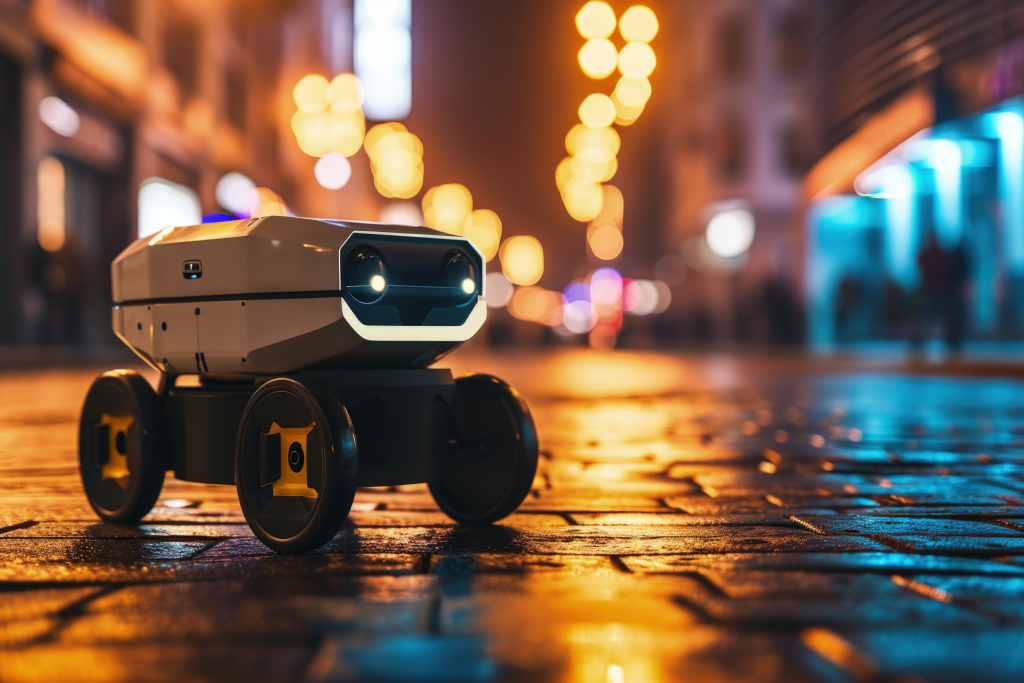
Autonomous Robotics
Autonomous robotics refers to a field of robotics focused on creating robots that can perceive their environment, make decisions, and execute tasks independently, without continuous human supervision or direct control. Unlike traditional automated robots that often follow pre-programmed paths or require human input for every change, autonomous robots use a combination of sensors, artificial intelligence (AI), and advanced control systems to adapt to dynamic environments and perform complex operations. Key Characteristics of Autonomous Robotics: Autonomous vs. Automated Robots: It’s crucial to distinguish autonomous robots from mere automated robots: Feature Automated Robots Autonomous Robots Human Intervention Requires significant human involvement (programming, monitoring, direct control). Requires minimal to no human intervention once initialized. Guidance Follow pre-programmed instructions or physical guides (tapes, beacons). Use sensors and AI to understand their environment and navigate independently. Adaptability Limited ability to adapt to changes; typically rigid. Highly adaptable to dynamic and unstructured environments. Decision-Making Executes pre-defined tasks; limited real-time decision-making. Makes real-time decisions based on perceived environment and goals. Intelligence Primarily programmed logic. Leverages AI, machine learning, and deep learning for intelligent behavior. Complexity Generally simpler in terms of sensing and processing. More complex with advanced sensor fusion and AI algorithms. Examples Traditional robotic arms on an assembly line performing repetitive spot welding. Self-driving cars, warehouse AMRs, surgical robots, exploration rovers. Export to Sheets Industrial Applications of Autonomous Robotics: Autonomous robots are transforming industries by enhancing efficiency, safety, and productivity: Challenges of Autonomous Robotics: Despite their immense potential, autonomous robots face several challenges: Future of Autonomous Robotics, especially in India: The future of autonomous robotics is bright and rapidly expanding, with India poised to play a significant role: India has the opportunity to move from being a consumer to a significant creator and exporter of autonomous robotic solutions, especially in areas like logistics, smart farming, and specialized service robotics, tailored to its unique industrial and societal needs. What is Autonomous Robotics? Autonomous robotics is a branch of robotics focused on creating robots that can operate independently and intelligently in dynamic environments, without direct and continuous human supervision. The core idea is for robots to be able to perceive, understand, decide, and act on their own, adapting to changes in their surroundings. Here’s a breakdown of what defines autonomous robotics: 1. Independent Operation (Autonomy): The most crucial characteristic. Once an autonomous robot is given a goal or mission, it should be able to execute it without a human constantly telling it what to do next. This is in contrast to traditional industrial robots that follow pre-programmed, rigid sequences of movements. 2. Perception of Environment: Autonomous robots are equipped with a variety of sensors to gather information about their surroundings. These sensors act as the robot’s “senses,” allowing it to “see,” “hear,” and “feel” its world. Common sensors include: 3. Intelligence (AI & Machine Learning): This is the “brain” of the autonomous robot. AI and ML algorithms are used to: 4. Adaptability: Unlike fixed automation that struggles with any deviation from its programmed routine, autonomous robots can adjust their behavior in response to changes. If an obstacle appears in its path, it can re-plan its route. If lighting conditions change, its vision system can compensate. 5. Self-Sufficiency (in some cases): Highly autonomous robots might also manage their own power (e.g., return to a charging station), perform self-diagnostics, or even recover from minor errors without human intervention. Autonomous vs. Automated: It’s important to differentiate: Examples of Autonomous Robots: In essence, autonomous robotics represents a significant leap from simple automation to intelligent, independent machine operation, paving the way for robots to operate in more complex, dynamic, and human-centric environments. Who is require Autonomous Robotics? Courtesy: AI IXX Autonomous robotics is not a luxury, but an increasingly vital requirement for a wide range of industries and organizations that need to achieve: Here’s a detailed breakdown of “who” requires autonomous robotics: 1. Manufacturing Sector: 2. Logistics and Warehousing: 3. Healthcare Sector: 4. Agriculture (AgriTech): 5. Infrastructure Inspection and Maintenance: 6. Defense and Security: 7. Service Industries (Emerging): In essence, any organization that faces challenges with efficiency, safety, labor availability, consistency, or the need to operate in complex/hazardous environments is increasingly requiring autonomous robotics as a core part of its operational strategy. Sources When is require Autonomous Robotics? Autonomous robotics isn’t required “at a specific time” in the sense of a scheduled event. Instead, its requirement arises when the current methods of operation fall short of desired levels of efficiency, safety, cost-effectiveness, or precision, particularly in dynamic and complex environments. Here’s a breakdown of when autonomous robotics becomes a requirement, defined by the challenges it solves: 1. When Operations are Too Slow or Inefficient: 2. When Tasks are Dangerous, Hazardous, or Physically Demanding: 3. When Precision, Consistency, and Quality are Paramount: 4. When Labor Shortages or High Labor Costs are a Challenge: 5. When Flexibility and Adaptability in Dynamic Environments are Needed: 6. When Data Collection and Analysis for Optimization are Crucial: In summary, autonomous robotics becomes a strategic imperative when organizations aim to move beyond the limitations of manual labor and traditional automation, seeking to unlock new levels of performance, safety, and adaptability in complex and evolving operational landscapes. It’s about moving from doing things “better” to doing them “intelligently and independently.” Sources Where is require Autonomous Robotics? Autonomous robotics is required across a wide spectrum of industries and environments where current methods are insufficient in terms of safety, efficiency, precision, or labor availability. Its application is truly global and rapidly expanding, as organizations seek to automate complex, dynamic, and often hazardous tasks. Here’s a breakdown of where autonomous robotics is required, with a particular focus on the Indian context: 1. Manufacturing Facilities (India & Global): 2. Warehouses and Logistics Hubs (India & Global): 3. Healthcare Facilities (India & Global): 4. Agriculture (India & Global): 5. Hazardous and Remote Environments: 6. Defense and Security (India & Global): 7. Service Industries (Emerging): In summary, autonomous robotics is required wherever there’s a compelling need to transcend human limitations (safety, endurance, precision, speed) and