Videos And Books
| Sr. No. | Title | Publications/ Films | URL |
| 1) | H.C. Verma Physics | Publications | https://books.google.co.in/ |
| 2) | M.L. Khanna Maths | Publications | https://books.google.co.in/ |
| 3) | I.A. Maron Calculus | Publications | https://books.google.co.in/ |
| 4) | Problems in Physics – I.E. Irodov | Publications | https://books.google.co.in/ |
| 5) | O.P. Tandon Physical Chemistry | Publications | https://books.google.co.in/ |
| 6) | NPTEL (IIT official) | Films | NPTEL IIT Bombay |
| 7) | Physics Wallah (PW) | Films | Physics Wallah Foundation |
| 8) | Khan Academy | Films | Khan Academy |
| 9) | Learn Engineering (YouTube) | Films | Learning Engineering |
| 10) | Crash Course (Science Basics) | Films | CrashCourse |
📘 Detailed Explanation of Each Resource
1. H.C. Verma – Physics (Conceptual Foundation)
The physics textbook written by H.C. Verma is considered one of the most essential resources for students preparing for IIT-JEE and other engineering entrance examinations.
This book is widely respected because it builds strong conceptual foundations rather than rote memorization. Physics, being a subject that combines mathematics and real-world phenomena, requires deep understanding, and this book is designed exactly for that purpose.
📌 Key Strengths:
- Strong focus on conceptual clarity
- Step-by-step explanation of physical laws
- Balanced mix of theory and numerical problems
- Real-life applications of physics principles
📘 Content Coverage:
The book is divided into two volumes covering:
- Mechanics (motion, force, energy, momentum)
- Thermodynamics
- Waves and oscillations
- Electricity and magnetism
- Modern physics concepts
🎯 Importance for Students:
Students often use this book as their first serious physics reference after school textbooks. It helps bridge the gap between basic understanding and advanced IIT-level problem solving.
2. M.L. Khanna – Mathematics Strength Builder
The mathematics resource by M.L. Khanna is designed to strengthen problem-solving ability through structured practice.
Unlike theory-heavy books, this one emphasizes skill development through repeated practice.
📌 Key Features:
- Covers algebra, calculus, geometry, and trigonometry
- Gradual increase in difficulty level
- Large number of practice problems
- Focus on exam-oriented preparation
🧠 Learning Benefits:
- Improves calculation speed
- Enhances accuracy in solving equations
- Builds confidence for competitive exams
- Strengthens core mathematical thinking
🎯 Usage Strategy:
Students typically use this book after understanding basic concepts from classroom lectures or simpler textbooks. It is ideal for daily practice and revision.
3. I.A. Maron – Calculus Mastery
The calculus book by I.A. Maron is an advanced-level mathematics book used for engineering and higher studies.
📌 Key Highlights:
- Detailed explanation of differential calculus
- Integral calculus with applications
- Mathematical proofs and derivations
- Engineering-level problem solving
📘 Learning Approach:
This book is more theoretical compared to typical coaching material. It encourages students to understand:
- Why formulas work
- How calculus is derived
- Logical structure behind mathematical methods
🎯 Importance:
It is highly useful for students aiming to develop strong analytical thinking skills, especially in engineering branches like mechanical, electrical, and computer science.
4. I.E. Irodov – Advanced Physics Problems
The physics problem book by I.E. Irodov is famous for its extremely challenging questions.
📌 Key Features:
- High difficulty-level numerical problems
- Multi-step reasoning required
- Concept integration from different topics
- Focus on deep understanding
🧠 Why It Is Important:
This book is not for beginners. It is used after mastering basic and intermediate physics concepts. It trains students to:
- Think critically under pressure
- Solve complex multi-concept problems
- Improve exam stamina and accuracy
🎯 Exam Relevance:
It is especially useful for students aiming for top IIT ranks, where questions require deep conceptual application rather than direct formulas.
5. O.P. Tandon – Chemistry Excellence
The chemistry textbook by O.P. Tandon is widely used for physical chemistry preparation.
📌 Key Features:
- Strong theoretical explanations
- Focus on chemical laws and principles
- Numerical problem sets
- Reaction mechanism clarity
📘 Subject Coverage:
- Physical chemistry (thermodynamics, equilibrium)
- Organic chemistry basics
- Inorganic chemistry fundamentals
🎯 Learning Value:
It helps students understand chemistry logically rather than memorizing reactions. It is especially useful for mastering numerical-based chemistry questions in competitive exams.
6. NPTEL – IIT-Based Video Learning
The NPTEL is one of India’s most powerful online education platforms.
📌 Key Features:
- Video lectures by IIT professors
- Structured course modules
- Free access to engineering content
- Certification programs available
🎥 Learning Style:
Each course is divided into weekly lectures, assignments, and quizzes, making it similar to a full university semester.
🎯 Benefits:
- Helps students learn directly from IIT faculty
- Useful for revision and advanced understanding
- Supports self-paced learning
7. Physics Wallah – Competitive Exam Learning Videos
The education platform Physics Wallah is widely popular among Indian students preparing for JEE and NEET exams.
📌 Features:
- Simple explanation of complex topics
- Affordable or free courses
- Structured exam preparation content
- Regular revision sessions
🎯 Importance:
It is especially useful for students who need easy-to-understand explanations and motivational learning support.
8. Khan Academy – Global Learning Platform
The platform Khan Academy is internationally recognized for its structured learning system.
📌 Features:
- Step-by-step video lessons
- Interactive exercises
- Wide subject coverage
- Free global access
🎯 Strength:
It is ideal for beginners because it explains concepts slowly and clearly, making difficult subjects easy to understand.
9. Learn Engineering – Visual Engineering Concepts
The YouTube channel Learn Engineering focuses on visualizing engineering concepts.
📌 Features:
- 3D animated engineering models
- Machine working principles
- Industrial process explanations
- Mechanical system breakdowns
🎯 Learning Benefit:
It helps students understand how machines and systems work in real life, which is difficult to learn from textbooks alone.
10. Crash Course – Science Simplification
The educational series Crash Course is a globally popular learning platform.
📌 Features:
- Fast-paced animated lessons
- Simple explanations of complex topics
- Covers physics, chemistry, biology, and history
- Engaging storytelling approach
🎯 Why It Is Useful:
It is ideal for quick revision and concept clarity. Students often use it to revise before exams or to quickly understand new topics.
1. Introduction
The term International Institute of Technology (IIT) is used by multiple educational institutions worldwide, but most commonly it refers to private or semi-private institutes offering technical, business, and professional education. One such institute is the International Institute of Technology (IIT) that provides online and blended learning programs in fields such as:
- Finance and Accounting
- Mortgage Broking
- Business Management
- Taxation and Compliance
- Professional Certification Programs
According to official institute information, IIT focuses on career-oriented education delivered through flexible online learning systems, allowing students to study at their own pace with structured academic support and digital learning resources such as videos, e-books, and case studies.
2. Educational Philosophy of IIT
The International Institute of Technology follows a modern learning model that emphasizes:
2.1 Flexible Learning
- Fully online or blended delivery system
- Self-paced modules
- Accessible from anywhere
2.2 Industry-Relevant Curriculum
Courses are designed to match real-world job requirements, especially in:
- Finance
- Accounting
- Mortgage advisory
- Taxation
2.3 Practical Skill Development
- Case studies
- Simulations
- Real business examples
- Professional tool usage (like MYOB, Xero in accounting programs)
2.4 Continuous Support System
Students receive:
- Academic mentors
- Online support teams
- Fast assessment feedback
3. Video Learning Resources at IIT
3.1 Role of Video Content in IIT Programs
Videos are a central part of IIT’s learning strategy. They are used for:
- Lecture delivery
- Concept explanations
- Practical demonstrations
- Exam preparation
- Case study walkthroughs
The institute uses structured video modules instead of traditional classroom teaching.
3.2 Types of Videos Provided
(A) Lecture Videos
These include:
- Instructor-led explanations
- Topic breakdowns
- Chapter-wise lessons
Example:
- Accounting principles explained step-by-step
- Mortgage calculation tutorials
(B) Practical Demonstration Videos
These videos show:
- Software usage (e.g., accounting tools)
- Real-world financial documentation
- Case handling procedures
(C) Assessment Preparation Videos
These focus on:
- Exam techniques
- Revision summaries
- Practice questions
(D) Industry Scenario Videos
These include:
- Business simulations
- Financial case studies
- Compliance scenarios
3.3 Benefits of Video-Based Learning
✔ Easy to understand complex topics
✔ Can be replayed multiple times
✔ Supports visual learners
✔ Flexible timing (24/7 access)
✔ Helps in revision before exams
3.4 Comparison with Traditional Learning
| Feature | Video Learning | Traditional Classroom |
|---|---|---|
| Flexibility | High | Low |
| Speed of learning | Self-paced | Fixed |
| Access | Anywhere | Physical presence required |
| Revision | Unlimited replay | Limited notes |
| Interaction | Online support | Face-to-face |
4. Books and Reading Materials at IIT
4.1 Digital Learning Books
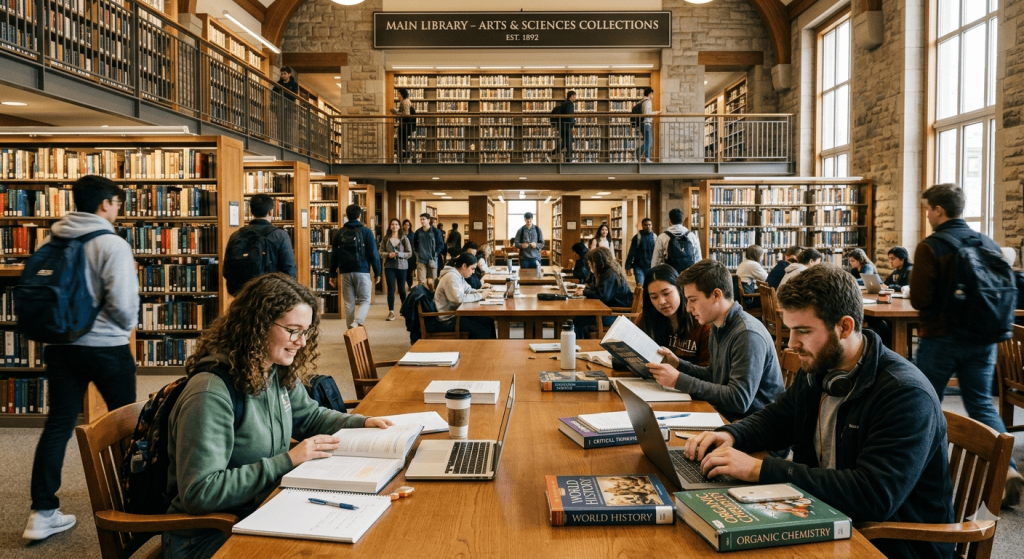
IIT provides structured learning materials such as:
- E-books
- Study guides
- PDF manuals
- Course handbooks
- Industry reference documents
These are aligned with course modules.
4.2 Purpose of Books in IIT Programs
Books are used for:
- Deep theoretical understanding
- Reference during assignments
- Exam preparation
- Professional certification readiness
4.3 Common Book Topics in IIT Programs
(A) Accounting & Finance Books
- Financial reporting principles
- Bookkeeping systems
- Business accounting standards
(B) Mortgage Broking Books
- Loan structuring
- Lending policies
- Credit assessment methods
(C) Taxation Books
- Tax law fundamentals
- Compliance procedures
- Legal frameworks
(D) Business Management Books
- Leadership concepts
- Organizational behavior
- Strategic planning
4.4 Example of Institutional Book Systems (Reference Model)
Other IIT-type institutions also maintain large libraries with:
- Thousands of e-books
- Journals
- Video lecture archives
For example, academic institutes often subscribe to:
- Springer e-journals
- Science & technology e-book databases
- Digital libraries with 80,000+ books/videos
This shows the standard model of how IIT-level institutions structure learning materials.
5. Integration of Videos and Books
One of the strongest features of IIT learning systems is integration of multiple learning formats.
5.1 How They Work Together
| Learning Tool | Purpose |
|---|---|
| Videos | Explain concepts visually |
| Books | Provide theory and reference |
| Assignments | Test understanding |
| Case studies | Apply knowledge practically |
5.2 Learning Cycle
A typical student learning cycle:
- Watch video lecture
- Read textbook chapter
- Attempt practice questions
- Review revision video
- Complete assessment
6. Technology in IIT Learning System
6.1 Learning Management System (LMS)
Students access:
- Course dashboards
- Video lectures
- E-books
- Assignments
6.2 Cloud-Based Access
- Study materials available online
- Accessible on mobile, laptop, tablet
- No physical dependency
6.3 Interactive Features
- Online quizzes
- Automated marking systems
- Discussion forums
- Tutor feedback systems
7. Importance of IIT Video & Book Model
7.1 For Students
- Learn at own pace
- Improve retention
- Access global-standard materials
7.2 For Working Professionals
- Study while working
- Upgrade qualifications
- Gain certifications for promotion
7.3 For Career Development
- Industry-aligned knowledge
- Practical skill development
- Better job readiness
8. Comparison with Other IIT Systems (General Context)
The term “IIT” can refer to different types of educational institutions depending on the context. In India, the most well-known meaning is the Indian Institutes of Technology, a group of premier public engineering and technology institutes. Globally, however, similar abbreviations are sometimes used by private institutions such as the “International Institute of Technology.” Despite differences in structure, funding, and academic focus, many of these institutions share a common educational approach: a strong integration of video lectures, books, and digital learning resources.
This section compares how the Indian Institutes of Technology (IITs) and related academic systems use videos and books as complementary learning tools, and how this model has become a global standard in technical education.
8.1 Indian Institutes of Technology (IITs) – Academic Excellence Model
The Indian Institutes of Technology are India’s top engineering institutions, known for high academic standards, research output, and competitive admissions. These institutes include campuses such as IIT Bombay, IIT Delhi, IIT Madras, IIT Kanpur, and others.
In these institutions, learning is traditionally classroom-based but has evolved significantly with digital transformation. Today, IITs combine:
- Lecture hall teaching
- Online video lectures
- Digital course notes
- Research papers and textbooks
This blended approach ensures students gain both theoretical depth and practical exposure.
8.2 Role of Video Learning in IIT Ecosystem
One of the most important developments in Indian technical education is the rise of video-based learning platforms, especially the NPTEL.
NPTEL is a joint initiative by IITs and IISc (Indian Institute of Science), designed to provide:
- Free video lectures from IIT professors
- Full semester course recordings
- Engineering and science tutorials
- Certification programs
These videos are widely used by:
- IIT students themselves (for revision)
- Engineering college students across India
- Working professionals preparing for upskilling
The video content is structured like a full classroom experience, often divided into weekly modules, assignments, and quizzes. This makes learning scalable beyond physical classrooms.
8.3 Books and Academic Publications in IITs
Books remain a core part of IIT education, even in a digital age. Faculty members and researchers at IITs regularly contribute to:
- Engineering textbooks
- Research monographs
- Reference manuals
- International journal publications
For example, professors at IIT Bombay and other campuses frequently publish advanced textbooks in fields like:
- Electrical engineering
- Computer science
- Mechanical systems
- Mathematics and physics
The Indian Institutes of Technology ecosystem strongly emphasizes academic writing. Many IIT faculty-authored books are used not only within India but also internationally.
Books serve as the foundation of learning because they provide:
- Structured theoretical explanations
- Mathematical derivations
- Problem-solving frameworks
- End-of-chapter exercises
Even when video lectures are used, students are still expected to refer to textbooks for deeper understanding and exam preparation.
8.4 IIT Bombay and Multimedia Learning Resources
A major contributor to India’s academic media content is IIT Bombay. This institute has been actively involved in producing:
- Educational videos
- Technical documentaries
- Research presentations
- Open courseware materials
IIT Bombay is also closely associated with national initiatives that promote digital education, including online lecture repositories and engineering outreach programs.
Its video and publication output supports not just enrolled students but also the broader engineering community in India. Many of these resources are shared through government-supported educational portals and academic networks.
8.5 Hybrid Learning Model: Books + Videos
Across all IIT systems, one of the strongest educational patterns is the hybrid learning model, where videos and books are used together rather than separately.
How the two formats complement each other:
Videos provide:
- Visual explanation of complex topics
- Step-by-step problem solving
- Classroom-style teaching experience
- Real-time demonstration of concepts
Books provide:
- Detailed theoretical foundations
- Formal definitions and equations
- Reference material for exams
- Structured chapter progression
When combined, they create a complete learning ecosystem where students can:
- Watch a lecture to understand the concept
- Read textbook sections to deepen understanding
- Solve exercises from books
- Rewatch videos for revision before exams
This system is particularly effective in engineering and technical education, where both conceptual clarity and mathematical precision are required.
8.6 Global Comparison of IIT-Style Learning
The IIT model has influenced many other institutions worldwide. Universities in the United States, Europe, and Asia have adopted similar systems, including:
- Recorded lecture repositories
- Massive Open Online Courses (MOOCs)
- Digital textbooks
- Interactive video tutorials
Platforms like NPTEL have helped standardize this model in India, while globally, similar systems exist through MIT OpenCourseWare and Coursera-style learning environments.
However, what makes the IIT system unique is its integration of:
- Rigorous academic curriculum
- Strong examination systems
- Deep theoretical focus
- Large-scale video lecture distribution
8.7 Key Differences Between Traditional and IIT Digital Systems
| Feature | Traditional Engineering Education | IIT Digital Learning Model |
|---|---|---|
| Teaching method | Classroom lectures only | Hybrid (videos + books + lectures) |
| Accessibility | Limited to campus | Global online access |
| Learning pace | Fixed schedule | Flexible/self-paced (especially via NPTEL) |
| Resources | Physical books | Digital + printed books + videos |
| Revision | Notes only | Full video replays + e-books |
8.8 Conclusion
The comparison shows that the IIT ecosystem—especially the Indian Institutes of Technology, supported by platforms like NPTEL and institutions such as IIT Bombay—has established a globally respected model of combining video lectures and academic books.
9. Future of IIT Learning Resources

9.1 Digital Expansion
- More video-based courses
- AI-driven learning platforms
- Personalized learning paths
9.2 E-Book Evolution
- Interactive textbooks
- Embedded quizzes
- Real-time updates
9.3 Virtual Classrooms
- Live streaming lectures
- Global student participation
- Virtual labs
10. Conclusion
The International Institute of Technology (IIT) learning system is built around a strong combination of:
- 🎥 Video lectures (for understanding)
- 📘 Books and e-learning materials (for depth)
- 🧠 Practical assessments (for application)
This hybrid model ensures that students not only learn theory but also develop practical industry skills.
In modern education, IIT-style learning reflects the global shift toward digital, flexible, and skill-based education systems, making it suitable for both students and working professionals.
Table of Contents