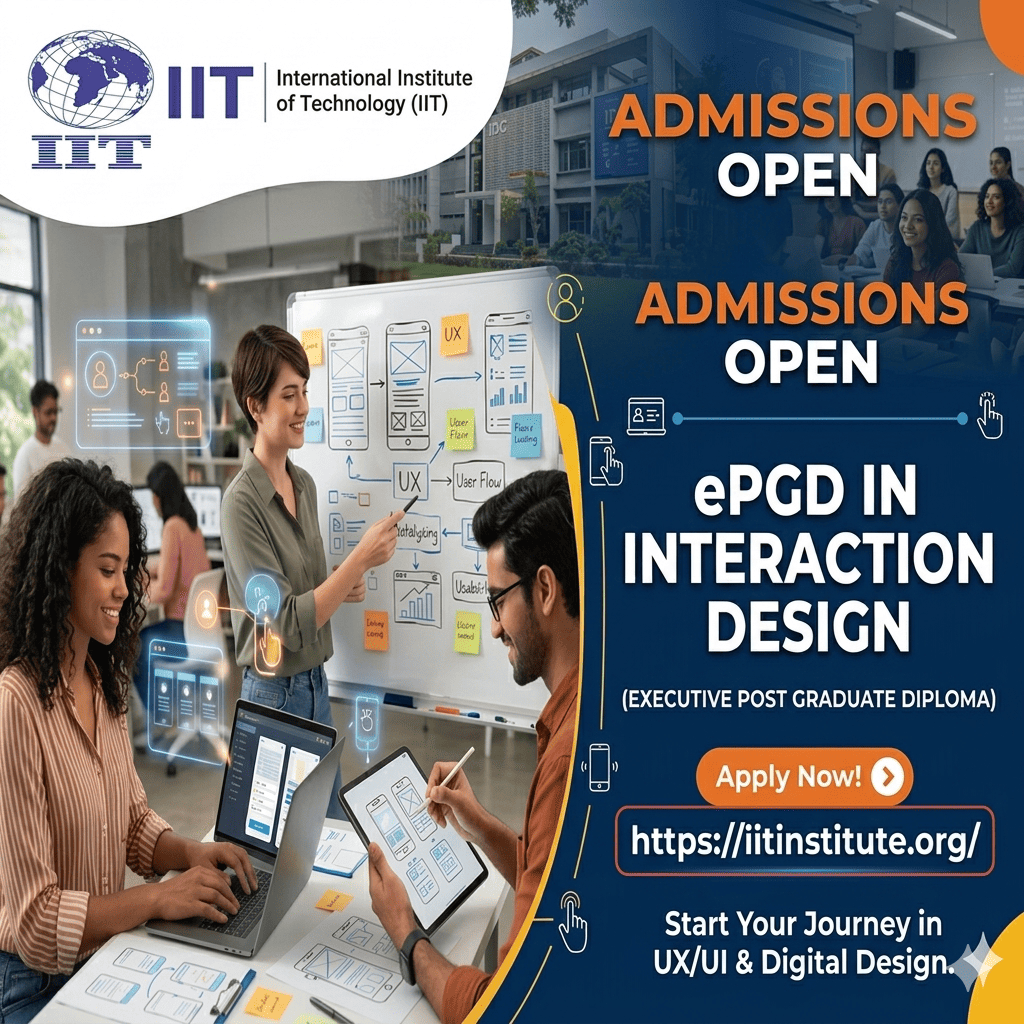
Admissions Open for ePGD in Interaction Design | IDC School of Design
International Institute of Technology (IIT)
Introduction
The digital world is evolving rapidly, and the demand for skilled interaction designers is at an all-time high. From mobile applications and websites to smart devices, artificial intelligence systems, healthcare interfaces, automotive dashboards, and immersive digital experiences, interaction design has become an essential discipline shaping the way people interact with technology.
Recognizing the growing importance of human-centered design, the IDC School of Design at the International Institute of Technology (IIT) proudly announces admissions open for the e-Postgraduate Diploma in Interaction Design (ePGD IxD) for the academic year 2026–27.
The ePGD in Interaction Design is a future-focused, industry-oriented postgraduate diploma program designed for graduates, working professionals, creative thinkers, engineers, architects, developers, entrepreneurs, and aspiring designers who want to build expertise in user experience design, interface design, design thinking, digital innovation, and interactive technologies.
The program combines academic excellence, practical industry exposure, interdisciplinary learning, and real-world design problem-solving to prepare learners for successful careers in UX/UI design, product design, interaction design, service design, user research, and digital innovation.
With a flexible online learning ecosystem, mentorship from experienced faculty, collaborative projects, and globally relevant curriculum, the ePGD in Interaction Design enables learners from across India and around the world to gain advanced design education from one of the most respected institutions in technology and innovation.
About the IDC School of Design
The IDC School of Design at the International Institute of Technology (IIT) is known for its commitment to creativity, innovation, research, design excellence, and interdisciplinary education. The institution has established itself as a leading center for design learning by integrating technology, human behavior, business strategy, and creative problem-solving.
The school believes that design is not merely about aesthetics; it is about solving human problems through empathy, usability, functionality, accessibility, and innovation. Students are encouraged to think critically, explore emerging technologies, understand user behavior, and create meaningful digital experiences.
The IDC School of Design promotes:
- Human-centered design approaches
- Design thinking methodologies
- Innovation and creativity
- User research and usability
- Digital product development
- Emerging technology integration
- Collaborative and interdisciplinary learning
- Sustainable and ethical design practices
The ePGD in Interaction Design reflects the institution’s mission to prepare professionals who can lead the future of digital transformation and innovation.
What is Interaction Design?
Interaction Design (IxD) is the practice of designing interactive digital products, systems, services, and experiences that are meaningful, efficient, engaging, and user-friendly.
Interaction designers focus on understanding how users interact with technology and then designing interfaces and experiences that improve usability, accessibility, engagement, and satisfaction.
Interaction design combines multiple disciplines including:
- User Experience (UX) Design
- User Interface (UI) Design
- Psychology
- Human-Computer Interaction (HCI)
- Visual Communication
- Information Architecture
- Motion Design
- Service Design
- Product Design
- Digital Innovation
- Cognitive Science
- Design Research
Today, interaction design plays a crucial role in:
- Mobile application development
- Web platforms
- Smart devices and IoT
- Artificial intelligence interfaces
- Virtual reality and augmented reality
- Healthcare technology
- Banking and fintech solutions
- E-commerce platforms
- Educational technology
- Automotive systems
- Enterprise software
- Gaming and entertainment
Organizations worldwide are investing heavily in creating seamless and engaging user experiences, making interaction design one of the fastest-growing career domains globally.
Why Choose the ePGD in Interaction Design?
The ePGD in Interaction Design at IIT offers learners an opportunity to gain advanced knowledge, practical skills, and industry exposure in one of the most in-demand design disciplines.
Industry-Relevant Curriculum
The curriculum is carefully designed to align with modern industry requirements and evolving technological trends. Students learn both theoretical concepts and practical applications through real-world projects and case studies.
Flexible Online Learning
The program is delivered through a modern digital learning environment that enables students and working professionals to study from anywhere while balancing personal and professional commitments.
Learn from Experienced Faculty
Students receive mentorship and guidance from experienced academicians, industry experts, researchers, and practicing designers.
Hands-On Learning
The program emphasizes experiential learning through:
- Live projects
- Design assignments
- Case studies
- Portfolio development
- User research activities
- Collaborative workshops
- Prototype development
- Industry challenges
Career-Focused Education
The ePGD in Interaction Design prepares learners for careers in:
- UX Design
- UI Design
- Product Design
- Service Design
- Design Research
- Information Architecture
- Interaction Design
- UX Writing
- Digital Strategy
- Design Consulting
Future-Ready Skill Development
Students develop competencies in:
- Design thinking
- Problem-solving
- User-centered innovation
- Digital product strategy
- Human-computer interaction
- Creativity and communication
- Visual storytelling
- Usability engineering
Program Objectives
The ePGD in Interaction Design is designed to achieve several academic and professional objectives.
Develop Human-Centered Design Skills
Students learn to understand user needs, emotions, behavior, and motivations while designing meaningful digital experiences.
Foster Creative Problem Solving
The program encourages learners to approach problems creatively and systematically through design thinking methodologies.
Build Technical and Design Expertise
Participants gain expertise in interface design, prototyping, usability testing, interaction systems, and digital product development.
Strengthen Research Capabilities
Students develop skills in user research, ethnographic studies, usability evaluation, and design analysis.
Encourage Innovation
The program nurtures innovation by integrating design with emerging technologies such as AI, IoT, AR/VR, and data-driven systems.
Create Industry-Ready Professionals
Graduates are prepared to work in multidisciplinary teams across industries including technology, healthcare, finance, education, e-commerce, media, and entertainment.
Eligibility Criteria
The ePGD in Interaction Design welcomes applicants from diverse academic and professional backgrounds.
Academic Qualification
Applicants should possess:
- A Bachelor’s degree from a recognized university or institution
- Candidates from engineering, architecture, design, fine arts, computer science, information technology, management, humanities, psychology, communication, and related disciplines are encouraged to apply
Working Professionals
The program is highly suitable for:
- Software professionals
- Designers
- Product managers
- Entrepreneurs
- Developers
- Creative professionals
- Educators
- UX researchers
- Startup founders
Fresh Graduates
Recent graduates interested in building a career in interaction design and digital innovation are also eligible.
Duration of the Program
The ePGD in Interaction Design is designed as a flexible postgraduate diploma program that allows learners to progress systematically through core concepts, practical learning, and advanced design specialization.
The program includes:
- Structured online coursework
- Live interactive sessions
- Design labs
- Assignments and assessments
- Industry projects
- Portfolio development
- Capstone project
The flexible format makes it suitable for both full-time learners and working professionals.
Curriculum Structure
The curriculum of the ePGD in Interaction Design is comprehensive, interdisciplinary, and aligned with modern design industry requirements.
Foundation of Design
Students are introduced to the fundamentals of design, creativity, visual communication, and human-centered problem solving.
Key topics include:
- Principles of design
- Visual language
- Typography
- Color theory
- Layout systems
- Design communication
- Design history
Design Thinking and Innovation
This module focuses on structured creative problem solving and innovation methodologies.
Topics include:
- Empathy mapping
- Problem framing
- Ideation techniques
- Brainstorming
- Rapid prototyping
- Innovation strategy
- User journey mapping
Human-Computer Interaction (HCI)
Students explore how humans interact with digital systems and technologies.
Topics include:
- Cognitive psychology
- User behavior
- Interaction models
- Accessibility principles
- Usability engineering
- Ergonomics
- Interface evaluation
User Experience (UX) Design
This module focuses on designing meaningful and user-friendly digital experiences.
Topics include:
- UX principles
- Information architecture
- User flows
- Wireframing
- User journey design
- Interaction patterns
- UX strategy
User Interface (UI) Design
Students learn how to create visually engaging and functional digital interfaces.
Topics include:
- Interface systems
- Responsive design
- Mobile-first design
- Grid systems
- Iconography
- Design systems
- Visual hierarchy
Design Research Methods
This module introduces students to qualitative and quantitative research techniques.
Topics include:
- User interviews
- Ethnographic studies
- Contextual inquiry
- Surveys and analytics
- Usability testing
- Data interpretation
- Persona creation
Prototyping and Interaction Development
Students build prototypes and interactive experiences.
Topics include:
- Low-fidelity prototyping
- High-fidelity prototyping
- Interactive simulations
- Motion interaction
- Micro-interactions
- Design tools and platforms
Emerging Technologies and Experience Design
The curriculum includes exposure to future technologies and digital experiences.
Topics include:
- Artificial intelligence interfaces
- Augmented reality
- Virtual reality
- Internet of Things (IoT)
- Conversational interfaces
- Smart systems
- Immersive design
Service Design and Systems Thinking
Students learn how to design services and integrated user ecosystems.
Topics include:
- Service blueprinting
- Customer experience design
- Systems thinking
- Stakeholder mapping
- Experience ecosystems
Portfolio and Capstone Project
The program culminates in a major design project where students apply their learning to solve real-world challenges.
The capstone project includes:
- Design research
- Problem analysis
- Concept development
- Prototype creation
- User testing
- Final presentation
- Portfolio showcase
Learning Methodology
The ePGD in Interaction Design adopts a learner-centric and project-based approach.
Online Interactive Learning
Students participate in:
- Live lectures
- Interactive webinars
- Virtual workshops
- Faculty mentoring sessions
- Design reviews
- Peer discussions
Project-Based Education
Learning is reinforced through:
- Real-world assignments
- Case studies
- Collaborative projects
- Industry simulations
- Prototype development
Studio Culture
The program replicates a design studio environment through collaborative teamwork, critique sessions, presentations, and iterative learning.
Industry Exposure
Students gain exposure to current industry practices, tools, trends, and design methodologies.
Tools and Technologies Covered
The program introduces learners to industry-standard tools and digital platforms commonly used in the design industry.
Students may gain exposure to:
- Figma
- Adobe XD
- Sketch
- Photoshop
- Illustrator
- Prototyping tools
- Motion design tools
- UX research platforms
- Collaboration software
The focus is not merely on software operation but on understanding how tools support design thinking and user-centered innovation.
Career Opportunities After ePGD in Interaction Design
Interaction design is among the most promising career domains in the global digital economy.
Graduates of the ePGD in Interaction Design can explore diverse career opportunities across industries.
UX Designer
UX Designers focus on improving user satisfaction by enhancing usability, accessibility, and interaction quality.
UI Designer
UI Designers create visually engaging and intuitive digital interfaces.
Interaction Designer
Interaction Designers develop interactive behaviors and experiences for digital products and systems.
Product Designer
Product Designers work on end-to-end digital product experiences from research to implementation.
UX Researcher
UX Researchers study user behavior, needs, and feedback to guide design decisions.
Service Designer
Service Designers improve customer experiences across service ecosystems.
Information Architect
Information Architects organize content and navigation structures for digital systems.
Design Consultant
Consultants help organizations improve digital experiences, usability, and customer engagement.
Creative Technologist
Creative Technologists integrate design with emerging technologies and innovation.
Entrepreneur and Startup Founder
The program also empowers learners to build startups, digital products, and innovative technology ventures.
Industries Hiring Interaction Design Professionals
Interaction design professionals are in demand across multiple sectors.
Technology and Software
Technology companies require UX/UI professionals for digital platforms, enterprise software, SaaS products, and mobile applications.
E-Commerce
Online businesses invest heavily in user experience optimization and customer engagement.
Banking and FinTech
Financial institutions require intuitive digital banking and payment experiences.
Healthcare
Healthcare technology companies use interaction design to improve patient care and digital accessibility.
Education Technology
EdTech platforms require engaging learning experiences and interactive interfaces.
Media and Entertainment
Streaming platforms, gaming companies, and digital media organizations rely on interaction design for immersive experiences.
Automotive and Smart Mobility
Automotive systems increasingly depend on user-centered interface design.
Government and Public Services
Digital governance and citizen-centric systems require accessible and inclusive interfaces.
Importance of Human-Centered Design in the Future
As technology becomes increasingly integrated into everyday life, the importance of human-centered design continues to grow.
Modern users expect:
- Simplicity
- Accessibility
- Personalization
- Speed
- Seamless interaction
- Emotional connection
- Inclusive experiences
Organizations that prioritize user experience achieve:
- Better customer satisfaction
- Higher engagement
- Improved usability
- Increased adoption rates
- Stronger brand loyalty
- Enhanced innovation
Interaction designers play a vital role in shaping these experiences.
Advantages of Studying at IIT
The International Institute of Technology (IIT) provides a dynamic ecosystem that supports creativity, innovation, research, and professional growth.
Academic Excellence
Students benefit from rigorous academic standards and multidisciplinary learning.
Innovation Ecosystem
The institution promotes innovation, entrepreneurship, and research-driven learning.
Global Perspective
The curriculum integrates international design trends and global best practices.
Networking Opportunities
Students engage with peers, faculty, industry experts, and design professionals.
Interdisciplinary Collaboration
The program encourages collaboration between design, technology, engineering, and business disciplines.
Industry-Relevant Learning
The curriculum is aligned with evolving industry expectations and digital transformation needs.
Why Interaction Design is a High-Demand Career
The rapid growth of digital transformation has created enormous demand for interaction design professionals worldwide.
Businesses today compete not only through technology but also through user experience quality.
Factors driving demand include:
- Expansion of mobile applications
- Growth of digital platforms
- AI-enabled systems
- Smart devices and IoT
- Remote work technologies
- E-learning platforms
- E-commerce expansion
- Digital healthcare solutions
- Immersive technologies
Interaction designers help organizations create products that are useful, intuitive, accessible, and emotionally engaging.
Skills Developed During the Program
The ePGD in Interaction Design develops both technical and professional competencies.
Creative Skills
- Visual storytelling
- Design communication
- Creative ideation
- Innovation thinking
Technical Skills
- Wireframing
- Prototyping
- Interface design
- Usability evaluation
- Research methodologies
Analytical Skills
- User analysis
- Problem-solving
- Design strategy
- Systems thinking
Professional Skills
- Team collaboration
- Presentation skills
- Leadership
- Project management
- Client communication
Portfolio Development
A strong portfolio is essential for building a successful design career.
The ePGD program helps students create professional portfolios showcasing:
- UX projects
- Interface designs
- User research
- Design processes
- Prototypes
- Case studies
- Problem-solving approaches
Portfolio development is integrated throughout the program to ensure students graduate with industry-ready work samples.
Opportunities for Working Professionals
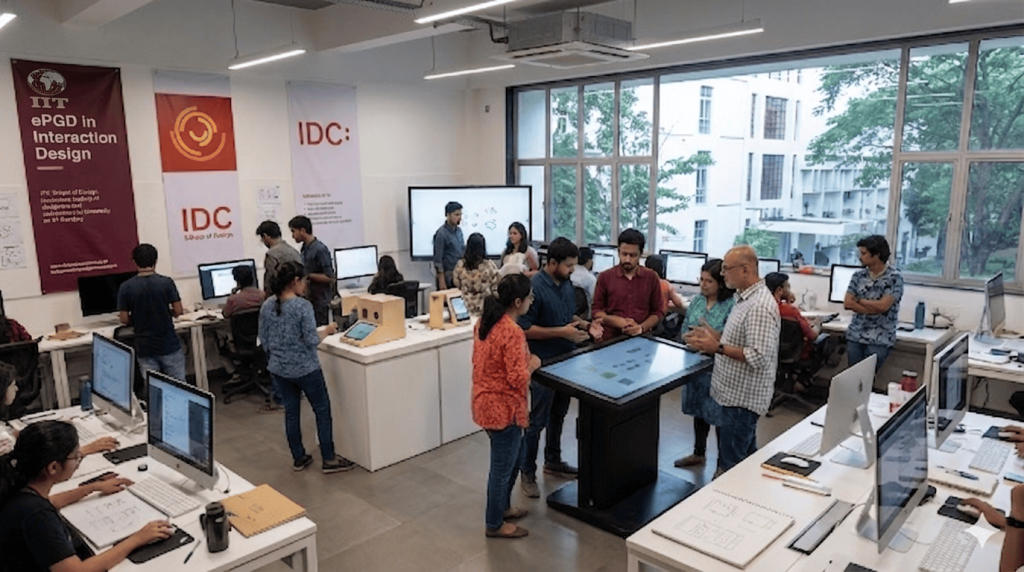
The flexible structure of the ePGD in Interaction Design makes it ideal for working professionals seeking career advancement or transition.
Professionals from various backgrounds can use the program to:
- Upskill in digital design
- Transition into UX/UI careers
- Enhance product innovation capabilities
- Build leadership in digital transformation
- Improve customer experience strategy
The online format enables learners to continue working while pursuing advanced education.
Research and Innovation Opportunities
The IDC School of Design encourages research and innovation in areas such as:
- Human-computer interaction
- Accessibility design
- AI and design
- Inclusive interfaces
- Smart systems
- Sustainable design
- Immersive experiences
- Design for social impact
Students may engage in experimental projects, innovation challenges, and interdisciplinary collaborations.
Student Support and Mentorship
The program emphasizes continuous support for learners.
Students benefit from:
- Faculty mentorship
- Academic guidance
- Peer collaboration
- Interactive discussions
- Design feedback sessions
- Career support
- Portfolio reviews
The collaborative learning environment encourages creativity, experimentation, and professional growth.
Admission Process
Candidates interested in the ePGD in Interaction Design can apply through the official admission process.
Step 1: Online Application
Applicants must complete the online application form and submit academic and professional details.
Step 2: Document Submission
Required documents may include:
- Academic certificates
- Identification proof
- Resume/CV
- Statement of purpose
- Portfolio (if applicable)
Step 3: Evaluation
Applications are evaluated based on academic background, creativity, motivation, professional experience, and aptitude for design learning.
Step 4: Admission Confirmation
Selected candidates receive admission offers and enrollment instructions.
Who Should Apply?
The ePGD in Interaction Design is suitable for:
- Graduates seeking design careers
- Engineers interested in UX/UI
- Software professionals
- Product managers
- Entrepreneurs
- Architects and planners
- Creative professionals
- Educators
- Researchers
- Startup founders
- Professionals seeking career transition
The interdisciplinary nature of the program welcomes learners from diverse domains.
Future Scope of Interaction Design
The future of interaction design is closely connected to technological advancement and digital innovation.
Emerging opportunities include:
- AI-driven interfaces
- Voice interaction systems
- Spatial computing
- Augmented reality experiences
- Virtual reality ecosystems
- Smart city interfaces
- Autonomous mobility systems
- Healthcare interaction systems
- Educational innovation platforms
- Sustainable digital ecosystems
As digital systems become more integrated into daily life, skilled interaction designers will remain highly valuable.
Building a Meaningful Career Through Design
Interaction design is not only a profession but also a powerful medium for creating positive human experiences.
Designers influence how people:
- Learn
- Communicate
- Access services
- Use technology
- Solve problems
- Connect with brands
- Experience digital ecosystems
Through thoughtful and responsible design, professionals can create solutions that improve accessibility, inclusion, efficiency, and quality of life.
Why Choose IIT for Design Education?
The International Institute of Technology (IIT) offers a unique environment where technology, creativity, innovation, and research converge.
Students choosing IIT benefit from:
- Strong academic reputation
- Advanced digital learning infrastructure
- Interdisciplinary ecosystem
- Research-oriented education
- Innovation culture
- Industry engagement
- Experienced faculty
- Collaborative peer network
The institution’s commitment to excellence ensures that learners receive education aligned with global standards and future industry needs.
Conclusion
The ePGD in Interaction Design offered by the IDC School of Design at the International Institute of Technology (IIT) is an exceptional opportunity for individuals who aspire to become leaders in digital experience design, innovation, and human-centered technology.
As industries worldwide continue to prioritize user experience, interaction design has emerged as one of the most influential and future-ready career domains. The program equips learners with the knowledge, creativity, technical expertise, and strategic thinking required to design impactful digital experiences.
Whether you are a recent graduate exploring creative technology careers, a working professional seeking upskilling opportunities, or an entrepreneur building innovative digital products, the ePGD in Interaction Design provides the ideal platform to transform your aspirations into reality.
With flexible online learning, industry-relevant curriculum, mentorship from experienced faculty, practical project-based education, and exposure to emerging technologies, the program empowers learners to thrive in the evolving digital economy.
Admissions are now open for the academic year 2026–27.
Take the next step toward a future driven by creativity, innovation, technology, and human-centered design.
Apply now and become part of the next generation of interaction design professionals shaping the future of digital experiences.
Table of Contents