Future Technology
International Institute of Technology (IIT)
Introduction
The world is entering a new era driven by rapid technological advancement, digital transformation, and scientific innovation. Technologies that once appeared only in science fiction are now becoming part of everyday life. Artificial Intelligence, robotics, automation, renewable energy, biotechnology, space research, smart infrastructure, and advanced communication systems are reshaping industries, education, healthcare, transportation, and global economies. In this evolving environment, educational institutions play a critical role in preparing future leaders, innovators, engineers, scientists, and entrepreneurs.
The International Institute of Technology (IIT) stands as a forward-thinking institution dedicated to promoting future technology education, research, innovation, and industrial collaboration. By integrating modern technological concepts with practical learning experiences, IIT aims to equip students with the knowledge and skills required to succeed in the rapidly changing technological landscape.
Future technology is not only about machines and software. It is about solving global problems, improving human life, creating sustainable systems, enhancing productivity, and building intelligent societies. The International Institute of Technology recognizes that tomorrow’s challenges require innovative solutions developed through interdisciplinary research, advanced learning methods, and industry-oriented training.
At IIT, students are encouraged to explore emerging technologies and participate in projects that address real-world issues. The institution focuses on developing technical excellence, creativity, critical thinking, and ethical responsibility among learners. Through laboratories, research centers, digital platforms, workshops, innovation hubs, and global collaborations, IIT provides an environment where future technologies can be explored, tested, and implemented.
The concept of future technology includes several advanced domains such as Artificial Intelligence (AI), Machine Learning (ML), Data Science, Blockchain, Cybersecurity, Internet of Things (IoT), Quantum Computing, Smart Manufacturing, Renewable Energy Systems, Virtual Reality (VR), Augmented Reality (AR), Cloud Computing, and Biotechnology. These technologies are transforming industries and creating new career opportunities across the world.
International Institute of Technology believes that technology education should not remain limited to theory. Students must gain practical exposure to advanced systems, digital tools, automation technologies, and research methodologies. Therefore, IIT emphasizes project-based learning, internship programs, industrial visits, live demonstrations, collaborative innovation, and startup incubation.
The future belongs to individuals and organizations capable of adapting to technological changes. IIT prepares students to become global professionals who can contribute effectively to industries, research institutions, government organizations, and entrepreneurial ventures. The institute’s focus on future technology ensures that graduates remain competitive in the international job market.
Through strategic planning, academic excellence, research-driven programs, and modern infrastructure, the International Institute of Technology is creating a strong foundation for technological leadership and innovation. The institution aims to become a center of excellence where students and researchers can contribute to the development of sustainable, intelligent, and technologically advanced societies.
Understanding Future Technology
Future technology refers to innovative systems, tools, devices, and scientific developments that have the potential to significantly impact society in the coming years. These technologies are designed to improve efficiency, automation, communication, productivity, and sustainability across various sectors.
Future technologies often emerge from continuous research, scientific experimentation, engineering advancements, and digital innovation. They influence industries such as healthcare, transportation, manufacturing, agriculture, defense, education, entertainment, finance, and environmental management.
The International Institute of Technology focuses on understanding both the theoretical and practical aspects of future technologies. Students learn how emerging technologies can solve modern challenges while creating new opportunities for economic growth and social development.
Key characteristics of future technology include:
- Innovation-driven development
- Intelligent automation
- Real-time data processing
- Improved human-machine interaction
- Sustainability and energy efficiency
- Enhanced global connectivity
- Digital transformation
- Advanced security mechanisms
- Interdisciplinary integration
Future technologies continue to evolve rapidly, making lifelong learning and continuous skill development essential for students and professionals.
Artificial Intelligence and Machine Learning
Artificial Intelligence (AI) is one of the most influential future technologies transforming modern society. AI refers to the ability of machines and computer systems to simulate human intelligence, including learning, reasoning, decision-making, and problem-solving.
Machine Learning (ML), a subset of AI, enables systems to learn from data and improve performance without explicit programming. AI and ML applications are widely used in healthcare diagnostics, autonomous vehicles, customer service, finance, cybersecurity, education, robotics, and industrial automation.
At the International Institute of Technology, students are introduced to AI and ML concepts through specialized courses, practical projects, coding laboratories, and research activities. The institute encourages learners to explore intelligent systems capable of processing large datasets and making accurate predictions.
Applications of AI and ML include:
- Smart virtual assistants
- Facial recognition systems
- Recommendation engines
- Fraud detection systems
- Predictive maintenance
- Medical diagnosis support
- Autonomous transportation
- Smart agriculture
- Industrial automation
- Language translation systems
IIT aims to prepare students for careers in AI development, data science, robotics engineering, intelligent automation, and advanced analytics.
Robotics and Automation
Robotics and automation are revolutionizing industries by improving productivity, precision, safety, and operational efficiency. Robots are increasingly used in manufacturing plants, healthcare facilities, logistics systems, space exploration, defense operations, and household applications.
Automation technologies reduce human error, increase production speed, and enable organizations to operate efficiently in highly competitive environments. Smart factories, automated warehouses, robotic surgery systems, and self-driving vehicles are examples of modern automation technologies.
The International Institute of Technology promotes robotics education through practical training, simulation tools, embedded systems, and research laboratories. Students gain knowledge in robotic design, control systems, sensors, programming, and automation engineering.
Important areas in robotics and automation include:
- Industrial robotics
- Autonomous systems
- Human-robot interaction
- Drone technology
- Mechatronics
- Smart manufacturing
- Robotic process automation
- Intelligent sensors
- Automation control systems
- Artificial intelligence integration
By integrating robotics with AI and IoT technologies, IIT prepares students to contribute to next-generation industrial systems and intelligent automation platforms.
Internet of Things (IoT)
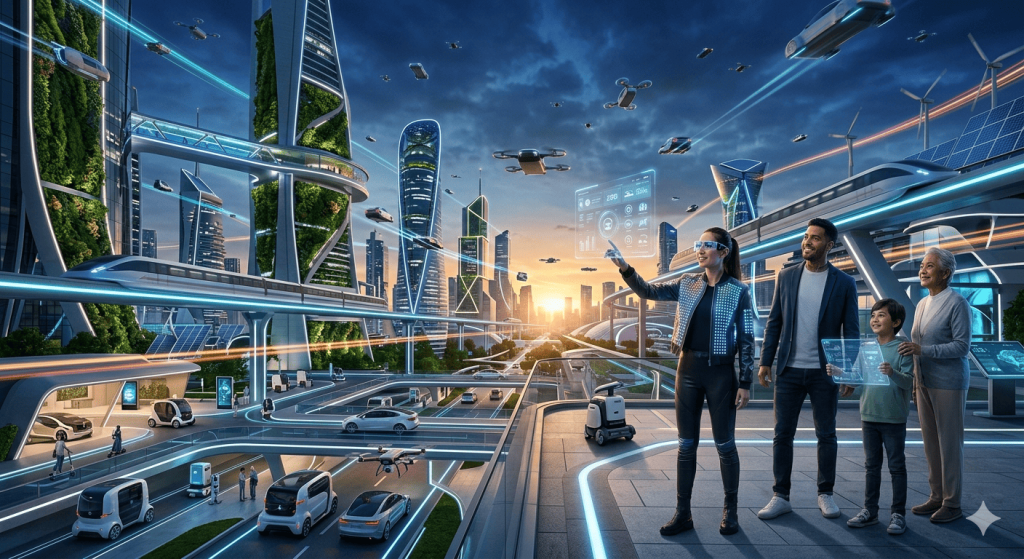
The Internet of Things (IoT) refers to interconnected devices capable of collecting, transmitting, and analyzing data through internet connectivity. IoT technology enables communication between devices, machines, sensors, and systems without human intervention.
IoT applications are widely used in smart homes, healthcare monitoring, transportation systems, agriculture, industrial automation, environmental monitoring, and smart cities.
At the International Institute of Technology, students learn about IoT architecture, sensor networks, wireless communication, cloud integration, and real-time data analysis. The institution supports innovation in connected technologies and intelligent systems.
Examples of IoT applications include:
- Smart home automation
- Wearable health devices
- Smart traffic management
- Precision agriculture
- Industrial monitoring systems
- Energy management systems
- Environmental sensing
- Connected healthcare devices
- Smart classrooms
- Smart security systems
The growth of IoT technology creates opportunities for students in embedded systems, network engineering, cloud computing, and smart infrastructure development.
Data Science and Big Data Analytics
Data has become one of the most valuable resources in the modern digital economy. Organizations generate enormous amounts of data daily through online platforms, sensors, transactions, communication systems, and business operations.
Data Science and Big Data Analytics involve collecting, processing, analyzing, and interpreting complex datasets to support decision-making and innovation.
The International Institute of Technology emphasizes data-driven learning by providing students with exposure to statistical analysis, data visualization, programming languages, and predictive modeling.
Applications of data science include:
- Business intelligence
- Financial forecasting
- Healthcare analytics
- Customer behavior analysis
- Market trend prediction
- Risk assessment
- Scientific research
- Smart city planning
- Social media analysis
- Cybersecurity monitoring
Students at IIT gain skills in programming, analytical thinking, data management, machine learning, and visualization techniques required for modern industries.
Cybersecurity and Information Security
As digital systems continue to expand, cybersecurity has become a major global concern. Cyber threats such as hacking, data breaches, ransomware, identity theft, and cyber espionage can cause serious financial and operational damage.
Cybersecurity involves protecting networks, devices, software, and information systems from unauthorized access and digital attacks.
The International Institute of Technology recognizes the importance of cybersecurity education in the modern digital age. Students are trained in ethical hacking, network security, cryptography, digital forensics, and cyber risk management.
Key areas of cybersecurity include:
- Network protection
- Application security
- Cloud security
- Data encryption
- Digital forensics
- Identity management
- Threat intelligence
- Security auditing
- Cyber law and ethics
- Incident response management
The demand for cybersecurity professionals continues to increase globally, creating significant career opportunities for graduates.
Blockchain Technology
Blockchain is a decentralized digital ledger technology that enables secure, transparent, and tamper-resistant transactions. Originally associated with cryptocurrency systems, blockchain technology is now applied across multiple industries.
Blockchain improves transparency, trust, and security in financial systems, supply chains, healthcare records, digital identity management, and smart contracts.
The International Institute of Technology introduces students to blockchain concepts, distributed systems, cryptographic methods, and decentralized applications.
Applications of blockchain technology include:
- Cryptocurrency systems
- Secure financial transactions
- Supply chain tracking
- Digital voting systems
- Smart contracts
- Healthcare data management
- Intellectual property protection
- Identity verification
- Banking solutions
- Decentralized finance
Blockchain technology represents a major innovation in digital security and transparent information management.
Cloud Computing
Cloud computing allows users to access computing resources, storage systems, software applications, and digital services through internet-based platforms.
Cloud technology supports remote work, scalable computing, data storage, collaboration tools, and business continuity.
The International Institute of Technology provides training in cloud infrastructure, virtualization, cloud security, and distributed computing systems.
Benefits of cloud computing include:
- Cost efficiency
- Scalability
- Remote accessibility
- Data backup and recovery
- Flexible resource management
- Improved collaboration
- Enhanced performance
- Business continuity support
Cloud computing plays an important role in modern digital transformation strategies.
Renewable Energy Technology
The growing need for sustainable development has increased the importance of renewable energy technologies. Renewable energy sources such as solar power, wind energy, hydroelectric systems, geothermal energy, and biomass help reduce environmental pollution and dependence on fossil fuels.
The International Institute of Technology promotes education and research in sustainable energy systems and green technologies.
Key areas of renewable energy technology include:
- Solar energy systems
- Wind turbine technology
- Energy storage systems
- Smart grids
- Electric vehicles
- Sustainable power generation
- Green building technologies
- Energy efficiency management
- Environmental engineering
- Climate technology
Students are encouraged to develop innovative solutions for energy conservation and environmental protection.
Smart Cities and Urban Technology
Smart cities use advanced digital technologies to improve urban infrastructure, transportation, public services, environmental sustainability, and quality of life.
Technologies such as IoT, AI, big data analytics, intelligent transportation systems, and digital governance contribute to smart city development.
The International Institute of Technology explores smart city concepts through research projects, urban planning studies, and technology integration programs.
Features of smart cities include:
- Intelligent traffic systems
- Smart waste management
- Energy-efficient infrastructure
- Digital public services
- Smart water management
- Environmental monitoring
- Public safety systems
- Smart healthcare systems
- Intelligent communication networks
- Sustainable urban planning
Future urban development depends heavily on intelligent technology integration.
Biotechnology and Healthcare Innovation
Biotechnology combines biology, engineering, chemistry, and technology to develop solutions in healthcare, agriculture, environmental management, and industrial production.
Healthcare innovation is transforming medical diagnostics, treatment systems, disease prevention, and patient care.
The International Institute of Technology supports biotechnology education and interdisciplinary research related to healthcare technology.
Emerging healthcare technologies include:
- Genetic engineering
- Biomedical devices
- Telemedicine
- Personalized medicine
- Bioinformatics
- Medical robotics
- Digital health monitoring
- Artificial organs
- Nanotechnology in medicine
- Smart healthcare systems
These innovations have the potential to improve global healthcare accessibility and efficiency.
Virtual Reality and Augmented Reality
Virtual Reality (VR) and Augmented Reality (AR) technologies create immersive digital experiences that enhance learning, entertainment, healthcare, training, and industrial applications.
VR provides fully simulated digital environments, while AR overlays digital information onto the real world.
The International Institute of Technology encourages students to explore VR and AR applications in education, engineering, gaming, architecture, and simulation training.
Applications include:
- Interactive learning environments
- Medical training simulations
- Industrial maintenance training
- Virtual tourism
- Gaming and entertainment
- Architectural visualization
- Remote collaboration
- Defense training systems
- Product design simulation
- Smart retail experiences
VR and AR technologies are becoming increasingly important in modern digital communication and interactive learning.
Quantum Computing
Quantum computing represents one of the most advanced future technologies with the potential to solve highly complex computational problems.
Unlike traditional computers that use binary bits, quantum computers use quantum bits or qubits, enabling significantly faster processing capabilities for specific tasks.
The International Institute of Technology introduces students to quantum computing concepts, quantum mechanics, computational theory, and advanced algorithms.
Potential applications include:
- Advanced scientific research
- Drug discovery
- Financial modeling
- Cryptography
- Artificial intelligence enhancement
- Climate simulation
- Optimization problems
- Space exploration research
Although quantum computing is still developing, it has the potential to revolutionize multiple industries.
Space Technology and Exploration
Space technology continues to expand human understanding of the universe while supporting communication, navigation, weather forecasting, defense, and scientific research.
Modern space exploration includes satellite systems, interplanetary missions, reusable rockets, and space research laboratories.
The International Institute of Technology encourages interest in aerospace engineering, satellite communication, astrophysics, and space research technologies.
Important areas include:
- Satellite systems
- Rocket propulsion
- Space robotics
- Space communication
- Astronomical research
- Planetary exploration
- Navigation systems
- Aerospace engineering
- Space materials science
- Remote sensing technology
Future space missions will require highly skilled scientists, engineers, and researchers.
Future Technology in Education
Technology is transforming education by improving accessibility, personalization, collaboration, and learning efficiency.
Digital classrooms, online learning platforms, AI-powered tutoring systems, smart assessment tools, and virtual laboratories are changing how students learn.
The International Institute of Technology integrates modern educational technologies into academic programs to support interactive and flexible learning.
Educational technology innovations include:
- Online learning platforms
- Smart classrooms
- Virtual laboratories
- AI-based learning systems
- Digital libraries
- Interactive simulations
- Mobile learning applications
- Remote education systems
- Learning analytics
- Collaborative digital tools
Future education systems will become increasingly personalized, data-driven, and globally connected.
Research and Innovation at IIT
Research and innovation are essential components of technological advancement. The International Institute of Technology encourages students and faculty members to participate in research activities that contribute to scientific progress and industrial development.
The institute promotes:
- Interdisciplinary research
- Innovation competitions
- Prototype development
- Technical workshops
- Research publications
- Startup incubation
- Patent development
- Industry collaboration
- Scientific conferences
- Technology transfer initiatives
Research-oriented education helps students develop analytical thinking, creativity, and problem-solving abilities.
Industry Collaboration and Skill Development
Strong collaboration between academic institutions and industries is essential for preparing students for future careers.
The International Institute of Technology works to bridge the gap between theoretical education and practical industry requirements.
Industry collaboration activities include:
- Internship programs
- Industrial visits
- Guest lectures
- Corporate training
- Joint research projects
- Technical seminars
- Live industrial projects
- Professional certification programs
- Placement support
- Entrepreneurship mentoring
Skill development programs help students gain practical exposure to modern technologies and workplace expectations.
Entrepreneurship and Startup Culture
Future technology creates opportunities for innovation-driven entrepreneurship and startup development.
The International Institute of Technology encourages students to develop entrepreneurial thinking, innovative business ideas, and technology-based solutions.
Startup support initiatives include:
- Innovation labs
- Incubation centers
- Business mentoring
- Startup workshops
- Funding guidance
- Product development support
- Networking opportunities
- Intellectual property awareness
- Market research assistance
- Entrepreneurial leadership training
Technology startups contribute significantly to economic growth, job creation, and social transformation.
Ethical Considerations in Future Technology
While future technologies offer significant advantages, they also raise ethical, social, and security concerns.
Issues such as data privacy, cybersecurity threats, automation-related unemployment, AI bias, digital inequality, and environmental impact require responsible technology management.
The International Institute of Technology emphasizes ethical awareness and responsible innovation among students and researchers.
Important ethical considerations include:
- Data protection
- Responsible AI usage
- Environmental sustainability
- Human rights protection
- Digital inclusivity
- Ethical research practices
- Cybersecurity responsibility
- Transparency in automation
- Fair technology access
- Social accountability
Future technological development must balance innovation with ethical responsibility.
Career Opportunities in Future Technology
The rapid growth of emerging technologies has created new career opportunities across various industries.
Graduates with future technology skills are in high demand in sectors such as information technology, healthcare, manufacturing, aerospace, finance, energy, education, telecommunications, and research.
Career opportunities include:
- Artificial Intelligence Engineer
- Data Scientist
- Robotics Engineer
- Cybersecurity Analyst
- Cloud Architect
- Blockchain Developer
- IoT Specialist
- Renewable Energy Engineer
- Software Developer
- Biotechnology Researcher
- Automation Engineer
- Digital Transformation Consultant
- Smart Infrastructure Planner
- VR/AR Developer
- Quantum Computing Researcher
The International Institute of Technology prepares students to become competent professionals capable of adapting to rapidly evolving technological environments.
Challenges in Future Technology Development
Despite rapid advancement, future technology development faces several challenges.
These challenges include:
- High research costs
- Cybersecurity risks
- Ethical concerns
- Technology accessibility gaps
- Environmental impact
- Rapid skill obsolescence
- Data privacy issues
- Infrastructure limitations
- Regulatory complexities
- Social adaptation challenges
Educational institutions like IIT play a critical role in addressing these challenges through research, innovation, skill development, and policy awareness.
Vision of International Institute of Technology for the Future
The International Institute of Technology aims to become a globally recognized institution for advanced technology education, research, and innovation.
The institute’s vision includes:
- Promoting technological excellence
- Encouraging research and innovation
- Supporting sustainable development
- Enhancing industry collaboration
- Developing global professionals
- Advancing digital education
- Building innovation ecosystems
- Encouraging entrepreneurship
- Supporting social development through technology
- Contributing to national and international progress
Through continuous improvement and strategic technological integration, IIT seeks to prepare students for the opportunities and challenges of the future.
Conclusion
Future technology is transforming every aspect of human life, industry, communication, healthcare, education, transportation, and global development. Emerging technologies such as Artificial Intelligence, robotics, IoT, blockchain, renewable energy, biotechnology, cybersecurity, quantum computing, and smart infrastructure are shaping the future of society.
The International Institute of Technology recognizes the importance of preparing students for this rapidly changing technological environment. By integrating advanced learning systems, research-driven education, practical training, innovation programs, and industry collaboration, IIT creates a strong foundation for technological excellence.
Future technology education is not only about acquiring technical knowledge. It is also about developing creativity, adaptability, ethical responsibility, leadership, and problem-solving skills. IIT aims to produce professionals who can contribute positively to scientific advancement, industrial growth, environmental sustainability, and social progress.
Table of Contents