Students
International Institute of Technology (IIT): A Deep Exploration
Introduction
The International Institute of Technology (IIT) are widely regarded as some of the most prestigious engineering institutions in the world. Established with the vision of developing highly skilled engineers and scientists to contribute to national development, they have grown into globally recognized centers of excellence in education, research, and innovation. Today, the International Institute of Technology (IIT) system is not merely a collection of engineering colleges; it represents a powerful academic ecosystem that consistently produces leaders in technology, entrepreneurship, academia, and industry across the globe.
One of the defining features of the IIT system is its academic rigor. The curriculum is designed to challenge students at every stage, emphasizing not just theoretical understanding but also analytical thinking, problem-solving ability, and real-world application. This rigorous structure, combined with world-class faculty and advanced research facilities, creates an environment where only the most dedicated and adaptable students thrive. As a result, IITs have earned a reputation for producing graduates who are not only technically proficient but also intellectually versatile and innovative.
Admission into IITs is itself one of the most competitive academic processes in the world. Each year, hundreds of thousands of students across India prepare intensively for the Joint Entrance Examination (JEE), a highly demanding test that evaluates conceptual clarity and problem-solving speed in physics, chemistry, and mathematics. Only a small fraction of these candidates secure admission into IITs, making entry into the system a significant achievement. However, this achievement also marks the beginning of a new and more complex journey—one that requires continuous effort, adaptation, and mental resilience.
At the center of this ecosystem are the students themselves—young individuals who transition from being high-performing school achievers to becoming part of an intellectually elite and highly competitive peer group. This transition is often both exciting and challenging. For many students, entering IIT means stepping into an environment where almost everyone has been among the top performers in their previous academic settings. This sudden shift can reshape self-perception, as students must adjust to a new academic reality where excellence is the norm rather than the exception.
Understanding IIT students requires looking beyond their academic performance. These students navigate a unique blend of ambition, pressure, creativity, and transformation. Ambition drives them to pursue excellence in engineering, research, entrepreneurship, and beyond. Many arrive at IITs with strong aspirations to contribute to cutting-edge technologies, secure prestigious careers, or innovate solutions to global problems. This ambition is nurtured by exposure to advanced coursework, collaborative projects, and interaction with highly motivated peers.
At the same time, IIT students experience significant academic and psychological pressure. The workload is intense, with continuous evaluations, complex assignments, and high expectations from faculty and peers alike. This environment can be both stimulating and stressful. While some students thrive under pressure, others may struggle to maintain balance. The culture of competition, though often healthy and motivating, can sometimes lead to anxiety and self-doubt. As a result, mental resilience becomes as important as intellectual ability in determining a student’s success.
Creativity also plays a central role in the IIT student experience. Despite the rigorous structure of engineering education, students are encouraged to think innovatively and apply theoretical knowledge to practical challenges. Through research projects, technical competitions, coding hackathons, and startup incubators, students explore creative solutions to real-world problems. This fosters an entrepreneurial mindset and prepares them for dynamic careers in rapidly evolving industries.
Transformation is perhaps the most significant aspect of the IIT student journey. Over the course of their education, students evolve not only as engineers but also as individuals. They develop independence, time management skills, and emotional maturity. Many discover new interests, redefine their career goals, and build lifelong friendships. The IIT experience often reshapes identity, helping students transition from structured academic life into professional and personal adulthood.
1. The Journey to IIT: Before Becoming a Student
Becoming an IIT student begins long before college life. The journey typically starts in secondary school, where students prepare for the Joint Entrance Examination (JEE), one of the toughest entrance exams in the world.
1.1 The Culture of Early Preparation
Many aspirants begin preparation as early as class 9 or 10. Coaching institutes, self-study routines, and test series become central to their lives. This phase is characterized by:
- Long study hours (often 8–14 hours daily)
- Heavy focus on Physics, Chemistry, and Mathematics
- Frequent mock tests and ranking systems
- Sacrifices in hobbies, sports, and social life
The preparation process is not just academic—it becomes psychological conditioning for competition.
1.2 The Pressure of Selection
Each year, over a million students appear for JEE, but only a small fraction secure admission into IITs. This extreme selectivity creates:
- High anxiety levels
- Strong societal pressure
- Family expectations tied to academic success
- A perception that IIT admission defines personal worth
Thus, by the time students enter IIT, they have already undergone years of mental conditioning for performance.
2. Life After Admission: The Transition Phase
Getting into IIT is often described as a dream come true. However, for many students, it is also the beginning of a new challenge.
2.1 The “All-India Topper Effect”
Students at IIT are no longer the top of their class—they are surrounded by thousands of other top performers. This leads to:
- A shift from “being the best” to “being average among the best”
- Initial loss of confidence for some students
- Re-evaluation of identity and self-worth
This phase is psychologically significant because it forces adaptation.
2.2 Academic Shock
The academic curriculum at IITs is intense and fast-paced. Subjects include:
- Advanced mathematics (linear algebra, differential equations)
- Engineering mechanics and thermodynamics
- Programming and data structures
- Laboratory and project-based learning
Many students experience what is known informally as “academic shock,” where the difficulty level is far higher than expected.
3. Academic Life: Rigour and Intellectual Growth

Despite the challenges, IIT academic life is intellectually enriching.
3.1 The Structure of Learning
The academic system typically includes:
- Lectures by highly qualified professors
- Weekly assignments
- Quizzes and mid-semester exams
- End-semester examinations
- Lab work and group projects
The pace is fast, requiring continuous effort rather than last-minute preparation.
3.2 Depth Over Memorization
Unlike traditional rote learning systems, IIT education emphasizes:
- Conceptual understanding
- Analytical thinking
- Problem-solving skills
- Application of theory to real-world problems
Students learn not just “what” but “why” and “how.”
3.3 Research Opportunities
Many IIT students engage in:
- Undergraduate research projects
- Internships in labs
- Publications in journals
- Participation in international conferences
This exposure helps bridge the gap between undergraduate study and advanced research.
4. Campus Life: Beyond Academics
While academics are central, IIT life is not limited to classrooms.
4.1 Hostels and Community Living
Students live in hostels, often sharing rooms. This creates:
- Strong peer bonding
- Lifelong friendships
- A sense of independence
Hostel life also teaches practical life skills like time management, budgeting, and self-discipline.
4.2 Cultural Diversity
IITs attract students from all over India. This leads to:
- Exposure to different languages and cultures
- Diverse perspectives in discussions
- Cultural festivals and regional events
This diversity is one of the most enriching aspects of IIT life.
4.3 Clubs and Extracurricular Activities
Students actively participate in:
- Robotics and coding clubs
- Drama, music, and dance societies
- Entrepreneurship cells
- Debate and literary clubs
- Sports teams
These activities help balance academic pressure and develop soft skills.
5. Psychological Dimensions of IIT Student Life
The IIT experience is not only academic—it is deeply psychological.
5.1 Stress and Competition
Common stress factors include:
- Continuous grading pressure
- Peer comparison
- Fear of failure
- Heavy workload
This can lead to burnout if not managed properly.
5.2 Identity Transformation
Many students undergo identity shifts:
- From “top student” to “one among many”
- From exam-focused learning to conceptual thinking
- From dependent teenagers to independent adults
This transformation can be both challenging and liberating.
5.3 Mental Health Awareness
In recent years, IITs have increased focus on mental health through:
- Counseling services
- Peer support groups
- Wellness programs
However, stigma around mental health still exists among some students.
6. Career Aspirations and Placement Pressure
One of the most defining aspects of IIT student life is career planning.
6.1 Campus Placements
IITs attract top recruiters from:
- Technology companies
- Consulting firms
- Core engineering industries
- Research organizations
Students often receive multiple job offers, but the process is highly competitive.
6.2 Entrepreneurship Culture
Many students choose startups over traditional jobs. IIT campuses have strong entrepreneurial ecosystems:
- Incubation centers
- Startup funding opportunities
- Mentorship from alumni
Some well-known Indian startups have been founded by IIT graduates.
6.3 Higher Studies
A significant number of students pursue:
- Master’s degrees abroad
- PhDs in research fields
- Competitive exams like GRE, GATE, or civil services
Thus, IIT is often a stepping stone rather than a final destination.
7. Challenges Faced by IIT Students
Despite prestige, IIT life has real challenges.
7.1 Academic Pressure
The curriculum can be overwhelming, especially in the first two years.
7.2 Work-Life Imbalance
Students often struggle to balance:
- Studies
- Internships
- Extracurricular activities
7.3 Social Isolation
Some students experience loneliness due to:
- High workload
- Intense competition
- Being away from home for the first time
7.4 Expectation Burden
There is constant societal expectation that IIT students must succeed at the highest level, which can be mentally taxing.
8. Personal Growth and Transformation
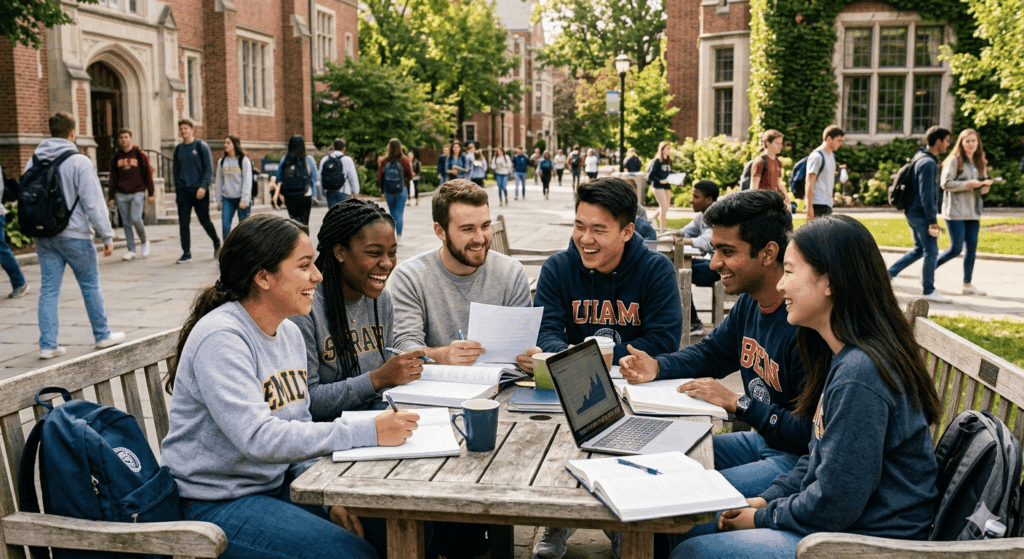
Despite challenges, IIT students often undergo significant personal development.
8.1 Independence
Students learn to manage:
- Time
- Finances
- Daily responsibilities
8.2 Problem-Solving Mindset
The rigorous academic environment develops:
- Logical reasoning
- Analytical thinking
- Decision-making under pressure
8.3 Confidence and Exposure
Exposure to global peers, internships, and research builds confidence and adaptability.
9. Alumni Impact and Legacy
IIT alumni have made significant contributions in:
- Technology (Silicon Valley leadership roles)
- Entrepreneurship (founding startups)
- Academia and research
- Public service and governance
This reinforces the global reputation of IIT education.
Conclusion
Students at the International Institute of Technology (IIT) represent a distinctive and powerful blend of ambition, discipline, resilience, and transformation. Their journey is not merely an academic pathway but a deeply personal evolution shaped by years of preparation, intense competition, and continuous self-discovery. From the early stages of preparing for the Joint Entrance Examination (JEE) to graduating from one of the most prestigious engineering institutions in the world, IIT students undergo an experience that profoundly influences their intellectual abilities, emotional strength, and long-term worldview.
The path to becoming an IIT student begins long before admission. It is marked by rigorous preparation, structured routines, and sustained academic pressure during school years. This early phase cultivates discipline and perseverance but also introduces students to the realities of competition at a national scale. By the time they enter the International Institute of Technology (IIT) system, they have already developed a strong work ethic and a competitive mindset. However, the transition into IIT life often brings a new set of challenges that go beyond academic preparation. Students find themselves among peers who are equally talented, driven, and accomplished, which can reshape their sense of identity and achievement.
Within IITs, academic expectations are significantly higher than most students have previously experienced. The curriculum demands deep conceptual understanding, analytical thinking, and the ability to apply knowledge in complex and unfamiliar contexts. This environment pushes students to continuously adapt and grow. At the same time, it can also create significant pressure, as performance is closely monitored through assignments, exams, and project evaluations. The need to consistently perform at a high level often becomes a defining aspect of student life, requiring strong time management and emotional resilience.
Beyond academics, IIT students experience a period of intense personal transformation. Many students leave home for the first time, learn to live independently in hostels, and navigate a diverse social environment. This exposure fosters maturity and self-reliance. They interact with peers from different regions, cultures, and educational backgrounds, which broadens their perspectives and enhances their interpersonal skills. These experiences contribute to shaping well-rounded individuals who are capable of adapting to diverse professional and social environments.
Despite the numerous opportunities available, IIT life is not without challenges. The pressure to excel academically, secure competitive internships, and prepare for future careers can sometimes lead to stress and burnout. Students often face difficulties balancing academic demands with extracurricular interests and personal well-being. While many adapt successfully, others struggle with anxiety, self-doubt, or feelings of isolation. In recent years, increased awareness of mental health has led to more support systems within IIT campuses, including counseling services and peer support networks. However, the cultural expectation of high performance continues to be a significant factor in student life.
Another important dimension of the IIT experience is the development of ambition and career aspirations. Students are exposed to a wide range of opportunities, including placements in leading global companies, research positions, and entrepreneurial ventures. Many IIT graduates pursue careers in engineering, technology, consulting, or finance, while others choose higher education or research roles. The environment encourages students to think beyond conventional boundaries and explore diverse career paths. This flexibility allows them to align their skills and interests with long-term professional goals.
Entrepreneurship is also a growing aspect of IIT culture. Many students are inspired to create startups, innovate solutions, and develop technologies that address real-world problems. Incubation centers, innovation labs, and mentorship programs provide support for such initiatives, fostering a spirit of creativity and risk-taking. As a result, IIT students are not only job seekers but also job creators, contributing to economic growth and technological advancement.
Ultimately, the IIT experience shapes individuals in profound and lasting ways. Students emerge not only as engineers and scientists but as thinkers, problem-solvers, and leaders. The combination of academic rigor, peer learning, and life experiences helps them develop a strong foundation for future success. They learn to navigate uncertainty, handle pressure, and adapt to rapidly changing environments—skills that are essential in today’s globalized world.
In conclusion, IIT students represent far more than academic achievers. They are individuals who undergo a complex journey of intellectual, emotional, and personal development. Their experiences reflect both the strengths and challenges of one of the most competitive educational systems in the world. While the IIT system provides unparalleled opportunities for growth and success, it also demands perseverance, adaptability, and resilience. In the end, the transformation they undergo ensures that IIT students leave not only with technical expertise but also with the confidence, maturity, and vision to make meaningful contributions to society and the world at large.
Table of Contents