Cell for OBC Liaison
International Institute of Technology (IIT)
1. Introduction
In contemporary higher education systems, the principles of equity, inclusion, and representation have evolved from being aspirational ideals to becoming essential institutional responsibilities. Universities and premier technical institutions are no longer evaluated solely on the basis of academic excellence or research output; they are also assessed by their commitment to fostering inclusive environments that provide equal opportunities for all sections of society. In this context, institutions with global stature such as the International Institutes of Technology (IITs) occupy a unique position. They are not only centers of advanced learning and innovation but also key agents of social transformation, shaping future leaders, policymakers, and professionals.
India’s socio-cultural landscape is deeply diverse, characterized by a complex interplay of caste, class, region, and language. Historically, certain communities have faced systemic disadvantages that have limited their access to education and employment opportunities. Among these groups are the Other Backward Classes (OBCs), who have been recognized by the Constitution of India as socially and educationally disadvantaged. Despite significant progress through affirmative action policies such as reservations in education and public employment, disparities persist in access, participation, and outcomes within higher education institutions.
The establishment of mechanisms to address these disparities is therefore not only a constitutional mandate but also a moral and institutional necessity. One such mechanism is the creation of the Other Backward Classes (OBC) Liaison Cell within higher educational institutions. This cell serves as a dedicated body responsible for ensuring that the provisions, safeguards, and benefits intended for OBC communities are effectively implemented and monitored. It represents a structured approach to institutional accountability, bridging the gap between policy formulation at the governmental level and its execution at the institutional level.
The OBC Liaison Cell performs a multifaceted role within an IIT. At its core, it functions as a monitoring and compliance unit, ensuring that reservation policies in admissions, recruitment, and promotions are adhered to in accordance with government guidelines. However, its role extends far beyond administrative oversight. It acts as a support system for OBC students and staff, addressing issues related to discrimination, academic challenges, financial constraints, and social integration. By doing so, it contributes to creating an environment where individuals from marginalized backgrounds can participate fully and confidently in academic and professional pursuits.
Another critical function of the OBC Liaison Cell is to serve as a communication bridge between various stakeholders. It facilitates interaction between the institution and government bodies such as the Ministry of Education, ensuring timely submission of reports and compliance data. Simultaneously, it provides a platform for OBC students and employees to voice their concerns and seek redressal. This dual role enhances transparency, accountability, and trust within the institutional framework.
In addition to its administrative and grievance-handling responsibilities, the OBC Liaison Cell plays a significant role in promoting awareness and sensitization. Many students entering IITs come from diverse socio-economic backgrounds and may lack awareness of the resources and opportunities available to them. The cell organizes orientation programs, workshops, and outreach activities to inform OBC students about scholarships, fellowships, and academic support initiatives. It also engages with faculty and staff to promote inclusive practices and reduce unconscious biases that may affect student experiences.
The presence of such a cell is particularly important in highly competitive academic environments like IITs, where the pressure to perform can be intense. Students from disadvantaged backgrounds may face additional challenges, including language barriers, lack of prior exposure to advanced curricula, and feelings of isolation. By providing mentorship programs, remedial classes, and counseling support, the OBC Liaison Cell helps mitigate these challenges and enhances student retention and success.
Furthermore, the OBC Liaison Cell contributes to the broader goal of social justice by fostering a campus culture that values diversity and inclusivity. It encourages dialogue, understanding, and collaboration among students from different backgrounds, thereby reducing social divisions and promoting mutual respect. In doing so, it aligns with the larger vision of IITs as institutions that not only produce technical expertise but also nurture socially responsible citizens.
This document aims to provide a comprehensive overview of the OBC Liaison Cell within an IIT. It examines its objectives, organizational structure, key functions, and the challenges it faces in fulfilling its mandate. Additionally, it explores best practices and future directions to enhance its effectiveness in an evolving educational landscape. By understanding the role and significance of the OBC Liaison Cell, stakeholders can better appreciate its contribution to building a more equitable and inclusive system of higher education.
2. Background and Rationale
India’s constitutional framework recognizes the need to uplift socially and educationally backward classes. The term “Other Backward Classes” refers to communities identified by the government as socially and educationally disadvantaged. Policies such as reservations in education and employment aim to correct historical inequalities.
Institutions like IITs, which are centers of academic excellence, attract students and staff from diverse socio-economic backgrounds. Despite reservation policies, OBC students may face challenges such as:
- Lack of awareness about available benefits
- Social stigma or discrimination
- Academic adjustment difficulties
- Financial constraints
To address these issues, the Government of India has mandated the establishment of OBC Liaison Officers and Cells in central institutions. These bodies ensure compliance with reservation policies and provide support systems for OBC students and employees.
3. Objectives of the OBC Liaison Cell
The primary objectives of the OBC Liaison Cell in an IIT include:
3.1 Policy Implementation
Ensure that all government policies related to OBC reservations in admissions, recruitment, and promotions are properly implemented.
3.2 Monitoring and Compliance
Track institutional adherence to reservation norms and submit periodic reports to relevant authorities such as the Ministry of Education.
3.3 Grievance Redressal
Provide a formal platform for OBC students and staff to raise concerns related to discrimination, harassment, or denial of benefits.
3.4 Awareness and Outreach
Promote awareness among OBC students and employees about their rights, scholarships, and welfare schemes.
3.5 Academic and Social Support
Facilitate programs that help OBC students integrate academically and socially within the campus environment.
4. Organizational Structure
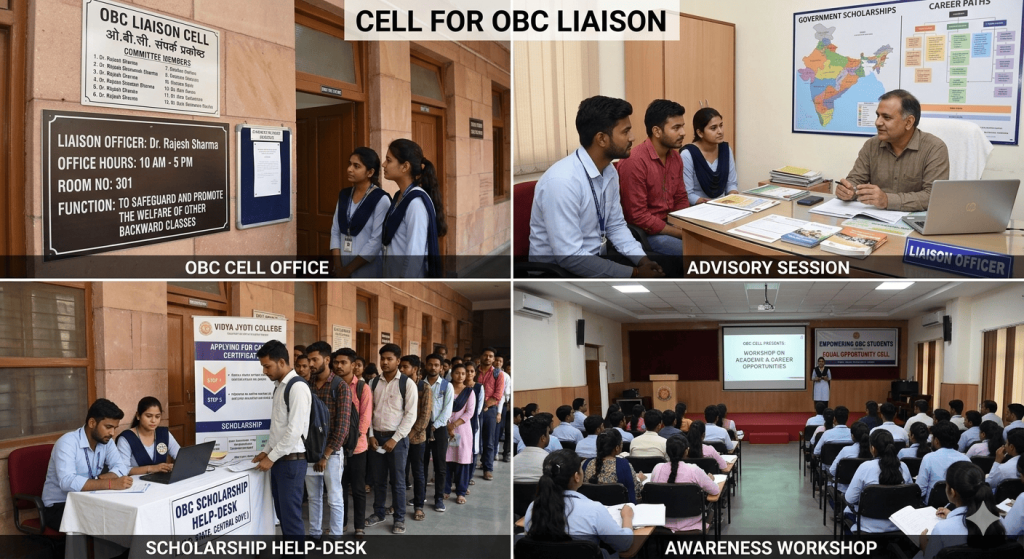
The OBC Liaison Cell is typically structured to ensure efficiency, accountability, and accessibility.
4.1 OBC Liaison Officer
The head of the cell, usually a senior faculty member or administrator, responsible for overseeing all activities and ensuring compliance with policies.
4.2 Supporting Staff
Administrative personnel assist in documentation, communication, and coordination of activities.
4.3 Advisory Committee
A committee comprising faculty members, student representatives, and sometimes external experts provides guidance and oversight.
4.4 Student Representatives
OBC student representatives help in communicating grassroots issues and ensuring that student voices are heard.
5. Key Functions of the OBC Liaison Cell
5.1 Implementation of Reservation Policies
The cell ensures that reservation quotas are followed during:
- Student admissions
- Faculty recruitment
- Non-teaching staff appointments
It verifies documentation such as caste certificates and ensures compliance with government guidelines.
5.2 Data Collection and Reporting
Maintaining accurate records is critical. The cell collects data on:
- Number of OBC students admitted
- Dropout rates
- Academic performance
- Staff representation
These reports are submitted to government bodies for review and policy assessment.
5.3 Grievance Handling
A transparent and confidential grievance mechanism is established. Complaints may include:
- Discrimination in classrooms or hostels
- Bias in evaluation or grading
- Harassment by peers or faculty
The cell investigates complaints and recommends appropriate actions.
5.4 Awareness Programs
Workshops, seminars, and orientation sessions are organized to:
- Educate students about scholarships and financial aid
- Inform faculty about inclusive practices
- Reduce stigma associated with reservation policies
5.5 Academic Support Initiatives
To address academic gaps, the cell may facilitate:
- Remedial classes
- Mentorship programs
- Peer tutoring systems
5.6 Career Guidance and Placement Support
The cell may collaborate with placement offices to ensure equal opportunities for OBC students in internships and job placements.
6. Role in Promoting Inclusivity
Beyond compliance, the OBC Liaison Cell contributes to building an inclusive campus culture.
6.1 Sensitization of Faculty and Staff
Training sessions help faculty understand diversity issues and adopt inclusive teaching methods.
6.2 Encouraging Representation
The cell promotes participation of OBC students in student bodies, research projects, and extracurricular activities.
6.3 Reducing Social Barriers
Initiatives such as cultural events and dialogue forums foster interaction among students from diverse backgrounds.
7. Challenges Faced by the OBC Liaison Cell
Despite its importance, the cell faces several challenges:
7.1 Lack of Awareness
Many students are unaware of the cell’s existence or the benefits available to them.
7.2 Social Stigma
Students may hesitate to approach the cell due to fear of being labeled or stigmatized.
7.3 Resource Constraints
Limited staff and funding can hinder the cell’s effectiveness.
7.4 Data Management Issues
Maintaining accurate and updated records can be challenging in large institutions.
7.5 Resistance to Change
Some stakeholders may resist policies aimed at promoting equity, viewing them as unfair.
8. Best Practices for Effective Functioning
To enhance its impact, the OBC Liaison Cell can adopt several best practices:
8.1 Digital Platforms
Creating online portals for grievance submission and information dissemination improves accessibility.
8.2 Regular Audits
Periodic audits ensure compliance with reservation policies.
8.3 Collaboration
Working with other institutional bodies such as SC/ST cells, gender sensitization committees, and counseling centers ensures holistic support.
8.4 Feedback Mechanisms
Regular surveys and feedback sessions help identify gaps and improve services.
8.5 Transparency
Publishing reports and activities builds trust and accountability.
9. Case Studies and Impact
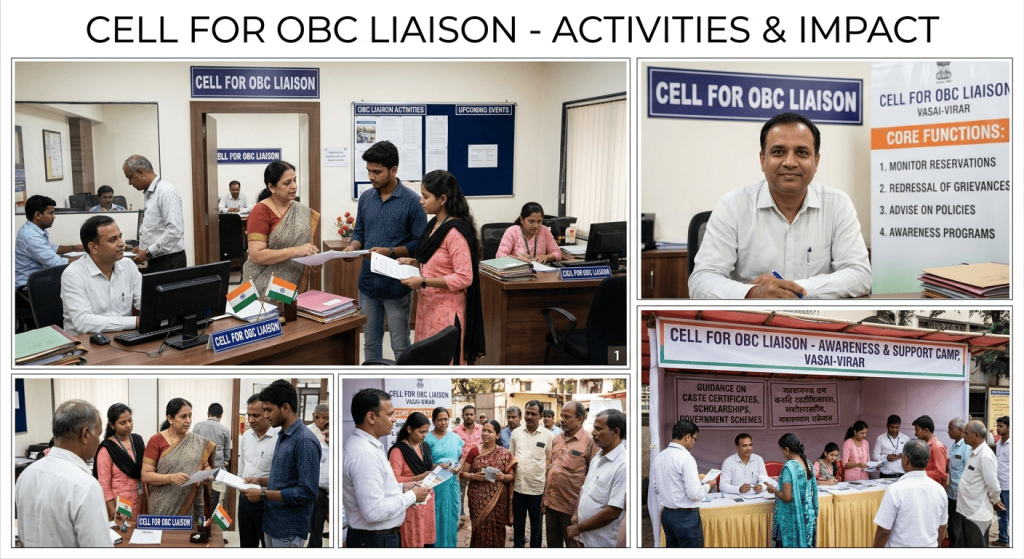
While specific examples vary across institutions, the impact of OBC Liaison Cells can be seen in:
- Increased enrollment and retention of OBC students
- Improved academic performance through support programs
- Reduction in reported discrimination cases
- Greater participation in campus activities
These outcomes demonstrate the cell’s role in creating a more equitable academic environment.
10. Legal and Policy Framework
The functioning of the OBC Liaison Cell is guided by various legal provisions:
- Indian Constitution (Articles 15 and 16) – Provisions for affirmative action
- Central Educational Institutions (Reservation in Admission) Act, 2006
- Guidelines issued by the Ministry of Education
These frameworks mandate reservation policies and the establishment of monitoring mechanisms like the OBC Liaison Cell.
11. Future Directions
As IITs evolve into global institutions, the role of the OBC Liaison Cell must also expand.
11.1 Integration with Diversity and Inclusion Offices
The cell can be part of a broader diversity framework that includes international students and other marginalized groups.
11.2 Use of Technology
AI-driven analytics can help track performance trends and identify areas needing intervention.
11.3 Global Benchmarking
Learning from international best practices in inclusion can enhance the cell’s effectiveness.
11.4 Policy Advocacy
The cell can contribute to policy formulation by providing ground-level insights to government bodies.
12. Conclusion
The OBC Liaison Cell stands as a vital institutional mechanism within International Institutes of Technology (IITs), ensuring that the principles of equity, inclusion, and social justice are meaningfully translated into practice. In institutions that are globally recognized for academic excellence and innovation, it is imperative that growth and achievement are accompanied by fairness and equal opportunity. The OBC Liaison Cell fulfills this responsibility by acting as both a regulatory and supportive body, ensuring that policies related to Other Backward Classes (OBCs) are not only implemented but also experienced positively by the intended beneficiaries.
At its core, the cell ensures compliance with government-mandated reservation policies in admissions, recruitment, and career advancement. However, its significance extends beyond procedural enforcement. It plays a transformative role in shaping an institutional culture that values diversity and actively works to reduce barriers faced by historically marginalized communities. By monitoring policy implementation, maintaining transparency, and submitting regular reports to relevant authorities, the cell strengthens accountability within the institutional framework.
Equally important is the role of the OBC Liaison Cell in providing support and guidance to students and staff belonging to OBC communities. Higher education environments such as IITs are highly competitive and demanding, and individuals from disadvantaged backgrounds may encounter additional academic, financial, and social challenges. The cell helps bridge these gaps by facilitating access to scholarships, organizing remedial programs, and promoting mentorship initiatives. Such efforts not only enhance academic performance but also improve retention rates and overall student well-being.
The grievance redressal function of the cell is another critical aspect of its contribution. By offering a safe and confidential platform for individuals to raise concerns related to discrimination, bias, or denial of rightful benefits, the cell reinforces the idea that inclusivity is not optional but fundamental. Addressing grievances promptly and fairly builds trust in the institution and reassures students and employees that their rights are protected.
In addition to addressing immediate concerns, the OBC Liaison Cell also contributes to long-term cultural change within IITs. Through awareness programs, sensitization workshops, and outreach activities, it works to dismantle stereotypes and reduce social stigma associated with reservation policies. These initiatives encourage dialogue and understanding among diverse groups, fostering a campus environment based on mutual respect and shared purpose. In doing so, the cell aligns with the broader vision of higher education as a space for holistic development and social integration.
The importance of the OBC Liaison Cell becomes even more pronounced when viewed in the context of India’s vast diversity and historical inequalities. Educational institutions play a crucial role in shaping the socio-economic landscape of the country. By ensuring that opportunities are accessible to all, regardless of background, IITs can truly function as engines of inclusive growth. The OBC Liaison Cell contributes to this mission by ensuring that talent is recognized and nurtured without prejudice or systemic disadvantage.
However, for the cell to achieve its full potential, continuous efforts are required to strengthen its functioning. Adequate resources, trained personnel, and institutional support are essential for effective implementation. Increasing awareness among students and staff about the cell’s role and services can enhance its reach and impact. Additionally, integrating technology for data management, grievance handling, and communication can improve efficiency and accessibility.
Looking ahead, the role of the OBC Liaison Cell is likely to evolve in response to changing educational and social dynamics. As IITs continue to expand their global presence, there is a growing need to align local inclusion efforts with international best practices in diversity and equity. The cell can play a proactive role in this transition by adopting innovative strategies, engaging in policy advocacy, and collaborating with other institutional bodies dedicated to inclusion and student welfare.
In conclusion, the OBC Liaison Cell is not merely an administrative requirement but a cornerstone of equitable education within IITs. It embodies the commitment of these institutions to uphold constitutional values and promote social justice. By addressing systemic inequalities, supporting marginalized communities, and fostering an inclusive academic environment, the cell ensures that excellence in education is both accessible and meaningful. Its continued strengthening is essential for building institutions that are not only globally competitive but also socially responsible and just.
Table of Contents