PWD Cell
International Institute of Technology (IIT): An In-Depth Study
1. Introduction
Higher education institutions, especially premier technical institutes such as the International Institute of Technology (IIT) and comparable international institutes of technology, occupy a central position in shaping global advancements in science, engineering, technology, and innovation. These institutions are not only responsible for producing highly skilled professionals but also for fostering research, critical thinking, and technological development that influence society at large. In this evolving academic landscape, the principles of equity, inclusivity, and accessibility have become essential pillars of institutional development.
In recent decades, there has been a significant global shift toward recognizing and addressing the needs of Persons with Disabilities (PWDs) within educational systems. This shift is driven by both ethical considerations and legal frameworks that emphasize equal rights and opportunities. Education is widely regarded as a fundamental human right, and ensuring that it is accessible to all individuals—regardless of physical, sensory, intellectual, or neurological differences—is a core responsibility of modern educational institutions.
Despite technological progress and infrastructural advancements, individuals with disabilities often continue to face barriers in accessing higher education. These barriers may include physical inaccessibility of buildings, lack of adaptive learning materials, limited availability of assistive technologies, and insufficient institutional awareness regarding inclusive practices. In technical institutions, where learning often involves laboratory work, complex visual data, and fast-paced academic environments, these challenges can become even more pronounced. As a result, there is a pressing need for structured support systems that ensure equitable participation for all learners.
To address these concerns, many institutions have established a dedicated administrative and support unit known as the PWD Cell (Persons with Disabilities Cell). The PWD Cell serves as a centralized mechanism responsible for identifying, supporting, and empowering individuals with disabilities within the academic environment. Its creation reflects a broader institutional commitment to inclusivity and compliance with national and international disability rights frameworks.
In countries like India, the functioning of such cells is often guided by legislation such as the Rights of Persons with Disabilities Act, 2016, which mandates equal access to education and reasonable accommodation in academic settings. Similarly, global frameworks such as the United Nations Convention on the Rights of Persons with Disabilities (UNCRPD) emphasize the importance of inclusive education systems that do not exclude individuals on the basis of disability. These legal and ethical frameworks collectively reinforce the necessity of institutional structures like the PWD Cell in higher education environments.
The primary role of the PWD Cell extends beyond administrative coordination. It is a proactive body that works to ensure academic access, infrastructure adaptation, policy implementation, and holistic support for students, faculty, and staff with disabilities. This includes facilitating accommodations such as extended examination time, provision of scribes, accessible learning materials, and the integration of assistive technologies into academic workflows. Additionally, the cell plays a critical role in ensuring that campus infrastructure is designed or modified to be physically accessible, including features such as ramps, elevators, tactile pathways, and accessible restrooms.
Beyond physical and academic support, the PWD Cell also contributes to building an inclusive institutional culture. It conducts awareness programs, sensitization workshops, and training sessions for faculty, staff, and students to promote understanding and acceptance of disability-related issues. This cultural dimension is essential, as inclusion is not only about infrastructure or policy but also about attitudes, perceptions, and everyday interactions within the academic community.
Furthermore, the PWD Cell often acts as a bridge between students with disabilities and institutional authorities, ensuring that individual needs are effectively communicated and addressed. It may also collaborate with external organizations, government bodies, and non-governmental organizations to enhance the availability of resources and expertise related to disability support.
Importantly, the establishment of a PWD Cell represents more than compliance with regulations; it signifies a deeper commitment to inclusive education as a core institutional value. It reflects the understanding that diversity enriches academic environments and that students with disabilities contribute meaningfully to research, innovation, and intellectual discourse when provided with appropriate support systems.
2. Concept of PWD Cell
The PWD Cell is a specialized institutional body designed to support individuals with physical, sensory, intellectual, or neurological disabilities. Its core objective is to ensure that disability is not a barrier to education, research, employment, or participation in institutional life.
2.1 Definition
A PWD Cell can be defined as:
A dedicated unit within an educational institution that ensures equal access, opportunity, and participation for persons with disabilities through policy implementation, academic accommodations, infrastructure modification, and support services.
2.2 Legal and Policy Framework
PWD Cells in IITs or similar institutions typically operate under:
- Rights of Persons with Disabilities Act, 2016 (India)
- UNCRPD (United Nations Convention on the Rights of Persons with Disabilities)
- Institutional equality and anti-discrimination policies
- University Grants Commission (UGC) guidelines (where applicable)
These frameworks mandate reasonable accommodation, non-discrimination, and accessibility in education.
3. Objectives of the PWD Cell
The primary objectives of a PWD Cell in an IIT-like institution include:
3.1 Ensuring Equal Access to Education
The cell ensures that students with disabilities have equal access to lectures, labs, examinations, and academic resources.
3.2 Providing Reasonable Accommodation
This includes:
- Extra time in examinations
- Use of scribes or assistive technologies
- Accessible learning materials
- Flexible attendance policies (when necessary)
3.3 Promoting Inclusive Infrastructure
PWD Cells advocate for:
- Ramps and elevators
- Accessible washrooms
- Braille signage
- Audio-visual aids
- Wheelchair-friendly pathways
3.4 Academic and Psychological Support
Support systems include counseling services, mentorship programs, and peer support networks.
3.5 Awareness and Sensitization
The cell conducts workshops to sensitize faculty, staff, and students about disability rights and inclusive behavior.
4. Organizational Structure of a PWD Cell
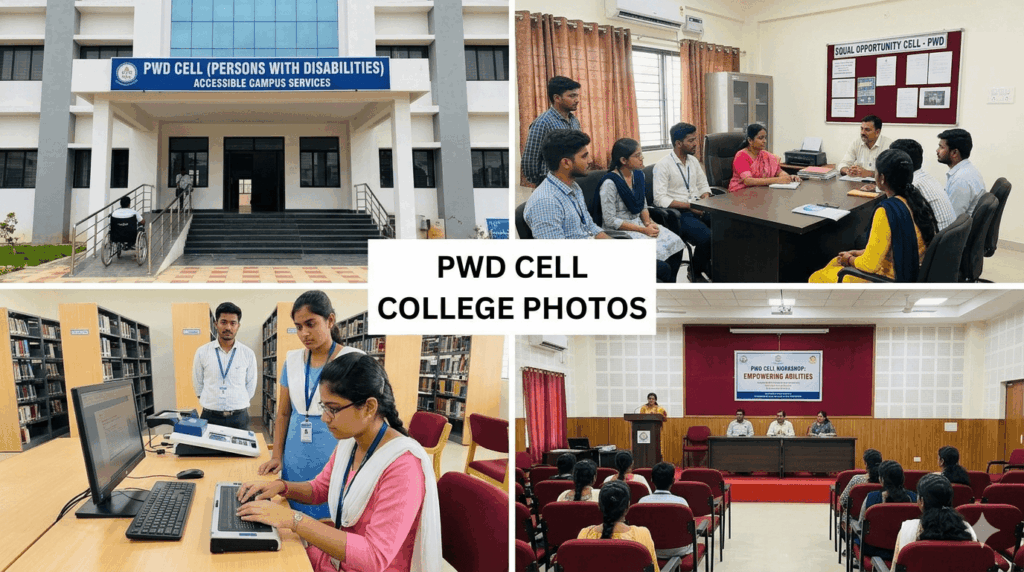
The structure of a PWD Cell varies by institution, but generally includes:
4.1 Coordinator
Usually a senior faculty member responsible for overall management.
4.2 Faculty Members
Represent various departments to ensure interdisciplinary coordination.
4.3 Administrative Staff
Handles documentation, policy execution, and communication.
4.4 Disability Experts
May include rehabilitation specialists, psychologists, or accessibility consultants.
4.5 Student Representatives
PWD students or allies who provide feedback and suggestions.
5. Key Functions of the PWD Cell
5.1 Identification and Registration
The cell maintains confidential records of students and staff with disabilities to provide targeted support.
5.2 Academic Accommodation
This includes:
- Modified exam formats
- Assistive technology support
- Lecture material in accessible formats (PDF, audio, Braille)
5.3 Infrastructure Development
Ensuring the campus is physically accessible:
- Installation of ramps and lifts
- Tactile paths for visually impaired individuals
- Accessible transportation within campus
5.4 Assistive Technology Support
Examples include:
- Screen readers (e.g., NVDA, JAWS)
- Speech-to-text software
- Hearing assistance systems
- Adaptive laboratory equipment
5.5 Examination Support
PWD Cells coordinate:
- Extra time allocation
- Scribe services
- Separate examination rooms
- Computer-based exams with accessibility tools
5.6 Financial Assistance and Scholarships
Guidance on:
- Government scholarships
- Institutional fee waivers
- Research grants for disabled students
5.7 Counseling and Emotional Support
Psychological counseling is essential to address:
- Academic stress
- Social inclusion challenges
- Confidence building
6. Role of PWD Cell in Academic Environment
6.1 Enhancing Learning Outcomes
By removing barriers, students with disabilities can perform at their true academic potential.
6.2 Encouraging Research Participation
PWD students are encouraged to participate in:
- Undergraduate research projects
- Postgraduate research
- Innovation labs
6.3 Faculty Support and Training
Faculty members are trained to:
- Use inclusive teaching methods
- Adapt lecture materials
- Understand diverse learning needs
7. Infrastructure and Accessibility in IITs
A modern IIT or similar institute aims to provide universal accessibility through:
7.1 Physical Infrastructure
- Barrier-free buildings
- Automatic doors
- Accessible hostels
- Reserved seating in lecture halls
7.2 Digital Accessibility
- Accessible websites compliant with WCAG standards
- Screen-reader-friendly learning platforms
- Captioned video lectures
7.3 Library Accessibility
- Braille books
- Audiobooks
- Digital libraries with assistive tools
8. Challenges Faced by PWD Cells
Despite progress, several challenges persist:
8.1 Infrastructure Limitations
Older buildings may not be fully accessible and require retrofitting.
8.2 Lack of Awareness
Some faculty or students may lack understanding of disability accommodations.
8.3 Resource Constraints
Assistive technologies and infrastructure upgrades require significant funding.
8.4 Social Barriers
PWD students may face:
- Social isolation
- Stigma
- Lack of peer interaction
8.5 Administrative Delays
Implementation of accommodations may sometimes be slow due to procedural bottlenecks.
9. Importance of PWD Cell in IIT Ecosystem
The presence of a strong PWD Cell transforms the institution in several ways:
9.1 Promotes Equality
Ensures that talent is not limited by physical or cognitive barriers.
9.2 Enhances Institutional Reputation
Inclusive institutions are globally respected for diversity and equity.
9.3 Encourages Innovation
Diverse perspectives lead to innovative engineering and technological solutions.
9.4 Legal Compliance
Ensures adherence to disability laws and avoids discrimination issues.
10. Best Practices for Effective PWD Cell Functioning
10.1 Proactive Policy Implementation
Not just reactive support, but planned inclusivity.
10.2 Regular Accessibility Audits
Continuous assessment of infrastructure and services.
10.3 Student Feedback Mechanism
PWD students should actively contribute to decision-making.
10.4 Use of Technology
Leveraging AI, assistive tools, and digital platforms for accessibility.
10.5 Collaboration with NGOs and Experts
Partnerships improve quality of services and innovation.
11. Case Study Approach (Hypothetical IIT Scenario)
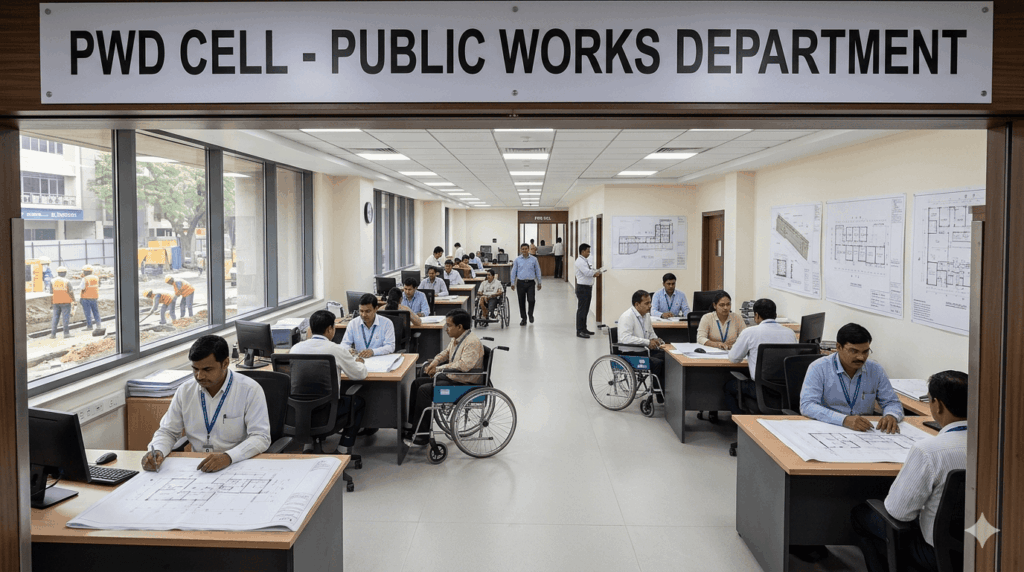
In a typical IIT setting:
- A visually impaired student uses screen-reading software for coding assignments.
- A hearing-impaired student receives lecture transcripts and captioned videos.
- A physically disabled student accesses labs through adaptive workstations.
The PWD Cell coordinates all these accommodations seamlessly, ensuring academic continuity.
12. Future of PWD Cells in Technical Institutes
The future direction includes:
12.1 AI-Based Accessibility Tools
- Real-time transcription
- Smart navigation systems
- Predictive learning support
12.2 Universal Design for Learning (UDL)
Curriculum designed from the start for all learners.
12.3 Fully Smart Accessible Campuses
Integration of IoT and smart infrastructure.
12.4 Greater Inclusion in STEM Research
Expanding opportunities in advanced fields like robotics, AI, and quantum computing.
13. Conclusion
The PWD Cell (Persons with Disabilities Cell) in an International Institute of Technology (IIT) represents a fundamental pillar of inclusive education and equitable academic participation. In modern higher education systems, especially within highly competitive and research-driven environments such as IITs and comparable global institutes of technology, the importance of accessibility and equal opportunity cannot be overstated. The PWD Cell plays a central role in ensuring that individuals with disabilities are not excluded or marginalized but are instead fully integrated into academic, research, and campus life.
At its core, the PWD Cell functions as a structured support mechanism that translates the principles of equality and human rights into practical, institutional action. It ensures that students, faculty, and staff with disabilities receive the necessary accommodations to perform to the best of their abilities. These accommodations may include academic modifications such as extended examination time, accessible learning materials, assistive technologies, and alternative evaluation methods. However, its impact extends far beyond these functional adjustments. It represents a broader commitment to dignity, respect, and equal participation in higher education.
One of the most significant contributions of the PWD Cell is its role in removing systemic barriers that have historically limited access to education for persons with disabilities. In technical institutions, where learning often involves complex visualizations, laboratory-based work, and fast-paced problem-solving environments, such barriers can be particularly challenging. The PWD Cell addresses these challenges by ensuring that infrastructure, teaching methodologies, and academic assessments are adapted to meet diverse needs. This includes the development of accessible classrooms, barrier-free campus design, and integration of assistive technologies such as screen readers, speech-to-text systems, and adaptive laboratory equipment.
Beyond infrastructure and academic support, the PWD Cell plays a crucial role in shaping the institutional culture of inclusivity. True accessibility is not limited to physical or technological accommodations; it also requires a shift in mindset across the academic community. Through awareness programs, sensitization workshops, and training sessions, the PWD Cell fosters an environment where disability is understood not as a limitation, but as a form of human diversity. Faculty members become more aware of inclusive teaching practices, while students develop greater empathy and awareness of accessibility issues. This cultural transformation is essential for sustaining long-term inclusivity within the institution.
Another important aspect of the PWD Cell is its function as a bridge between policy and implementation. While national laws and international conventions, such as the Rights of Persons with Disabilities Act, 2016 and the UN Convention on the Rights of Persons with Disabilities (UNCRPD), establish strong legal frameworks for inclusion, their effectiveness depends on institutional execution. The PWD Cell ensures that these policies are effectively translated into actionable support systems within the institute. It coordinates between administrative departments, academic units, and students to ensure that disability-related accommodations are implemented efficiently and consistently.
The impact of the PWD Cell is also visible in the empowerment of individuals with disabilities. By providing equal access to educational opportunities, it enables students to pursue academic excellence, engage in cutting-edge research, and contribute meaningfully to innovation and technological advancement. Many students with disabilities, when provided with appropriate support, excel in fields such as computer science, engineering design, artificial intelligence, and scientific research. Their participation enriches the academic ecosystem by introducing diverse perspectives and problem-solving approaches.
Despite its many achievements, the PWD Cell also highlights ongoing challenges in achieving full inclusivity. Issues such as infrastructural limitations in older campus buildings, inconsistent awareness among faculty or students, and the need for continuous investment in assistive technologies remain areas that require attention. Additionally, the dynamic nature of disability support means that institutions must continuously evolve their strategies to keep pace with technological advancements and changing educational needs.
Nevertheless, the existence and functioning of the PWD Cell mark a significant step forward in building equitable and future-ready educational institutions. It demonstrates that excellence in education is not defined solely by academic rigor or research output, but also by the ability of an institution to include and support all members of its community.
Table of Contents