Diversity and Inclusion
International Institute of Technology (IIT)
Abstract
Diversity and inclusion (D&I) have emerged as central principles in contemporary higher education systems, shaping institutional policies, academic cultures, and student experiences. In science, technology, engineering, and mathematics (STEM)-focused universities such as the International Institute of Technology (IIT), D&I plays a particularly critical role in addressing historical inequities, expanding participation, and enhancing innovation outcomes. As global challenges become increasingly complex, diverse academic environments are recognized as essential for producing creative, socially responsible, and globally competent graduates.
Conceptually, diversity refers to the presence of differences among individuals, including but not limited to race, ethnicity, gender, socioeconomic background, language, disability, and worldview. Inclusion, on the other hand, emphasizes the active creation of environments where all individuals feel valued, supported, and able to fully participate in academic and institutional life. Together, D&I frameworks move beyond representation to focus on equity, belonging, and systemic transformation within educational institutions.
In the context of STEM education at institutions such as IIT, diversity and inclusion are essential for fostering innovation, improving problem-solving capacity, and ensuring equitable access to opportunities. Diverse teams are known to outperform homogeneous groups due to the variety of perspectives they bring to research and engineering challenges. Furthermore, inclusive learning environments reduce dropout rates, improve academic performance, and enhance student well-being, particularly for underrepresented groups.
Several strategies can be adopted by IIT to strengthen its diversity and inclusion framework. These include implementing holistic admission policies, expanding scholarship programs for marginalized communities, establishing mentorship networks, and integrating inclusive pedagogy into curricula. Faculty training on unconscious bias, the promotion of gender-sensitive infrastructure, and the creation of safe reporting mechanisms for discrimination are also critical components of a robust D&I strategy.
Despite significant progress, several challenges persist in implementing effective D&I policies in technical institutions. These include unconscious bias in admissions and hiring, lack of representation in faculty positions, cultural resistance to change, and inadequate data collection on diversity metrics. Additionally, resource constraints and varying institutional priorities can hinder sustained implementation of inclusion initiatives.
Globally, several universities have demonstrated successful D&I models. For instance, institutions in the United States and Europe have implemented structured equity offices, targeted outreach programs, and data-driven accountability systems. Policy frameworks such as UNESCO guidelines on inclusive education and national higher education equity mandates provide guiding principles that IIT can adapt to its context while maintaining academic excellence.
The outcomes of effective diversity and inclusion initiatives include improved academic performance, increased innovation output, stronger institutional reputation, and enhanced global collaboration opportunities. Measuring these outcomes requires both quantitative indicators, such as enrollment diversity statistics and graduation rates, and qualitative measures, including student satisfaction and campus climate surveys. Ultimately, D&I is not only a moral imperative but also a strategic necessity for institutions aiming to thrive in a globalized knowledge economy.
In conclusion, diversity and inclusion are fundamental to the transformation of STEM-focused institutions like IIT into equitable, innovative, and globally competitive academic environments. By adopting comprehensive policies, addressing persistent challenges, and learning from global best practices, IIT can strengthen its commitment to D&I and ensure sustainable academic and societal impact.
To operationalize these initiatives effectively, IIT should develop a long-term diversity and inclusion roadmap aligned with institutional strategic goals. This roadmap should include periodic audits, stakeholder engagement involving students and faculty, and transparent reporting to ensure accountability. Leveraging digital tools and analytics can help track progress and identify gaps in representation and participation. Continuous feedback loops and adaptive policy revisions will be essential to ensure relevance, impact, and responsiveness to evolving academic and societal needs. Such structured planning will help institutionalize inclusion and ensure measurable, sustainable progress across all academic departments effectively consistently.
1. Introduction
The International Institute of Technology (IIT), as a hypothetical premier institution dedicated to advanced technical education and research, functions within an increasingly globalized academic ecosystem characterized by rapid technological advancement, interdisciplinary collaboration, and heightened awareness of social equity. In such an environment, diversity and inclusion (D&I) are no longer peripheral considerations; rather, they are foundational elements that shape institutional excellence, innovation capacity, and long-term sustainability.
Diversity refers to the presence of differences within a given environment, encompassing visible and invisible dimensions such as race, ethnicity, gender, socioeconomic background, nationality, language, disability status, religion, and cognitive or learning styles. It also extends to differences in life experiences, disciplinary perspectives, and problem-solving approaches. Inclusion, in contrast, refers to the intentional and sustained effort to create environments in which individuals from diverse backgrounds are not only present but are also actively supported, respected, and empowered to participate fully in academic, social, and professional activities. While diversity emphasizes representation, inclusion focuses on belonging, equity, and meaningful engagement.
In the context of technical institutions like IIT, the relationship between diversity and inclusion is particularly significant. Engineering, technology, and scientific research thrive on innovation, and innovation is often driven by exposure to varied perspectives and approaches. A diverse student and faculty population contributes to a broader range of ideas, which can lead to more creative solutions to complex global problems such as climate change, public health crises, artificial intelligence ethics, and sustainable infrastructure development. However, diversity alone is insufficient if inclusive structures are not in place. Without inclusion, diverse individuals may experience marginalization, reduced participation, or unequal access to opportunities, thereby limiting the potential benefits of diversity.
Globally, higher education institutions have increasingly recognized that D&I contributes not only to social justice but also to institutional performance. Research indicates that diverse teams are more likely to challenge assumptions, reduce groupthink, and produce higher-quality research outcomes. In STEM fields, where innovation and precision are critical, these advantages are particularly valuable. As a result, leading universities worldwide have integrated D&I into their strategic frameworks, incorporating policies related to admissions, hiring, curriculum design, and campus climate.
For IIT, the implementation of D&I principles can serve multiple strategic objectives. First, it enhances academic excellence by attracting talent from a wide range of backgrounds, thereby enriching classroom discussions and research collaborations. Second, it improves institutional reputation, making IIT more competitive in attracting international students, faculty, and research partnerships. Third, it contributes to social responsibility by ensuring equitable access to high-quality education for historically underrepresented or marginalized groups.
Despite its importance, achieving meaningful diversity and inclusion in technical institutions presents several challenges. These may include systemic inequalities in earlier stages of education, financial barriers, unconscious bias in selection processes, and cultural or linguistic differences that affect student integration. Additionally, resistance to institutional change and lack of awareness about the benefits of D&I can further hinder progress. Addressing these challenges requires comprehensive and sustained efforts across multiple levels of the institution.
In this context, inclusion becomes particularly critical. An inclusive environment ensures that students and staff not only gain access to IIT but also experience a sense of belonging and empowerment. This involves creating supportive academic structures, accessible learning resources, mentorship opportunities, and mechanisms for addressing discrimination or bias. It also requires fostering a campus culture that values respect, empathy, and collaboration across differences.
2. Conceptual Framework of Diversity and Inclusion
2.1 Dimensions of Diversity
Diversity can be categorized into several dimensions:
- Primary dimensions: Age, gender, race, ethnicity, physical abilities, and sexual orientation.
- Secondary dimensions: Education, socioeconomic status, language, religion, and geographic background.
- Organizational dimensions: Role, department, seniority, and specialization.
2.2 Understanding Inclusion
Inclusion goes beyond representation. It involves:
- Equitable access to resources and opportunities
- Participation in decision-making processes
- Psychological safety in academic and research environments
- Removal of systemic barriers
2.3 Equity vs Equality
Equality implies treating everyone the same, while equity involves providing individuals with resources based on their specific needs to achieve fair outcomes. For IIT, equity might involve scholarships for underrepresented groups, accessible infrastructure for disabled individuals, and mentorship programs for first-generation learners.
3. Importance of Diversity and Inclusion in Technical Education
3.1 Enhancing Innovation
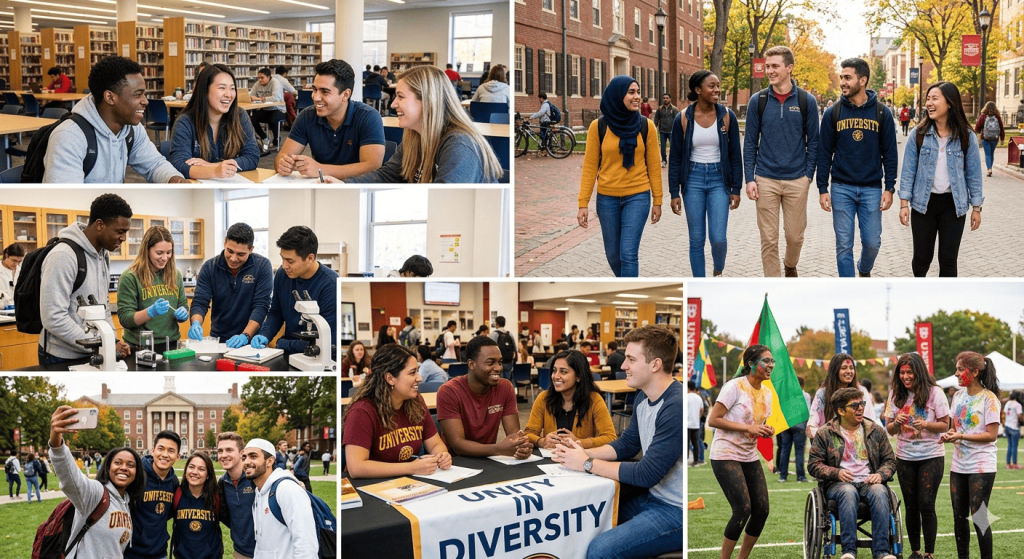
Research shows that diverse teams produce more innovative solutions. In engineering and technology, where IIT specializes, diverse perspectives can lead to breakthroughs in areas such as artificial intelligence, renewable energy, and biomedical engineering.
3.2 Improving Academic Outcomes
Inclusive environments improve student engagement, retention, and academic performance. Students who feel represented and supported are more likely to succeed.
3.3 Global Competitiveness
As IIT aims to maintain international standards, diversity prepares students for global workplaces where cross-cultural collaboration is essential.
3.4 Ethical Responsibility
Institutions of higher learning have a responsibility to promote social justice and reduce inequalities in education access.
4. Current Challenges in Implementing Diversity and Inclusion
4.1 Structural Inequalities
Many students from marginalized communities face barriers such as limited access to quality pre-university education, financial constraints, and lack of mentorship.
4.2 Cultural Barriers
Language differences, cultural misunderstandings, and unconscious biases can hinder inclusion.
4.3 Gender Imbalance in STEM
Engineering and technology fields often exhibit significant gender disparities, with fewer women participating in advanced technical programs.
4.4 Disability Accessibility
Physical infrastructure and digital platforms may not always be fully accessible to individuals with disabilities.
4.5 Resistance to Change
Institutional inertia and resistance from stakeholders can slow the implementation of D&I initiatives.
5. Strategies for Promoting Diversity and Inclusion at IIT
5.1 Inclusive Admissions Policies
- Holistic admissions criteria beyond standardized test scores
- Reserved seats or affirmative action policies for underrepresented groups
- Outreach programs in rural and underserved communities
5.2 Scholarships and Financial Aid
- Need-based scholarships
- Merit-cum-need funding models
- Corporate-sponsored diversity scholarships
5.3 Curriculum Diversification
- Inclusion of global perspectives in technical subjects
- Courses on ethics, society, and technology
- Interdisciplinary programs combining engineering with social sciences
5.4 Faculty Diversity
- Recruitment of faculty from diverse backgrounds
- International faculty exchange programs
- Bias training for hiring committees
5.5 Mentorship and Support Systems
- Peer mentoring programs
- Faculty-student advisory systems
- Mental health and counseling services
5.6 Inclusive Infrastructure
- Accessible classrooms and laboratories
- Assistive technologies for disabled students
- Gender-neutral facilities
5.7 Use of Technology
- AI-driven learning platforms adapted for diverse learners
- Online education access for remote students
- Data analytics to track inclusion metrics
6. Role of Leadership in Driving Inclusion
Leadership at IIT plays a crucial role in shaping institutional culture. Effective leaders:
- Set clear diversity goals
- Allocate resources for inclusion programs
- Ensure accountability through reporting systems
- Foster open dialogue on equity issues
7. Measuring Diversity and Inclusion
To ensure effectiveness, IIT must establish measurable indicators:
- Demographic diversity ratios (students and faculty)
- Retention and graduation rates across groups
- Student satisfaction surveys
- Representation in leadership positions
- Participation in research and extracurricular activities
8. Global Best Practices in Higher Education
8.1 United States Universities
Many leading universities implement affirmative action policies, diversity offices, and extensive scholarship programs.
8.2 European Institutions
Focus on inclusion through accessibility laws and integration programs for international students.
8.3 Asian Institutions
Rapidly expanding diversity initiatives, especially in STEM fields, with emphasis on gender inclusion.
9. Case Study: Hypothetical Implementation at IIT
Phase 1: Assessment
- Conduct campus-wide diversity audit
- Identify gaps in representation and inclusion
Phase 2: Policy Design
- Develop institutional D&I framework
- Establish diversity office
Phase 3: Implementation
- Launch scholarships and outreach programs
- Revise curriculum and hiring practices
Phase 4: Evaluation
- Annual reporting on diversity metrics
- Feedback loops from students and faculty
10. Impact of Diversity and Inclusion on Research and Innovation
Diverse research teams at IIT can:
- Generate broader research questions
- Improve problem-solving approaches
- Increase publication impact and citations
- Foster interdisciplinary collaboration
11. Student Perspective on Inclusion
Students benefit from:
- Sense of belonging
- Reduced academic stress
- Enhanced collaboration opportunities
- Exposure to diverse viewpoints
12. Faculty and Staff Development
Training programs should include:
- Cultural competency workshops
- Anti-bias training
- Inclusive teaching methodologies
- Leadership development for underrepresented faculty
13. Technology and Digital Inclusion

As IIT increasingly integrates digital learning:
- Platforms must be accessible to all learners
- Language support tools should be available
- AI systems must be monitored for bias
14. Policy Recommendations
- Establish a permanent Office of Diversity and Inclusion
- Mandate annual D&I reporting
- Integrate inclusion goals into performance evaluations
- Strengthen partnerships with global institutions
15. Future Outlook
The future of IIT depends on its ability to:
- Adapt to global diversity standards
- Continuously evolve inclusion practices
- Embrace technological advancements responsibly
- Foster a truly global academic community
16. Conclusion
Diversity and inclusion (D&I) stand as foundational pillars for the long-term success and global relevance of the International Institute of Technology (IIT). In an era defined by rapid technological advancement, global interdependence, and complex societal challenges, higher education institutions are expected not only to produce technically proficient graduates but also to cultivate ethically responsible, socially aware, and globally competent individuals. Within this framework, D&I is not an optional enhancement but a core institutional requirement that directly influences academic excellence, research innovation, and institutional legitimacy.
At IIT, the integration of diversity and inclusion into institutional philosophy contributes significantly to the enrichment of the academic ecosystem. Diversity brings together individuals from varied cultural, linguistic, socioeconomic, and intellectual backgrounds, enabling a broader spectrum of ideas and perspectives. This variety is particularly valuable in technical disciplines, where complex problems often require interdisciplinary and innovative solutions. When students and faculty approach challenges from different viewpoints, the likelihood of creative breakthroughs and effective problem-solving increases substantially. As a result, diversity directly enhances the institution’s capacity for innovation and global competitiveness.
Inclusion complements diversity by ensuring that all members of the academic community are empowered to participate meaningfully in institutional life. Without inclusion, diversity risks becoming superficial or symbolic, failing to translate into tangible benefits. Inclusive environments foster a sense of belonging, psychological safety, and mutual respect, which are essential for academic engagement and personal development. When individuals feel valued and supported, they are more likely to contribute actively, collaborate effectively, and pursue excellence in their respective fields. Therefore, inclusion transforms diversity from a demographic characteristic into a functional strength.
The educational outcomes associated with strong D&I practices are also significant. Studies across global higher education systems indicate that inclusive learning environments improve student retention, academic performance, and satisfaction. Students in such environments develop stronger critical thinking skills, cultural competence, and adaptability—attributes that are essential in a rapidly evolving global workforce. For IIT, this translates into producing graduates who are not only technically skilled but also capable of working effectively in diverse teams and international settings.
Despite these benefits, the implementation of D&I initiatives is not without challenges. Structural inequalities in access to education, implicit biases in institutional processes, and resistance to cultural change can hinder progress. Additionally, achieving meaningful representation across all levels of the institution requires sustained effort, resources, and long-term commitment. These challenges underscore the need for comprehensive strategies that go beyond policy formulation to include active implementation, monitoring, and evaluation.
Strategic implementation of inclusive policies is therefore essential for transforming IIT into a model institution. This includes adopting equitable admission practices, strengthening financial aid and scholarship programs, promoting inclusive curriculum design, and ensuring accessibility for students with disabilities. Faculty development programs that address unconscious bias and promote inclusive teaching practices are equally important. Furthermore, establishing clear accountability mechanisms and data-driven evaluation systems can help measure progress and identify areas for improvement.
Leadership plays a critical role in driving this transformation. Institutional leaders must demonstrate a visible and sustained commitment to diversity and inclusion, embedding these values into the strategic vision of IIT. However, leadership alone is insufficient. Faculty members, administrative staff, and students must all actively participate in fostering an inclusive culture. Student organizations, peer mentoring systems, and collaborative research initiatives can further reinforce these values at the grassroots level.
Importantly, diversity and inclusion should not be viewed as static goals to be achieved once and for all. Instead, they represent ongoing, dynamic processes that evolve alongside societal changes and institutional growth. Continuous reflection, adaptation, and innovation are required to ensure that D&I initiatives remain relevant and effective. Regular assessment of institutional climate, open dialogue among stakeholders, and responsiveness to feedback are essential components of this ongoing process.
In conclusion, diversity and inclusion are integral to the mission and success of the International Institute of Technology. They enhance innovation, strengthen educational outcomes, and reinforce the ethical foundations of higher education. By embracing D&I as a core institutional value, IIT can position itself as a forward-thinking, globally engaged, and socially responsible institution. Achieving this vision requires sustained commitment, collaborative effort, and a recognition that building an inclusive academic environment is an enduring journey rather than a final destination.
Table of Contents